About Parribacus antarcticus (Lund, 1793)
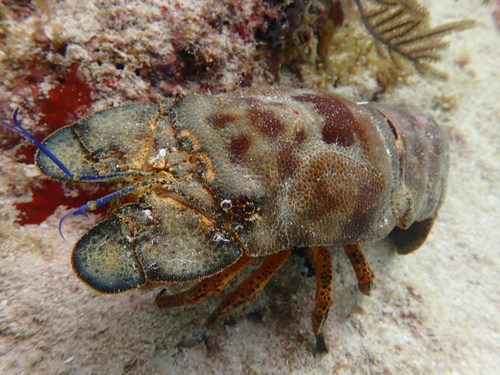
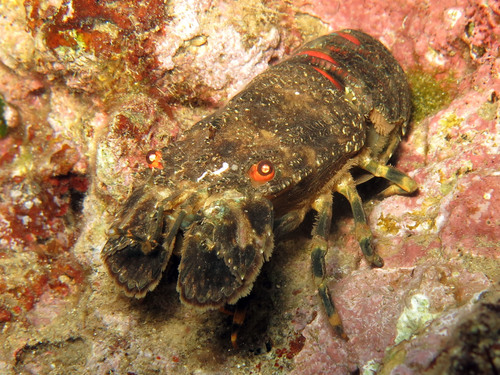
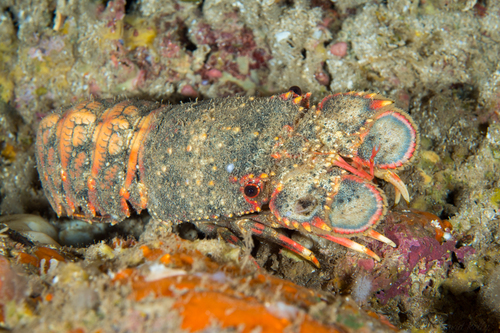
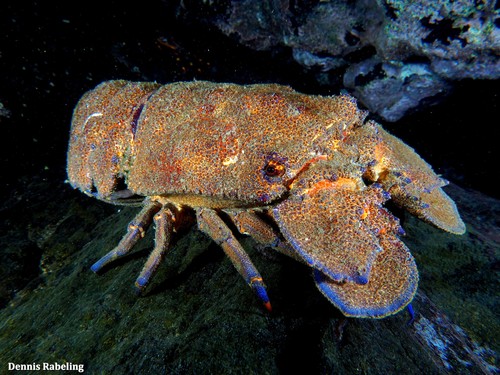
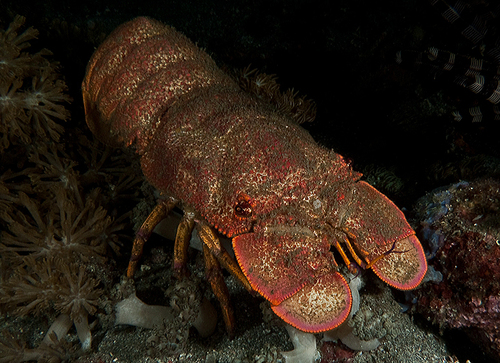
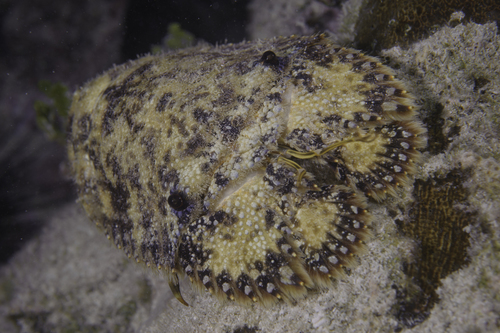
Male Parribacus antarcticus can reach a total length of around 20 cm, though most individuals measure between 12 and 15 cm. Their base body color is yellowish, mottled with brown and black patches; the rostrum and orbital margin are purplish. They have quite flattened bodies, with the dorsal surface covered in tubercles and short hairs. The lateral margin bears large teeth marked with bands of yellow, orange, and light purple. The transverse groove on the abdominal somites is wide, and bears only a few hairs or tubercles. Their small eyes sit within incompletely closed orbits located on the anterior margin of the carapace. This slipper lobster species is nocturnal; during the day, individuals typically hide in crevices or on the undersides of large slabs and ledges, often in small groups. It can swim backwards very quickly using its tail. This slipper lobster feeds on a variety of prey, including molluscs, small shrimps, crabs, and sea urchins. Parribacus antarcticus is distributed along the western Atlantic Ocean coast from Florida to northern Brazil, along the southern African coast in the Indian Ocean, and around Hawaii and Polynesia in the South Pacific Ocean. These slipper lobsters are bottom-dwelling organisms. They inhabit shallow waters of lagoons, and coral or stone marine reefs, preferring areas with a sandy bottom, at depths from 0 to 20 meters.