About Paroligolophus agrestis (Meade, 1855)
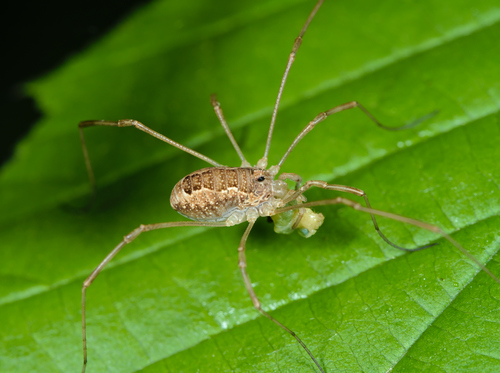
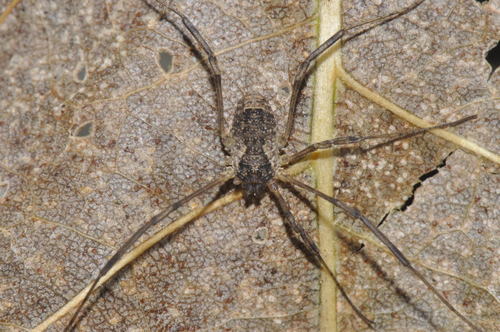
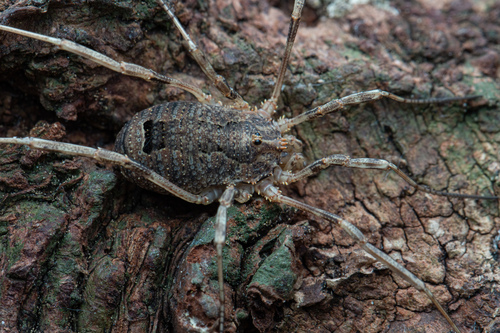
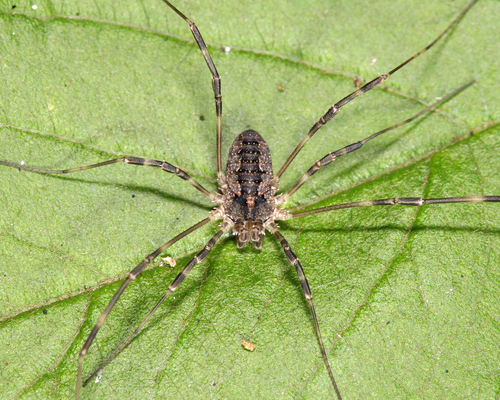
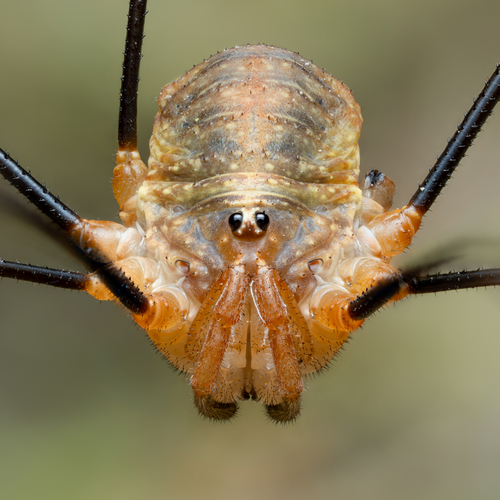
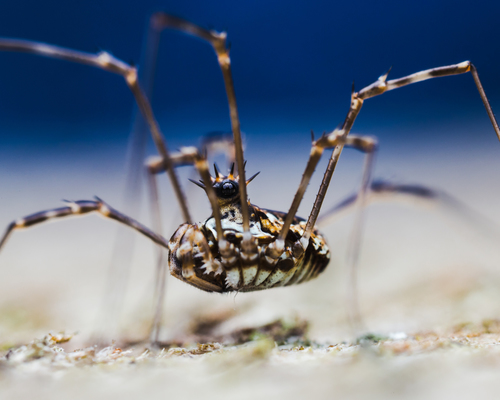
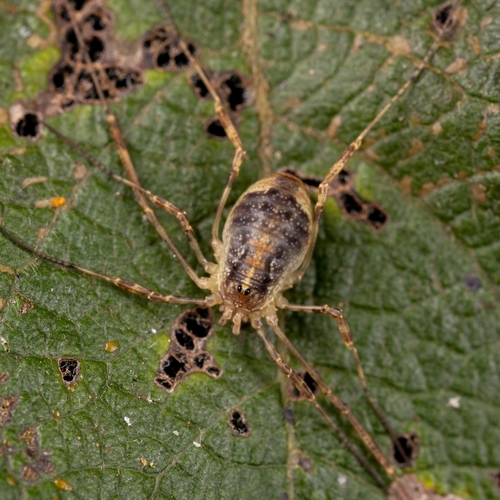
Paroligolophus agrestis is a species of harvestman first described by Meade in 1855. This species is native to Europe, including the United Kingdom, and has been introduced to North America, where it is found in the Pacific Northwest and Nova Scotia. Mature females of this species have bodies that are approximately 6 millimeters long, while mature males are smaller, reaching around 4 millimeters in body length. Like nearly all harvestmen, the second leg of Paroligolophus agrestis is the longest, measuring 14 to 20 millimeters when fully extended. The patellae and tibiae of this species have distinct angles, rather than being rounded. The upper surface of its body is typically brown with grey and red tones, with a line of whitish markings running along the center of the body. A tendency toward red coloration is considered a useful characteristic for identifying this species. There may be darker markings on the rear of the body, crossed by lighter lines. The area between the eyes is noticeably light in color. On the underside of the body, the genital plate is notched, and this notch is particularly prominent in females; this is a distinctive feature of the species.