About Parnassia caroliniana Michx.
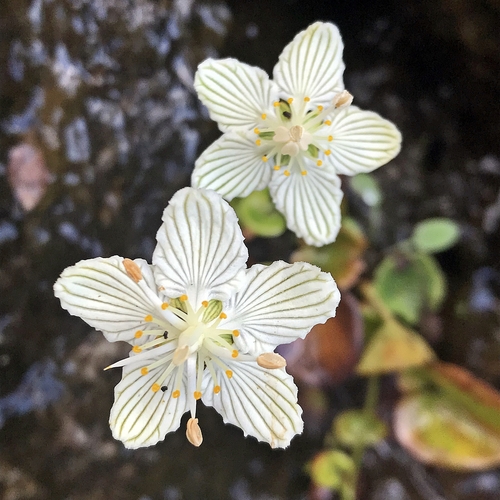
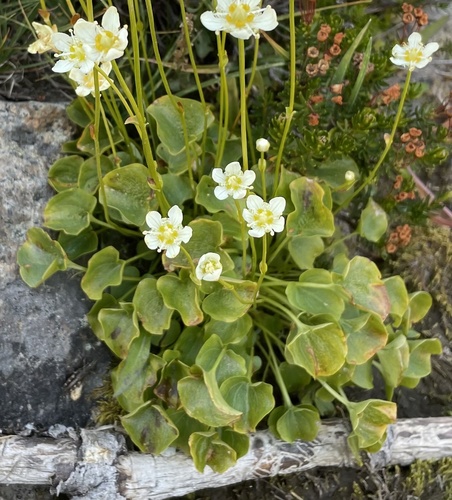
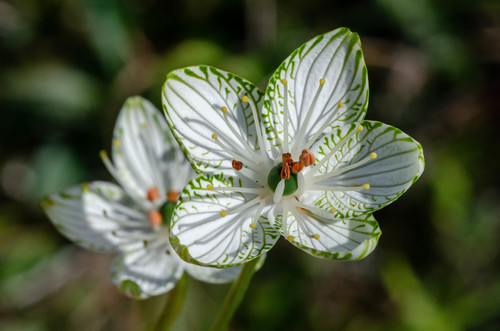
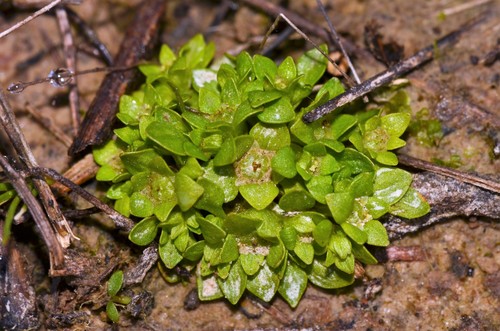
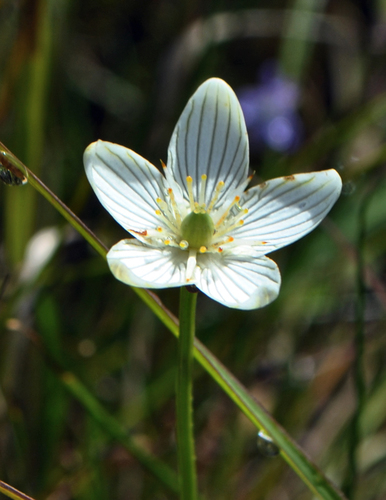
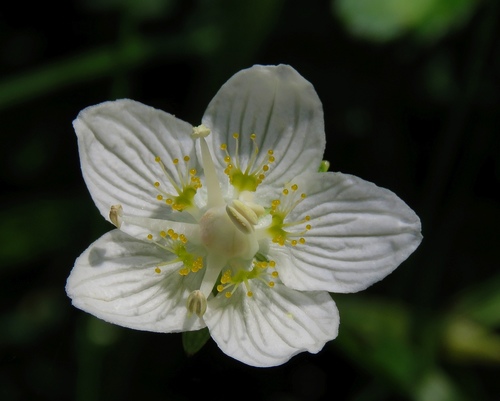
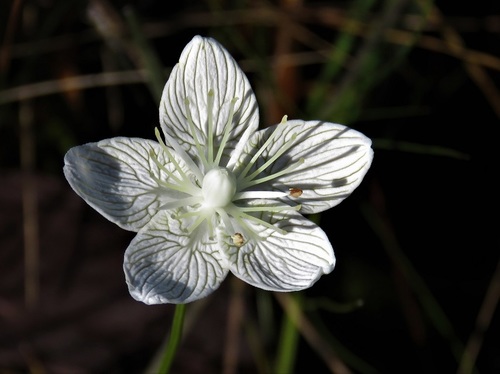
Parnassia caroliniana Michx. is a species of flowering plant in the family Celastraceae, commonly known as Carolina grass of Parnassus. It is native to the southeastern United States, occurring in North Carolina and South Carolina, plus one isolated population in the Florida Panhandle. This rhizomatous perennial herb can grow up to 65 centimeters (26 inches) tall. It produces basal leaves with rounded to oval blades attached to long petioles, while leaves growing on the stem are heart-shaped and clasp the stem at their bases. The inflorescence is a single solitary flower that has five deeply veined white petals, which may exceed 2 centimeters (0.8 inches) in length. At the center of the flower are five stamens with yellow anthers, and five three-parted staminodes. The fruit is a capsule that splits open to release its seeds. When compared to Parnassia grandifolia, the pistil of P. caroliniana is white, its staminodes are apiculate, and its petals broaden at a point closer to their base than the petals of P. grandifolia. Parnassia caroliniana grows in moist locations across a variety of habitat types, including flatwoods, savannas, bogs, and ecotones between pocosins and savannas, or between swamps and savannas. On the coastal plain, the species occurs on sandy calcareous substrates that contain peat. Its common associated pine tree species are longleaf pine and slash pine, and the plant prefers grassy areas with an open canopy. Populations can now often be found near pine plantations. Other plant species that co-occur in its habitat include Andropogon virginicus, A. glomeratus, Aristida stricta, Arundinaria tecta, Centella asiatica, Ctenium aromaticum, Dichromena sp., Erigeron vernus, Eryngium integrifolium, Eupatorium rotundifolium, E. leucolepis, E. pilosum, Fothergilla gardenii, Gaylussacia frondosa, Gentiana pennelliana, Helenium pinnatifidum, Ilex glabra, Lorinseria areolata, Lyonia lucida, Pinus serotina, Platanthera ciliaris, P. cristata, Pteridium aquilinum, Ptilimnium capillaceum, Pycnanthemum flexuosum, Rhexia alifanus, Sarracenia flava, S. purpurea, Taxodium ascendens and Vaccinium crassifolium. Flowering takes place from the end of September through the beginning of November. Hoverflies, other types of Diptera, and beetles are attracted to the flowers of this species. The main threats to Parnassia caroliniana come from timber-related activities, including logging, seedling planting, and ditching. Once trees are established, fire suppression is implemented in the area, which eliminates the natural fire regime that normally keeps brush cleared and maintains an open canopy in these forests and woodlands. Land drainage also alters habitat, making it too dry to support the species. Additional habitat loss occurs when land is converted for residential and commercial development. The species is actively conserved at Moores Creek National Battlefield in North Carolina, where wetland rehabilitation projects are currently underway.