About Parmotrema perforatum (Jacq.) A.Massal.
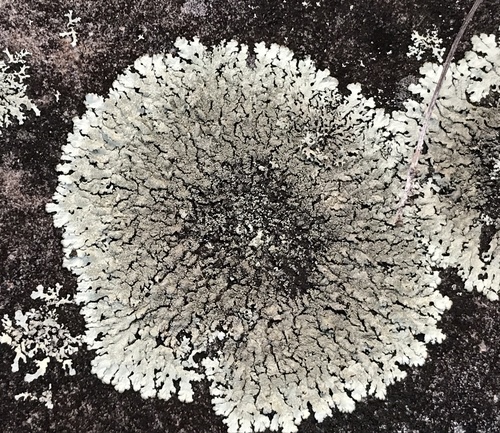
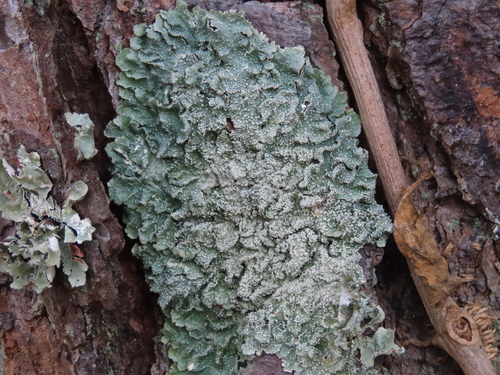
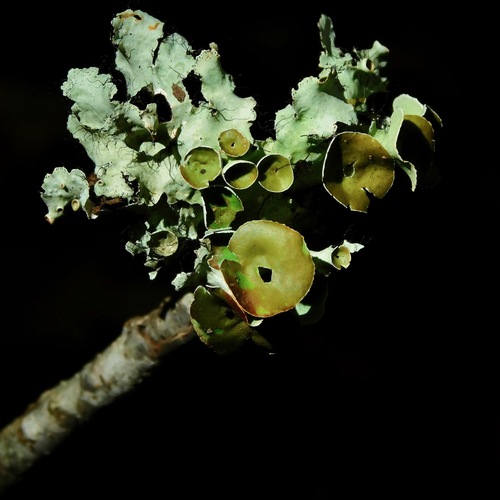
Parmotrema perforatum, commonly called the perforated ruffle lichen, is a foliose lichen species belonging to the family Parmeliaceae. It was first formally described as a new species in 1787 by Nikolaus Joseph von Jacquin. In 1860, Italian lichenologist Abramo Bartolommeo Massalongo transferred the species to the genus Parmotrema, giving it its current scientific name Parmotrema perforatum (Jacq.) A.Massal. Like all members of the genus Parmotrema, P. perforatum has a naked white zone on the underside of its thallus margin, and typically has long hair-like projections called cilia on the edges of its lobes. This lichen is characterized by its apothecia (the fungal sexual fruiting bodies), which often have a perforated hole in their center. The main lichen body (thallus) is gray, and does not have the yellow-green tones found in lichens that contain usnic acid. P. perforatum does not produce any asexual reproductive structures such as soredia or isidia, but consistently forms the centrally perforated sexual apothecia that give the species its name.