About Parinari curatellifolia Planch. ex Benth.
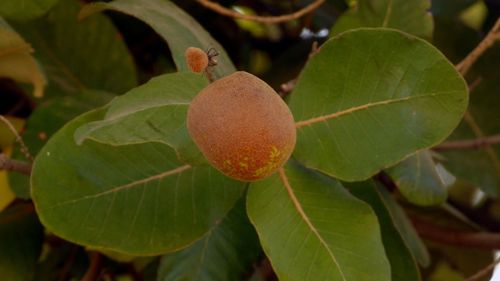
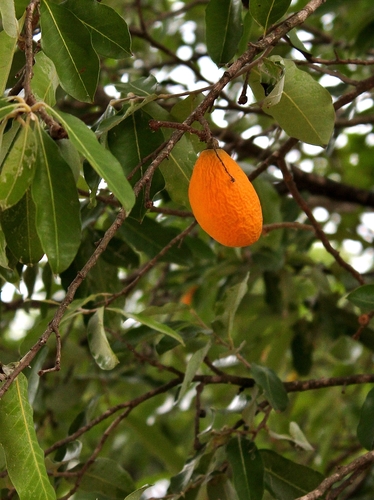
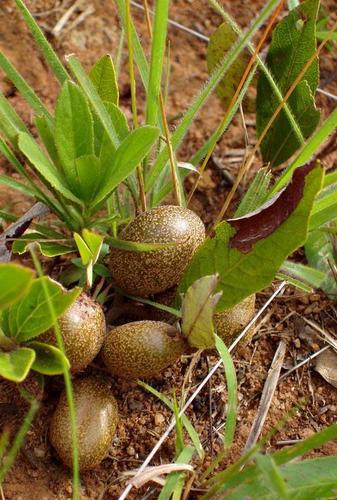
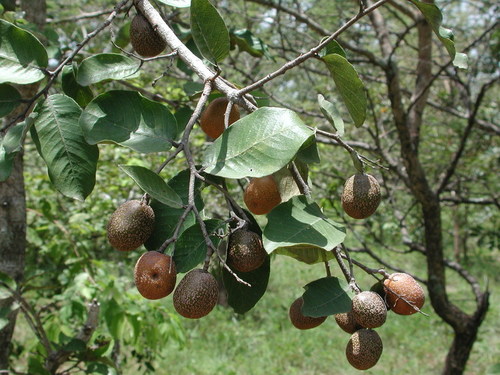
Parinari curatellifolia, called Tutu in Bambara and Ìdòfún in Yoruba, is an evergreen tropical tree native to Africa. It most often grows in various types of deciduous woodland, particularly in poorly drained inland areas at moderate altitudes. Among Tswana-speaking South Africans, it is known as mmupudu; it is also called mupundu or mobola plum, named after its fruit. The fruit is considered tasty, so the tree is typically left standing when woodland is cleared for cultivation. Its distribution spans the Guinea Savanna region of West Africa from Senegal to Chad, extends through seasonal woodland across the equator to Kenya and along the eastern side of the African continent, and continues through inland deciduous Miombo woodland to Zambia and Zimbabwe. Its southernmost distribution reaches just outside the tropics in South Africa, at approximately 25°S. This species is a traditional African food plant. Its little-known fruit has potential to improve nutrition, boost food security, foster rural development, and support sustainable landcare. The tree's wood is very hard and heavy because it contains silica crystals, making it difficult to work with. The wood is not durable, so it sees little use, though it produces good charcoal. The main value of the tree comes from its delicious fruit, which appears early in the dry season and can be harvested for three or more months. The fruit is eaten as a snack, and its kernel has a high oil content. Crushed fruit pulp is used as an ingredient in drinks; it ferments well, so it is often used to make alcoholic drinks. Some indigenous churches in Zimbabwe also use this tree for faith healing.