About Pareurythoe californica (Johnson, 1897)
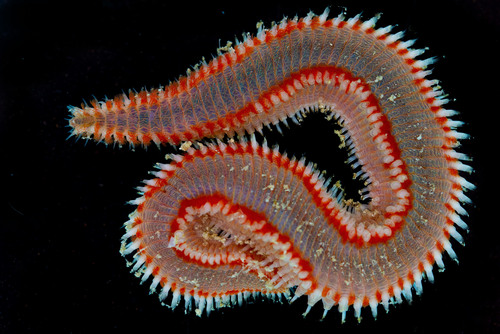
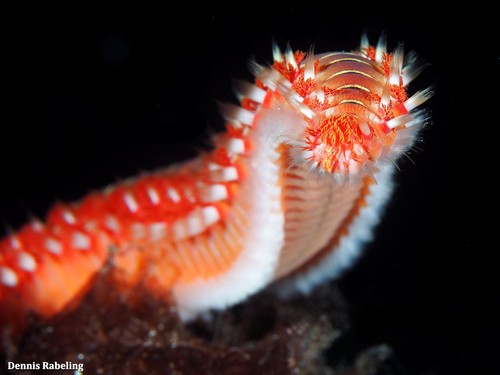
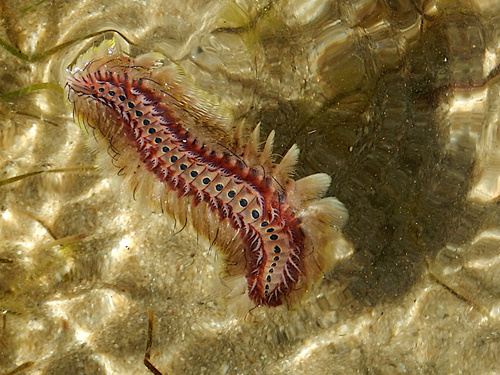
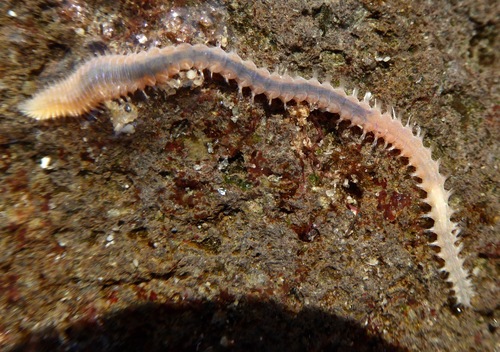
Pareurythoe californica has a long body that tapers gradually. It is flattened along its dorsal surface, and has a square cross-section. As a member of the family Amphinomidae, P. californica has distinctive chaetae, or bristles, that extend out sideways from its body. These bristles give the worm a hairy appearance, which inspired common names like bristle worm and sea mouse. The chaetae work as a defense mechanism to deter predators, and they can cause skin irritation in humans if touched. P. californica is a gonochoric species. Its eggs are produced in the nephridium. After fertilization, the eggs develop into planktonic larvae, which then metamorphose into a juvenile stage before maturing into adults. Ecologically, P. californica acts as both a predator and a scavenger. It feeds on a wide range of organic materials, including detritus, algae, and occasionally small invertebrates. It can also get nutrients by absorbing amino acids directly from seawater.