About Pardalotus quadragintus Gould, 1838
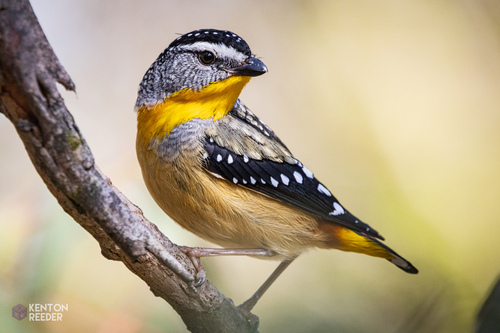
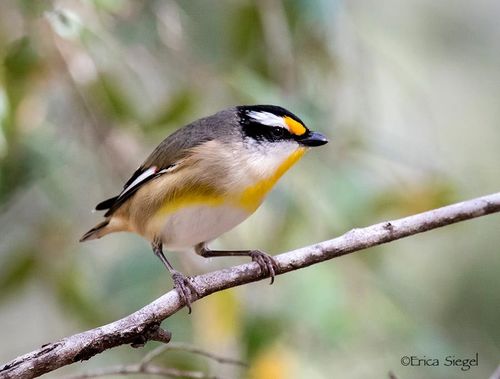
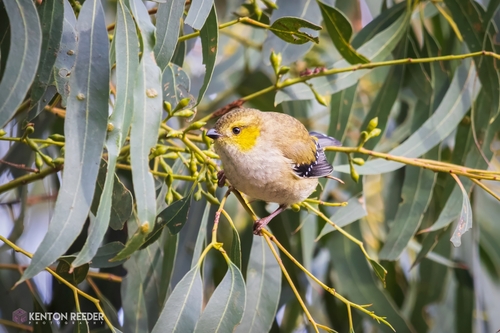
The forty-spotted pardalote, scientifically named Pardalotus quadragintus Gould, 1838, is a small, energetic passerine that measures around 9 to 10 cm (3.5 to 4 in) long. It is similar to the much more common spotted pardalote (Pardalotus punctatus), with which it shares its range, but differs in plumage: it has a dull greenish-brown back and head (compared to the more colourful plumage of the spotted pardalote), and lacks a brow line. Its rump is olive, its undertail is dull yellow, and its chest is white with light yellow tints. Its wings are black with white tips, which appear as many discrete dots (closer to 60 than 40) when the wings are folded. There is no seasonal variation in this species' plumage, and juveniles are slightly less colourful than adults. As of September 2021, the forty-spotted pardalote is reliably found only in a few isolated colonies in south-eastern Tasmania, most notably on Maria Island and Bruny Island. These two islands hold 99% of the species' total population. A small number of colonies are scattered across mainland Tasmania, and a few may still remain on Flinders Island. In 2009, there were 450 individual forty-spotted pardalotes on Bruny Island and 974 on Maria Island. A 2009 survey counted 1,486 birds at 54 of the 102 surveyed colonies. This compares to 3,840 individuals counted across 121 colonies in surveys from 1991 to 1997, representing a 47% loss of colonies. Forty-spotted pardalotes are found almost exclusively in dry eucalypt forests with a high concentration of Eucalyptus viminalis (white gum), where they forage almost exclusively. Eucalyptus viminalis provides around 80% of the diet for this species' nestlings.