About Parcoblatta pennsylvanica (De Geer, 1773)
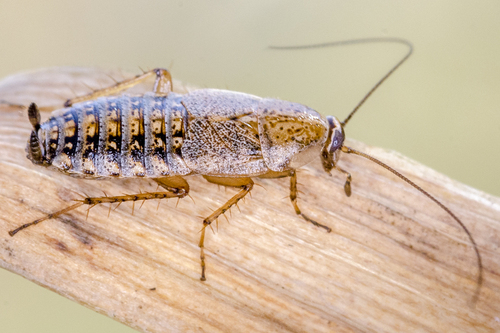
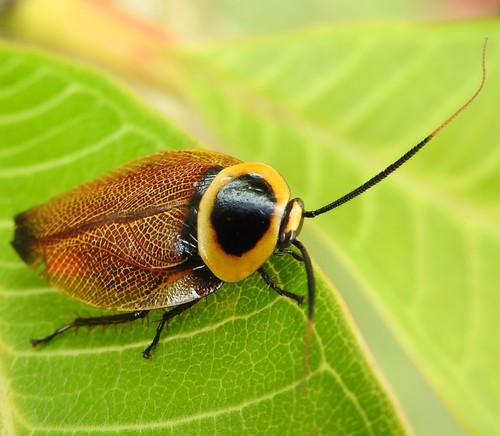
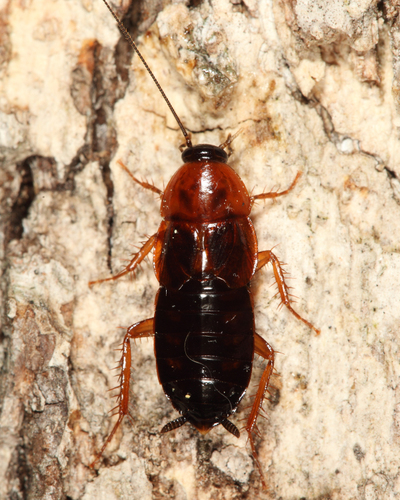
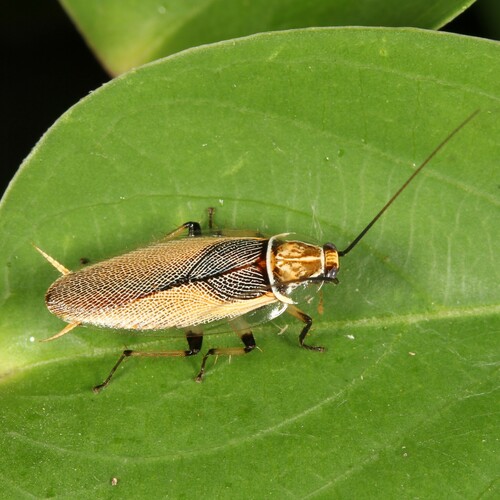
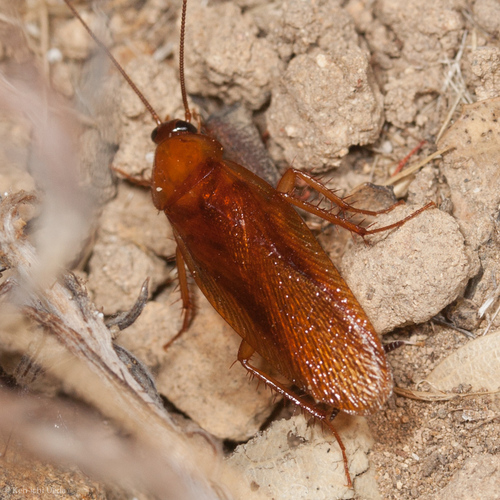
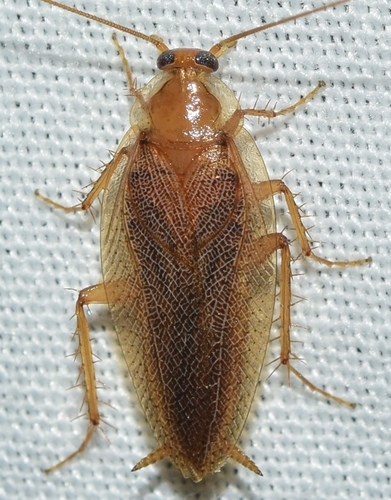
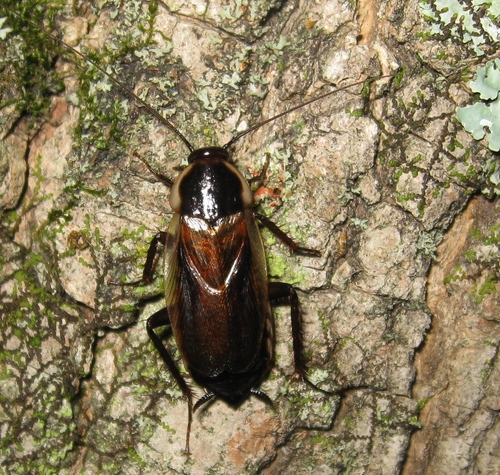
Males of Parcoblatta pennsylvanica (De Geer, 1773) are dark brown, with yellow margins along the sides of the thorax and the front half of the wings. Adult males are fully winged, with wings longer than their bodies, and can fly swiftly but cannot sustain flight for long periods. Females have conspicuous, functionless short wing pads (similar to those of female oriental cockroaches) that only cover one-third to two-thirds of the abdomen.
This species lives in open, wooded areas with sparse ground cover. Entomologist Fred A. Lawson notes it is often seen on oak and elm tree trunks and lower branches after dark. Both nymphs and adults are found outdoors under loose bark, in woodpiles, stumps, and hollow trees. They are often carried indoors on infested firewood, and wander through homes without gathering in any single room. They can be particularly problematic during their May to June mating season: males frequently travel in large groups, fly significant distances, are attracted to nighttime lights, and may enter buildings. Large populations can also be found in residential rain gutters. Both adult males and females have been found under shingles and inside garages. The species feeds primarily on decaying organic matter, and rarely breeds indoors. However, increasing use of firewood, the popularity of cedar shake shingles, and continued construction of homes in wooded areas are expected to increase issues with this species.
Parcoblatta pennsylvanica is distributed across southeastern Canada (the provinces of Ontario and Quebec) and eastern and central United States, where it has been recorded in Alabama, Delaware, the District of Columbia, Georgia, Illinois, Indiana, Iowa, Kansas, Kentucky, Louisiana, Maine, Maryland, Massachusetts, Michigan, Minnesota, Mississippi, Missouri, Nebraska, New Jersey, New York, North Carolina, Ohio, Oklahoma, Pennsylvania, South Dakota, Tennessee, Texas, Virginia, Wisconsin, and is thought to possibly occur in Florida. A 1966 article stated it was the only definitely native cockroach species in Ontario; a 1987 update added Parcoblatta virginica and Parcoblatta uhleriana as also indigenous to the province.
This cockroach has three developmental stages: egg, nymph, and adult. Females produce egg capsules during warm months, and deposit these capsules behind loose bark on dead trees, fallen logs, or stumps. The yellowish brown egg capsules are characteristically curved on both sides to form a half-moon shape, and are twice as long as they are wide; each capsule holds up to 32 eggs. At 80 °F, the egg stage lasts approximately 34 days. The nymphal stage typically lasts 10 to 12 months, though it can extend to up to 2 years. Adult females normally have a life span of several months.