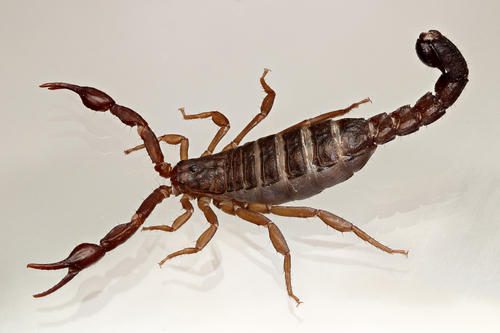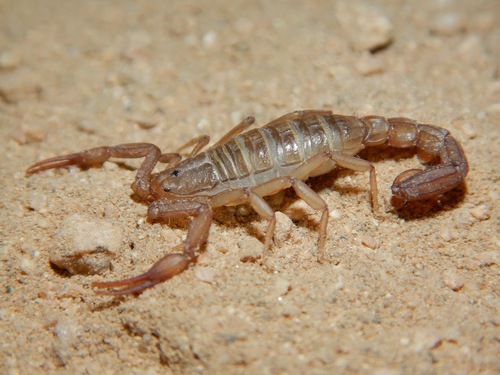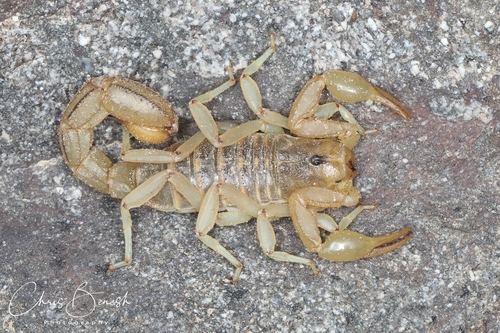
About Paravaejovis spinigerus (Wood, 1863)
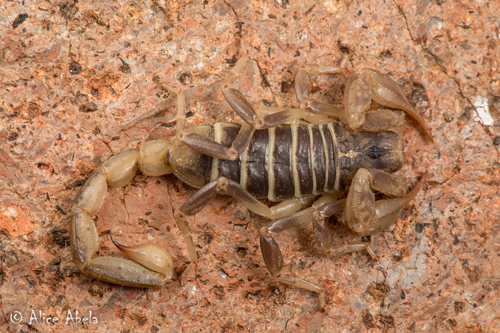
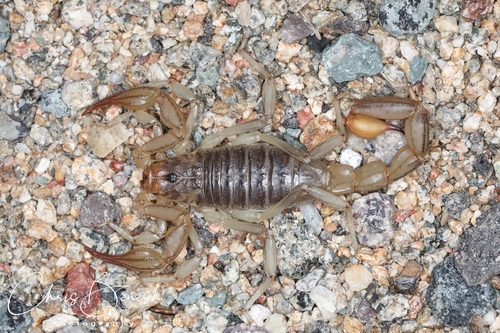
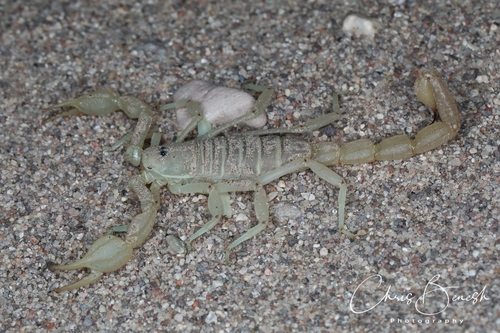
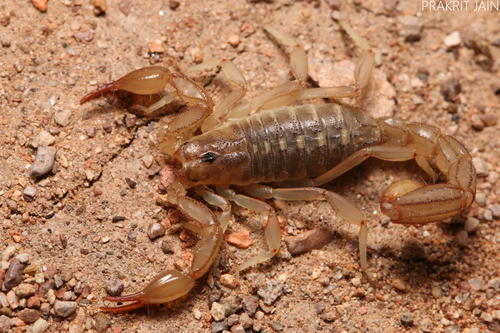
Paravaejovis spinigerus is a medium-sized scorpion. Large adult males and females reach nearly 60–70 mm in length and weigh approximately 9.5 grams. This species can be distinguished from the Arizona bark scorpion (Centruroides sculpturatus) by brownish-tan stripes that run along the keels (ridges) on the back of its tail; P. spinigerus also typically has a thicker tail than its hands and pedipalps, while both these structures are quite slender in Arizona bark scorpions. Some individuals have a base color of light yellow or golden brown, with variable dark markings along the tail. The specific epithet spinigerus comes from the spiniform granules located at the ends of the dorsal keels of the tail. Prior to 2013, Paravaejovis spinigerus was classified in the genus Hoffmannius.
Paravaejovis spinigerus is found in the Sonoran Desert of northwestern Mexico (in the states of Sonora, Baja California, and Baja California Sur) and the southwestern United States (in Arizona, New Mexico, and parts of California). It is commonly found under rocks and other surface objects, such as sleeping bags or shoes, or on sandy soils across a variety of habitats, ranging from desert floor to rocky hillsides. It actively seeks out the most humid areas it can find.
For mating, Paravaejovis spinigerus uses both smell and vibrations to locate potential mates. Once a pair finds each other, they perform a mating dance that can last anywhere from a few minutes to several hours. After dancing, the two scorpions go their separate ways. If the male continues dancing after the female is ready to stop, the female will attack and eat him.
Offspring develop inside the female scorpion and are born alive from her body. During the gestation period, which usually lasts 3–8 months, the female’s posture differs from that of other scorpions: her body becomes very inflexible and rigid. Near the time of birth, she lowers her front legs to allow offspring to emerge from her body. Offspring may emerge one at a time with a few minutes between each, or all emerge at once in a constant flow. The female maintains her stiff posture until all offspring have left her body. She cares for her young and carries them on her back until they complete their first molt. The number of offspring, called scorplings, can range from 1 to 100 per litter. Depending on the species and environmental factors, mother scorpions may either care for their offspring or eat them; the reason for this behavior is currently unknown.