About Parasteatoda tepidariorum (C.L.Koch, 1841)
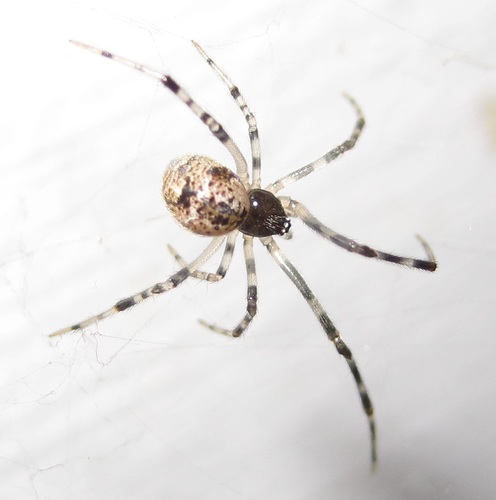
Parasteatoda tepidariorum, commonly called the common house spider or American house spider, is a spider species belonging to the genus Parasteatoda, and it has a cosmopolitan distribution. This species is synanthropic, meaning it lives in and around human dwellings. Its prey capture method is similar to that of other cobweb spiders: the spider responds to disturbances that travel along its web to entangle and then paralyze its prey, which is most often household insects and other invertebrates that are typically considered pests. P. tepidariorum is native to Asia, but it has been introduced to many regions worldwide, including Canada, the United States, South America, Europe, Morocco, Turkey, the Caucasus, Russia (from European Russia to the Russian Far East), Saint Helena, South Africa, the Seychelles, New Zealand, and Hawaii. In South Africa, the species has been collected from Gauteng, Eastern Cape, and Western Cape provinces, with recorded occurrences at notable sites including Mountain Zebra National Park and Robben Island. This species builds three-dimensional webs in dark corners, and it is frequently found around buildings. In South Africa, P. tepidariorum lives at altitudes ranging from 1246 to 1513 meters above sea level, and has been sampled in the Fynbos, Nama Karoo, and Savanna biomes. After reaching maturity, individuals of this species can live for more than one year. Females suspend their spherical egg sacs within their webs; these egg sacs have a tan, papery outer layer. Females produce clutches with an average of 149 eggs. Each egg is approximately 0.59 mm in diameter, and weighs around 0.12 mg. After hatching from the egg sac, spiderlings stay on their mother's web for several days. Common house spiders possess neurotoxic venom. However, their bites are less severe than bites from other theridiid spiders, and they are not known to be dangerous to humans.