About Parasemia plantaginis (Linnaeus, 1758)
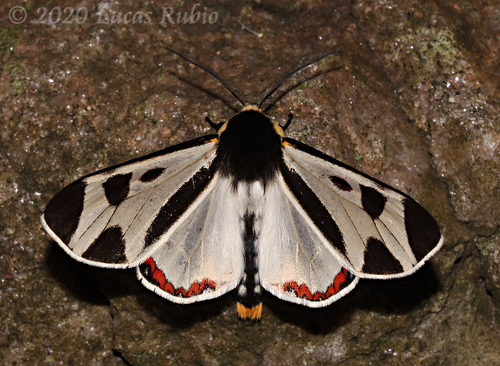
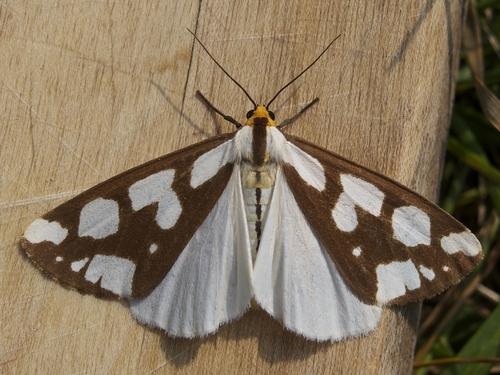
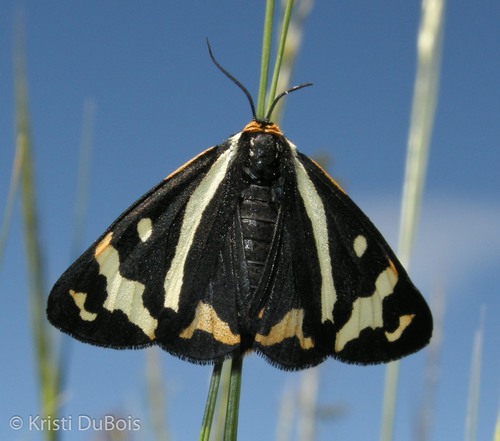
Parasemia plantaginis, the wood tiger moth, is an extraordinarily variable species. Its wingspan measures 32–38 mm. In both sexes, individuals normally have black forewings marked with moderately broad ivory yellow bands. For males, the hindwing is yellow or white, with an irregular, often interrupted marginal band and two or three submarginal spots; black streaks are present on the basal portion of the hindwing at the margin of the cell and before the anal margin. For females, the upper surface of the hindwing is red, with a heavily black base. Numerous named aberrations of this moth have been documented; these aberrations often occur predominantly among populations, and are found only exceptionally alongside typical specimens. A 1913 work by Seitz lists all major known aberrations. Populations of this moth exist across the globe, but it is most common in the northern latitudes of North America and Eurasia. In North America, its range extends from Alaska to Manitoba, and extends south through the Rocky Mountain region to southern New Mexico, with isolated populations present in Arizona and the Sierra Nevada mountains of California and Nevada. P. plantaginis prefers slightly moist habitats, such as meadows located near streams. Adult moths tend to stay close to lupine stands, which are meadows dominated by plants of the genus Lupinus. Over 250 annual and perennial species of the genus Lupinus are distributed across both montane and lowland habitats, with highly diverse regions of the genus in North and South America. Wood tiger moths are polyphagous, meaning their diet can vary significantly. Feeding on different host plants can lead to different immune function and overall life history traits for the moths. One documented example involves wood tiger moth caterpillars that feed on ribwort plantain. This plant contains high levels of iridoid glycosides, which help the caterpillars produce their own defensive chemicals. A 2015 study found that the iridoid glycosides in larvae that fed on plantain were sufficient to deter both ants and parasitoids.