About Paranthrene tabaniformis (Rottemburg & von, 1775)
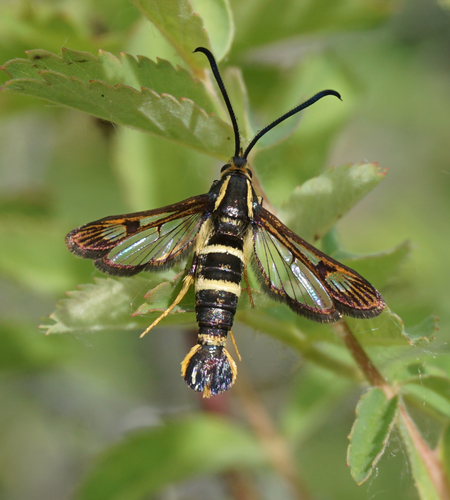
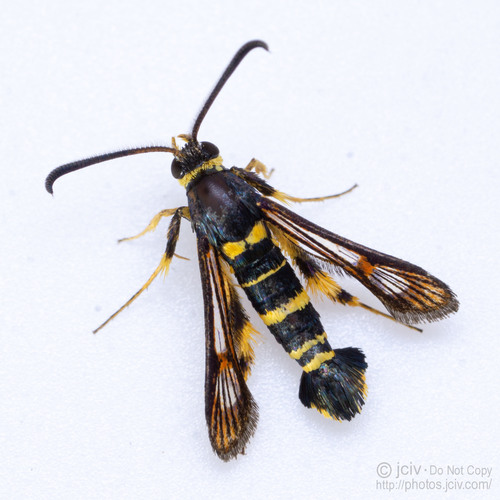
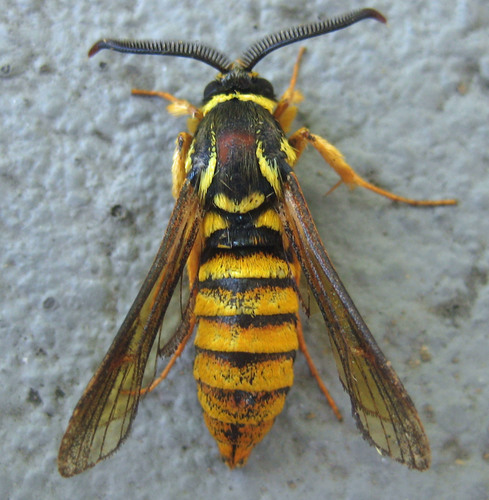
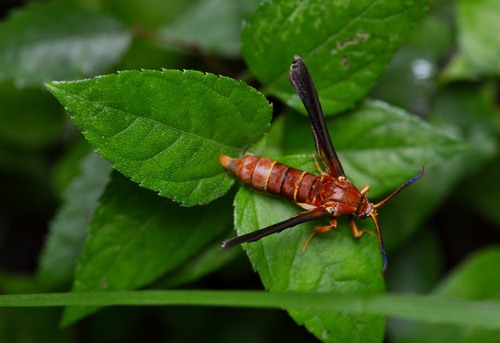
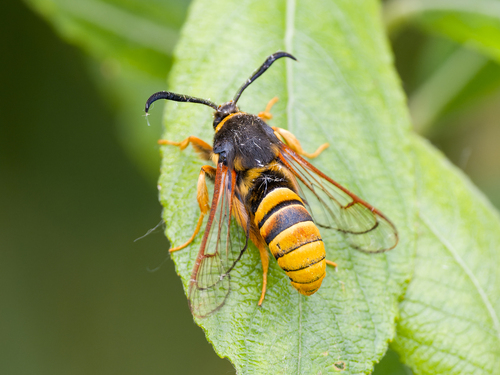
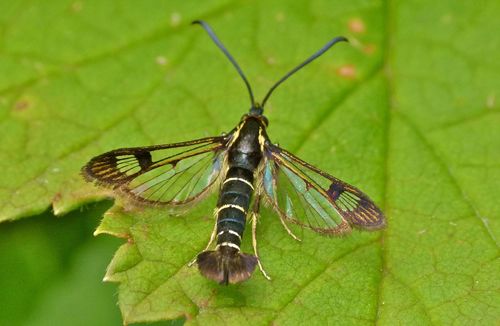
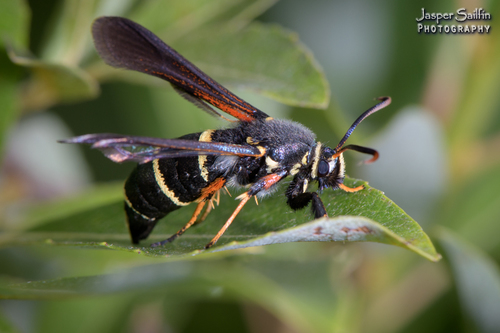
Paranthrene tabaniformis, commonly known as the dusky clearwing, is a moth species belonging to the family Sesiidae. This species is found in both the Palearctic and Nearctic realms. It has a wingspan of approximately 30 millimeters, and forewings that measure approximately 14 millimeters in length. Meyrick's description of the species notes that the head bears a white vertical bar in front of each eye, and a yellow ring on its posterior portion. The abdomen has yellow rings on segments 2, 4, 6, and sometimes on segment 7. The middle and posterior tibiae are orange with black bands. The forewings are a rather dark fuscous color, with an elongated, obscure hyaline patch toward the base, and a violet-blackish costal streak. The hindwings are hyaline, with dark fuscous veins and terminal margin. The adult moths fly from May to August, with the timing varying depending on location. The larvae of Paranthrene tabaniformis feed on poplar, willow, and sea-buckthorn. Larvae go through 6 to 7 developmental stages. When mature, larvae pupate inside chambers constructed within their larval galleries. Pupae can be found in the center of one-year-old poplar seedlings, or beneath the bark of stems and branches in older trees. Adults are strong, effective fliers, though little is currently known about the flight distances of adult female P. tabaniformis. P. tabaniformis resembles wasps, which is thought to potentially be an example of Batesian mimicry.