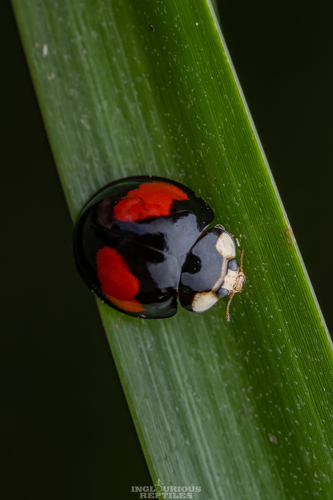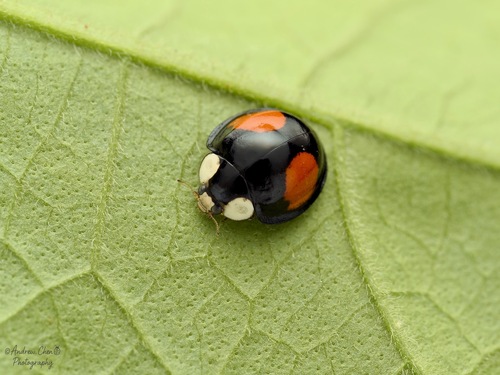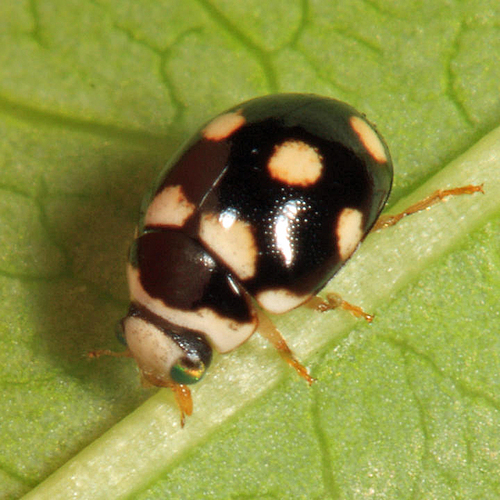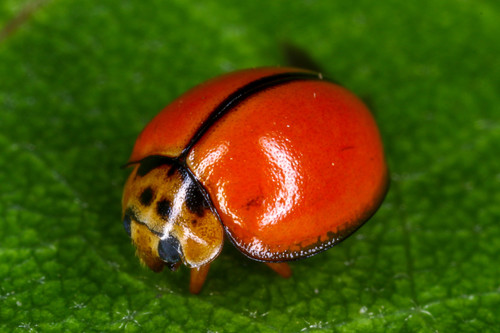
About Paranaemia vittigera (Mannerheim, 1843)
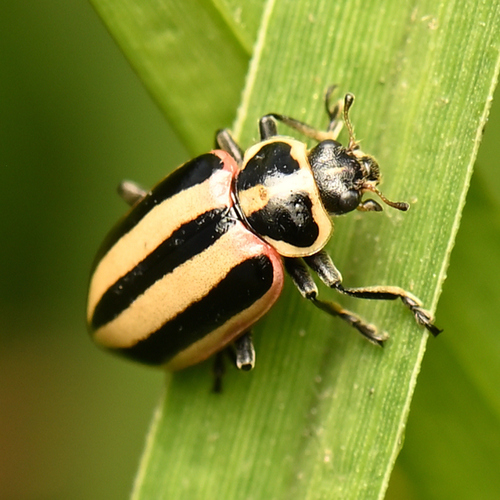
The scientific name of this species is Paranaemia vittigera (Mannerheim, 1843). Adult Paranaemia vittigera have elongate, dorsoventrally flattened bodies that measure roughly 4.5 to 6.6 millimeters in length. Their elytra range from yellow to pink, and feature three black longitudinal stripes; their heads are black. The pronotum matches the elytra in color, and bears two large triangular black spots. The distinct black stripes on the elytra can lead to confusion with specimens from the genera Hippodamia and Macronaemia, but Paranaemia vittigera can be distinguished from these genera by the margined base of its pronotum. This species occupies a wide range of habitats, including vegetation along riverbanks, streams and other wetlands, meadows, grasslands, and areas within agricultural field crops. Its recorded native range spans from Alberta to western Texas, extending west to British Columbia and California; it is also found in the Mexican states of Michoacán and Guanajuato. Outside of its native range in western North America, Paranaemia vittigera has been introduced to Hawai'i. Paranaemia vittigera is omnivorous, feeding on both plant material and soft-bodied insects such as aphids. In Mexican populations, Paranaemia vittigera individuals are less voracious and slower foragers than other co-occurring lady beetle species: this includes native species Hippodamia convergens and Cycloneda sanguinea, as well as the invasive species Harmonia axyridis. Adult Paranaemia vittigera are known to be parasitized by mermithid nematodes, and by mites of the genus Coccipolipus. This species also shows a strong tendency to form monospecific aggregations.