About Paramisgurnus dabryanus Dabry de Thiersant, 1872
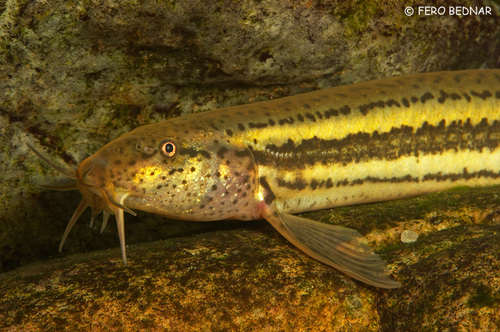
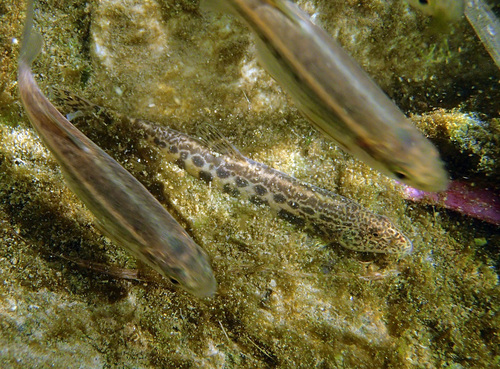
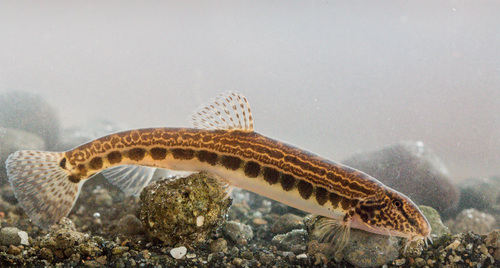
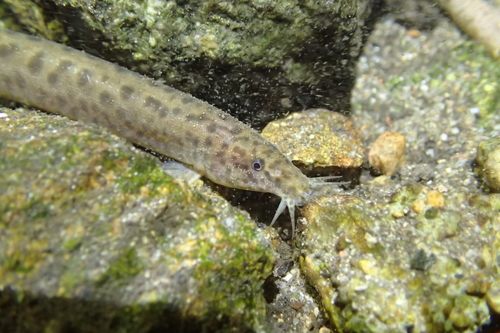
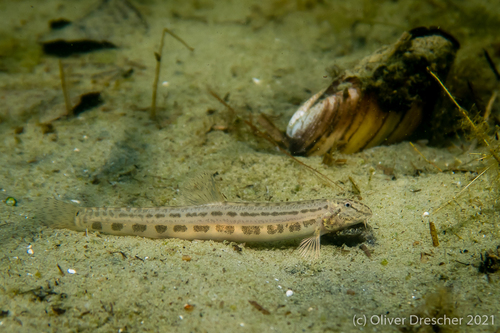
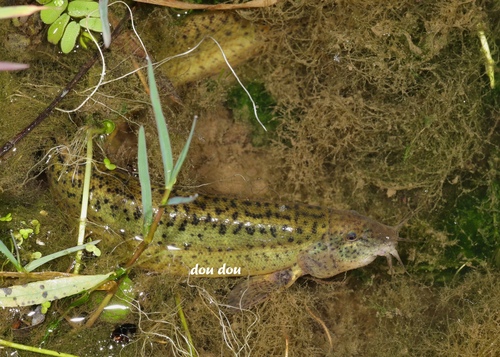
Misgurnus dabryanus, the large-scale loach, is a species of true loach native to Mainland China, Hainan, Taiwan, Korea, and the Russian Far East. It inhabits water bodies including the Yangtze Basin, Pearl River, Amur River, and many other drainages. Several invasive populations are known to exist in Barcelona, the San Joaquin River in California, and most of Japan. Large-scale loaches are typically brown, grey, or golden with mottled or speckled black dots. This patterning leads to the species sometimes being sold in pet stores under the name 'peppered loach', though it is more often misidentified as the pond loach. It is a small loach, reaching a total length between 7.3 to 15.4 cm (2.9 to 6.1 in). The diet and behavior of the large-scale loach are nearly identical to those of other true loaches. It is an omnivorous scavenging bottom feeder, with three pairs of barbels that it uses to detect food. The species can breathe atmospheric oxygen, which lets it survive in low-quality water or even on land for extended periods. Females develop eggs over the winter, and reproduction takes place in the spring. The male wraps around the female to fertilize her eggs, which are laid in covered locations such as aquatic vegetation, with no parental care provided after laying. The large-scale loach strongly resembles the pond loach (Misgurnus anguillicaudatus), another true loach species. Because of this similarity, some recorded invasive pond loach populations may actually be partially or entirely composed of large-scale loaches. Large-scale loaches can be distinguished from pond loaches by three key traits: they have higher adipose crests on the caudal peduncle, a thinner lamina circularis (an enlarged bony scale at the base of the first and second pectoral fin rays), and no dark spot near the caudal base in the upper corner of the tail fin. The large-scale loach also grows to a smaller maximum size than the pond loach, which can reach 30 cm (12 in) in total length. Both species can hybridize with one another, so correct identification can be difficult in mixed populations.