About Paralichthys lethostigma Jordan & Gilbert, 1884
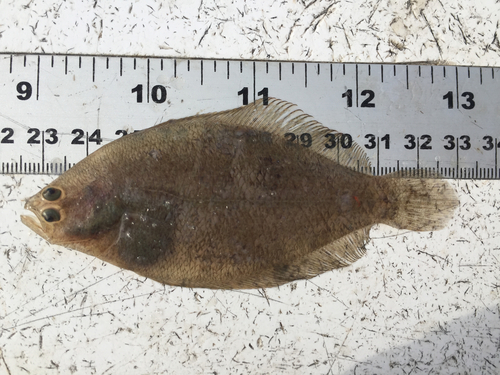
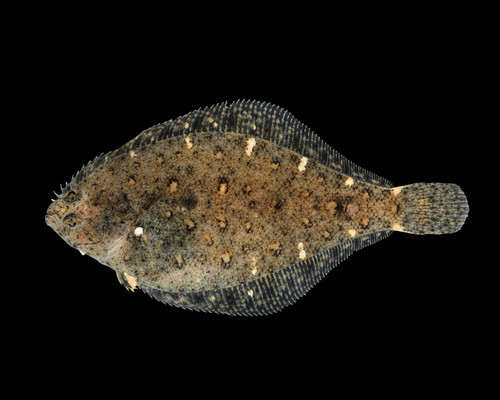
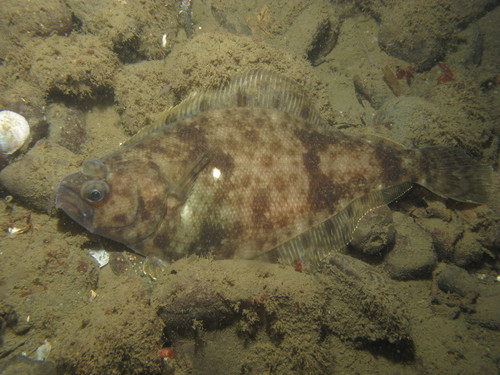
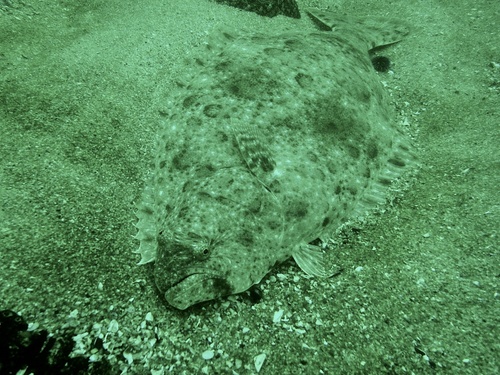
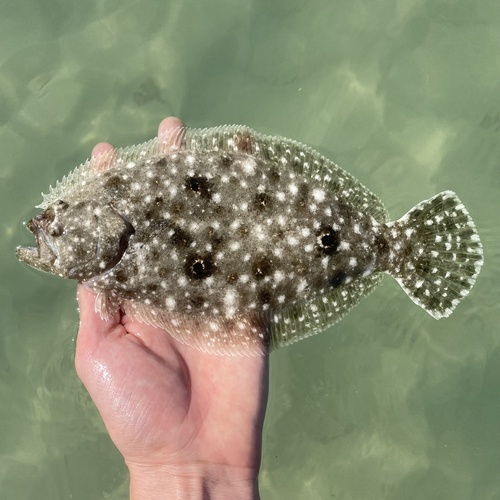
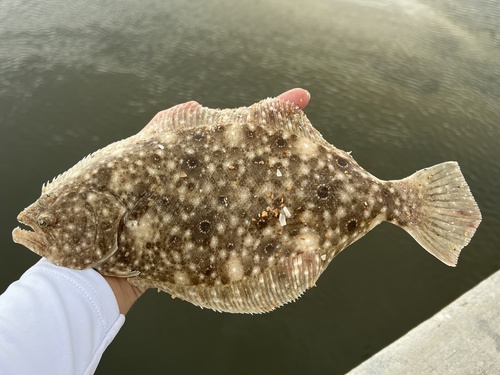
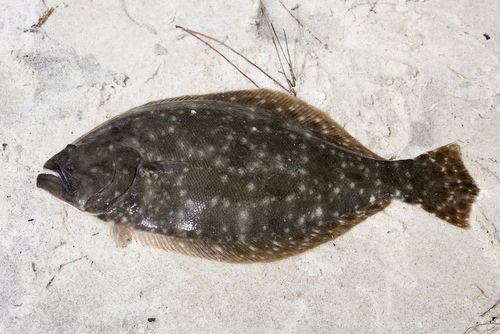
This species, scientifically named Paralichthys lethostigma, commonly called southern flounder, has a brown body covered with diffuse, unocellated spots and blotches. Adults typically reach 12–14 inches (30–36 cm) in length. Females grow faster and live longer than males: males live around 5 years, while females live 7–8 years. The annual growth cycle starts in spring and ends in fall as water cools. Southern flounder reach sexual maturity at around two years of age. Older, larger adults start their spawning migration earlier than smaller, younger individuals. Adults breed and spend the warm season in coastal embayments and nearshore shelf waters. Eggs develop there until they reach the late larval stage; currents then push larvae into estuaries, where juveniles settle into sediment to grow. Juveniles remain in estuaries until they reach sexual maturity, then leave to spawn. Most mature adults leave estuaries to spawn offshore during fall and winter. This species can tolerate low salinity, and both juvenile and adult individuals have even been found in freshwater habitats. Its natural distribution runs along the U.S. East Coast north to North Carolina, and along the northern Gulf of Mexico south to Tuxpan. It is not found in far southern Florida or the Florida Keys. One single specimen was reported in 2015 in the Mediterranean Sea off Israel, and this individual is likely an escapee from mariculture. The IUCN lists this species as Near Threatened. Threats include overfishing from both commercial and recreational fishing, mortality caused by the shrimp trawl industry, and human-caused habitat destruction.