About Paralichthys dentatus (Linnaeus, 1766)
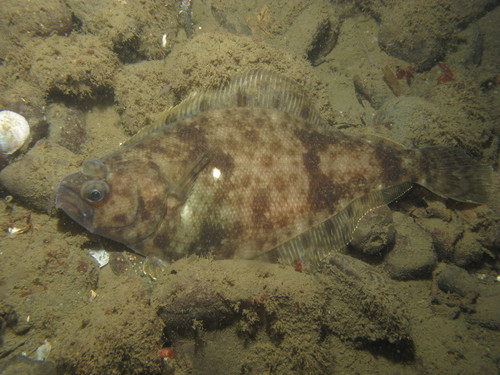
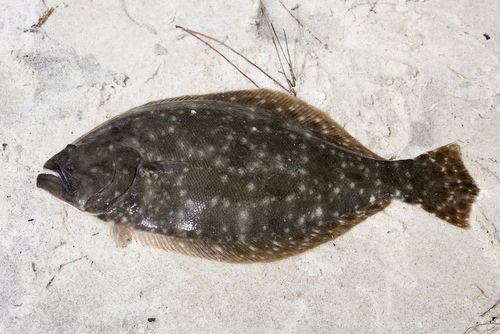
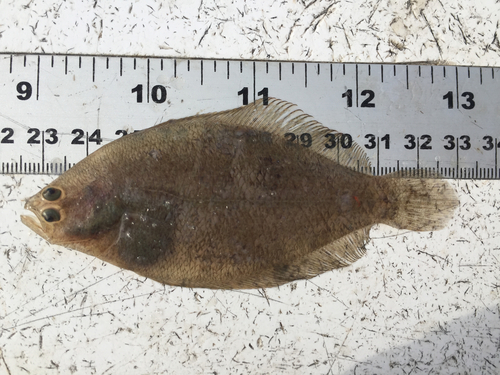
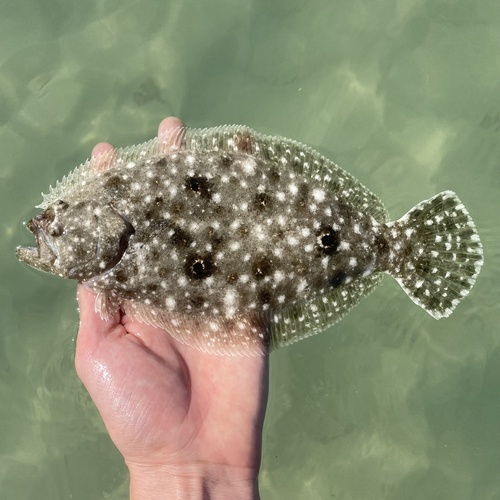
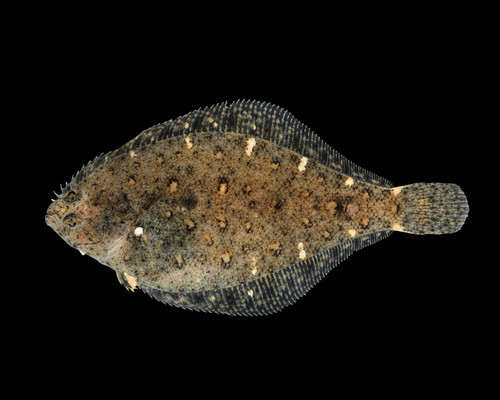
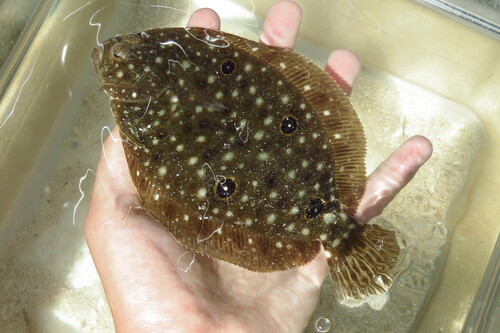
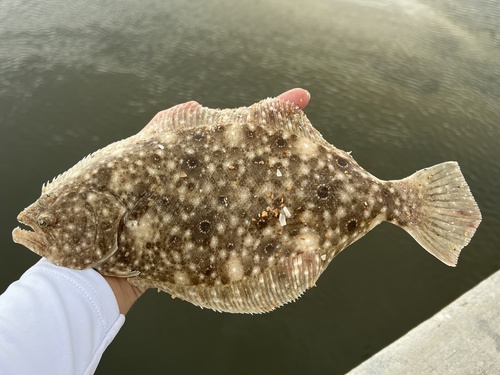
Paralichthys dentatus, also known as fluke or summer flounder, is a member of the large-tooth flounder family Paralichthyidae. Individuals of this species typically have 5 to 14 ocellated (eye-like) spots on their bodies. Like most left-eye flounders, they can change the color and pattern of their dark side to match the surrounding seabed, and are able to rapidly burrow into muddy or sandy bottoms. Both upper and lower jaws have quite sharp, well-developed teeth. On average, summer flounder reach sexual maturity at 2 years of age. Mature individuals usually weigh 1 to 3 pounds and measure 15 to 20 inches in length, though the species can grow as large as 26 pounds and live up to 20 years; females are the largest and oldest specimens found. The maximum observed age for female flounders is 17 years, while the maximum observed age for male flounders is 15 years. Adult summer flounder are highly predatory and mostly piscivorous. They often lie buried with only their head exposed to ambush prey, which includes sand lance, menhaden, Atlantic silverside, mummichog killifish, small bluefish, porgies, squid, shrimp, and crabs. Though they are primarily bottom fish, they are rapid swimmers over short distances and can be very aggressive. They feed actively at mid-depths, and will even chase prey to the surface. Summer flounder are found in the western Atlantic, ranging from Nova Scotia to Florida, and may occur possibly farther south. In this southern range, they can mix with and be confused for their close relative, the southern flounder (Paralichthys lethostigma), which lacks the eye-like spots of the summer flounder. Paralichthys dentatus is most common in coastal and shelf waters off the northeast United States, where it is commonly called Fluke. In spring, fluke leave their deep ocean winter habitat where they spawn, and move into inshore waters along beaches, inlets, bays, estuaries, canals, and creeks. They remain in these inshore areas until autumn, or even early winter. Commercial fishing for summer flounder typically uses trawling methods. Recreational angling for the species is usually done while drifting in a boat or casting from shore, with a wide variety of approaches: these include live or cut baits on a bottom rig, artificial lures, or weighted jigs tipped with strip baits. Summer flounder is considered an excellent food fish, with firm, mild-tasting white flesh.