About Paralichthys albigutta Jordan & Gilbert, 1882
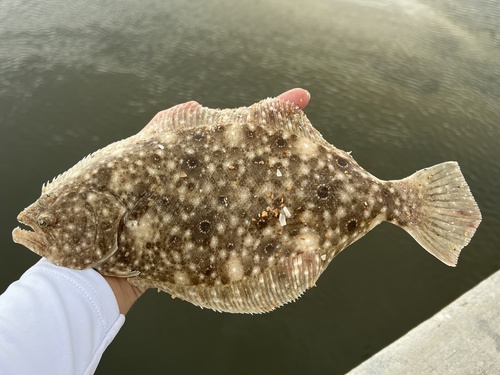
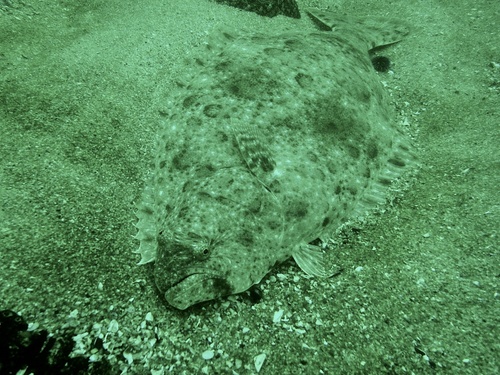
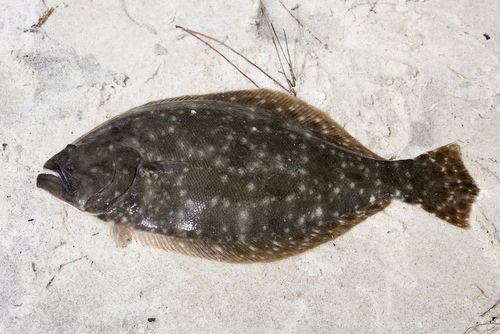
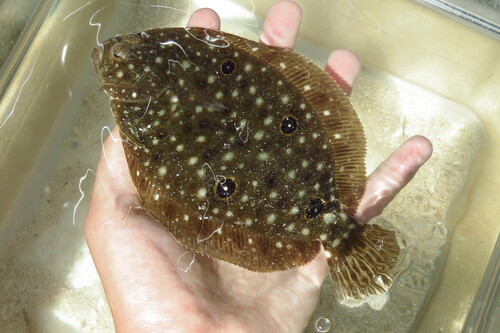
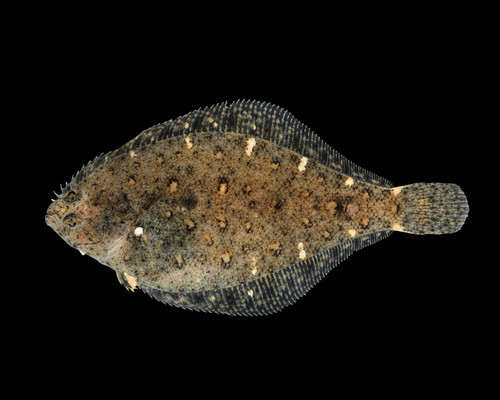
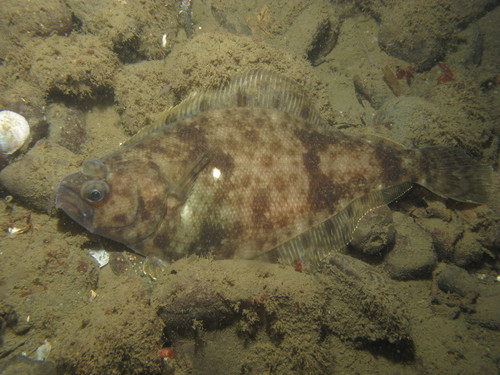
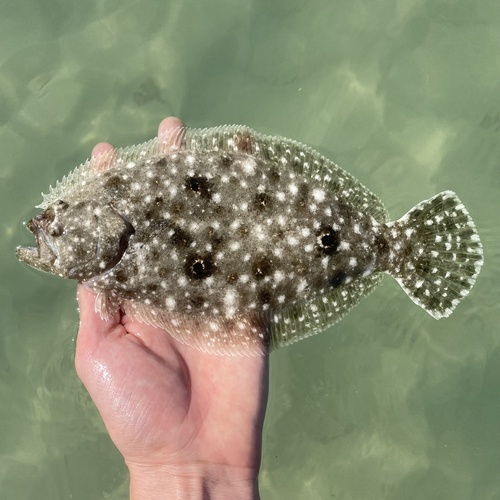
Paralichthys albigutta, commonly called the Gulf flounder, is a flatfish that swims on its side, with both eyes located on its left side that face upward while swimming. It has sharp teeth, and the side opposite its eye-bearing side is white. This species is widely distributed across the Gulf of Mexico and part of the western North Atlantic. The center of its abundance in the Gulf of Mexico lies along the northeastern Gulf coast, and it occurs in very low numbers west of the Mississippi River delta. Adults can be found in a variety of habitats and generally prefer hard, sandy bottoms. This is a demersal species that lives in shallow depths in estuaries and coastal environments. It is most commonly found on the continental shelf at depths of 18 to 92 meters, though individuals have been collected at depths up to around 130 meters. Other confirmed habitats include seagrass beds, coastal lagoons, flat hard-bottom, and limestone ledges. It naturally occurs in low abundance within seagrass beds, and is well represented in museum collections as 660 separate lots. Juveniles settle in and inhabit high salinity seagrass beds; they use vegetation as habitat, or are found adjacent to vegetation in estuaries. Older adults move offshore to live in deeper water. This species undergoes an ontogenetic shift in diet: small young individuals feed on amphipods and small crustaceans, while adult individuals feed primarily on fish. Adults spend most of the year in bays and estuaries, then migrate to deeper offshore waters to spawn during fall and winter, with spawning peaking between late October and mid-December. Specimens with ripe gonads have been collected at depths of 20 to 40 meters in the eastern Gulf of Mexico. Larvae migrate inshore between January and February. Females reach maturity between 1 and 2 years of age; all females are mature by 2 years, with age at maturity recorded as 1 year, and size at 50% maturity ranging from 35 to 38 cm total length. Males reach maturity when they reach 30 to 35 cm total length. Females grow faster and reach larger adult sizes than males. Reported longevity ranges from 7 to 10 years overall; males have a documented longevity of 8 to 11 years, while females have a documented longevity of 7 years. This species is exploited both commercially and recreationally. From 1970 to 2000, many fish species including P. albigutta experienced abundance declines in the Northern Gulf of Mexico. While a 2010 study by Fodrie et al. attributed at least part of this decline to rising global sea temperatures, multiple other factors may also contribute, including bycatch in trawl fisheries and increased recreational landings, per a 2015 personal communication from T. Munroe. Gill netting in North Carolina has been linked to flounder stock decline through the targeting of non-reproductive juveniles, but the population-level effects of gill net harvest on P. albigutta remain unknown.