About Paralabrax maculatofasciatus (Steindachner, 1868)
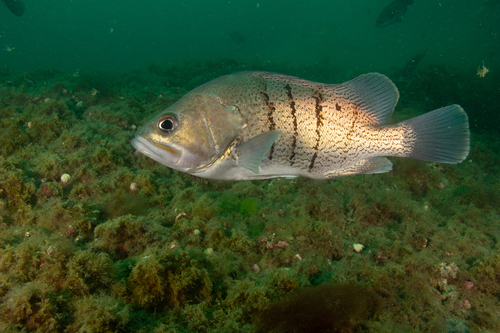
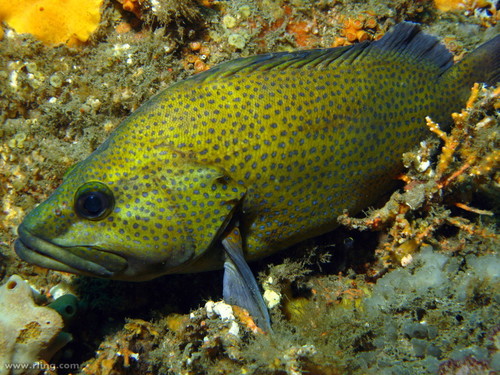
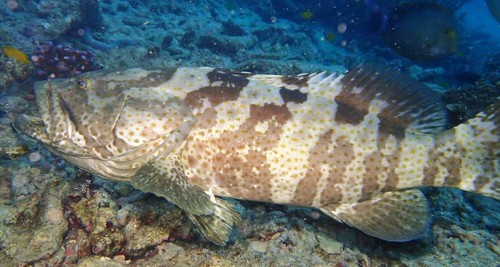
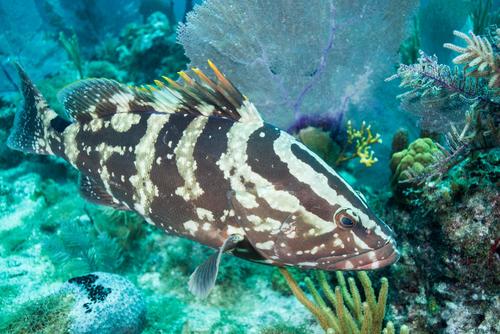
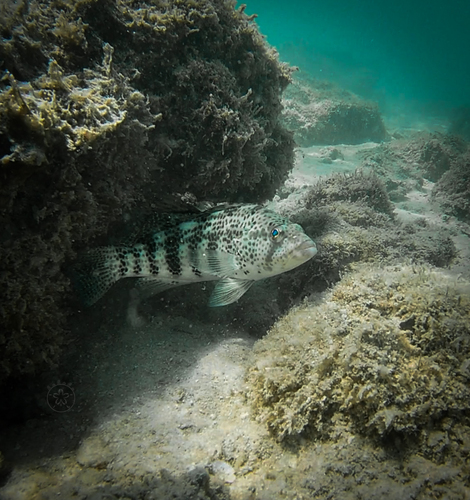
Paralabrax maculatofasciatus, commonly called the spotted sand bass, has an elongated, compressed body whose standard length is 3.0 to 3.3 times its body depth. It has a pointed head and a large mouth, with finely serrated edges along the preopercle. Its dorsal fin has 10 spines — the third of which is greatly elongated — and 13 to 14 soft rays, while the anal fin has 3 spines and 7 soft rays. The caudal fin is either rounded or concave. The body is overall tan in color, covered in many black, brown, and orange spots that blend together to form dark vertical bars along the posterior of the ventral surface. A dark line runs from the eye to the operculum, and 6 to 7 dark lines are present on the flanks. The anal fin, caudal fin, and soft portion of the dorsal fin are covered in a dense pattern of spots. The maximum published total length of this species is 67 centimetres (26 in), and its maximum published weight is 6.0 kilograms (13.2 lb).
The spotted sand bass occurs in the central eastern Pacific Ocean. Its range extends from southern California, United States, as far north as Monterey Bay, though it is rare north of Santa Monica Bay, south to the southern tip of Baja California, Mexico. Historically, this species was found as far south as Mazatlan.
This species typically inhabits shallow, warm-water areas including bays, harbours, and sheltered coastal environments. It prefers habitats that offer some form of structure, such as areas with eelgrass, surfgrass, or rocks. The spotted sand bass is a carnivorous species that feeds mainly on crustaceans, bivalves, and small fishes. Its spawning season runs from May to September. Females release their eggs into the water column, and the resulting pelagic larvae live for approximately one month before settling. This species is a protogynous hermaphrodite. It is a rather secretive fish that hunts during the day.