About Paragomphus sabicus Pinhey, 1950
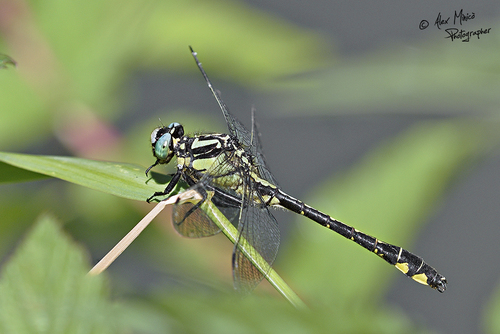
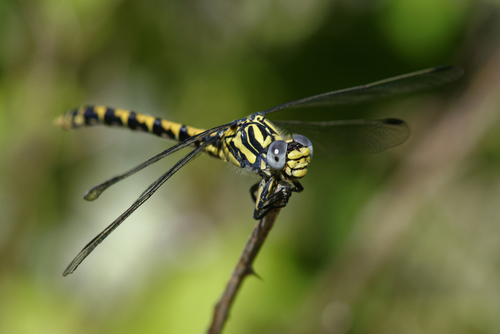
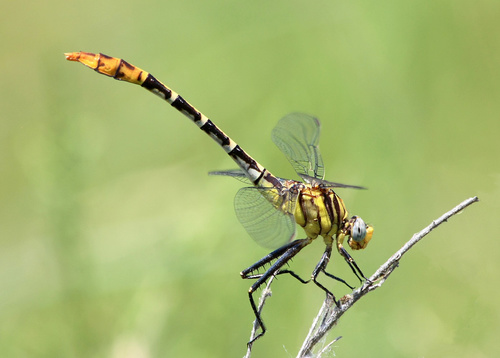
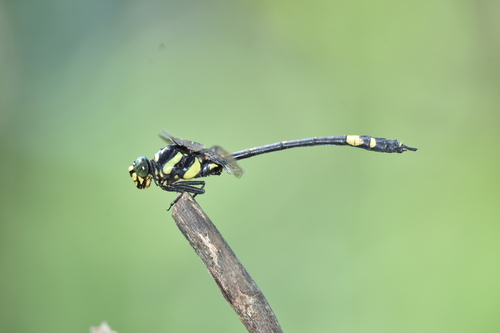
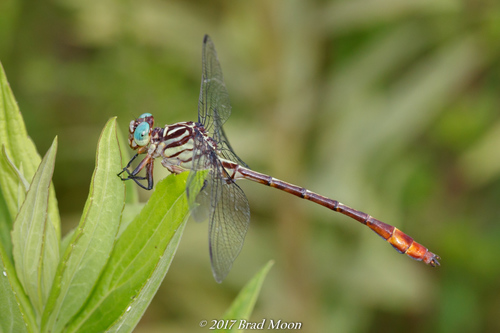
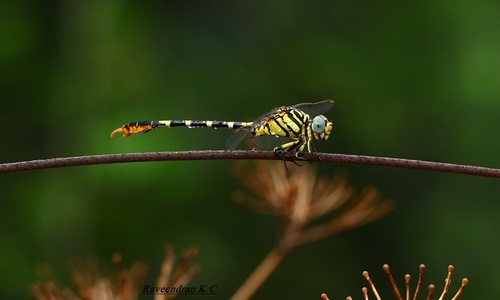
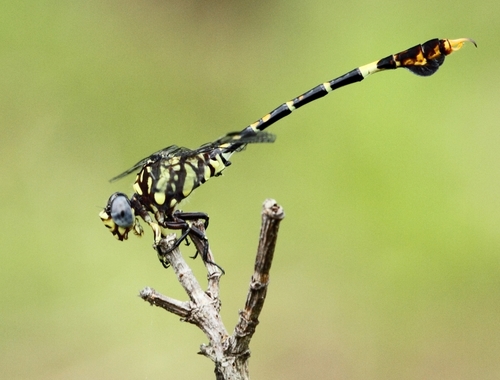
Paragomphus sabicus, commonly known as the Sabi hooktail, is a species of dragonfly that belongs to the family Gomphidae. This species was first formally described by Pinhey in 1950. It is distributed across Botswana, Kenya, Malawi, Mozambique, Namibia, South Africa, Tanzania, Zambia, and Zimbabwe. Its natural habitats include subtropical or tropical moist lowland forests, subtropical or tropical dry shrubland, subtropical or tropical moist shrubland, and rivers. The species name is derived from the Sabi Valley in present-day Zimbabwe, where the original holotype specimens were collected in the late 1940s. Paragomphus sabicus resembles the closely related rock hooktail, Paragomphus cognatus, but can be distinguished by physical features: it has a bright yellow face, rust-colored markings on abdominal segments 8 to 9, and orange markings on abdominal segment 10. For secondary sexual characteristics, females have black foliations, while males have larger foliations marked with rust-colored lines.