About Paraflabellina funeka (Gosliner & R.J.Griffiths, 1981)
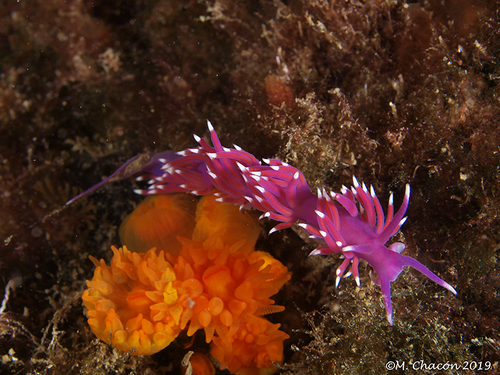
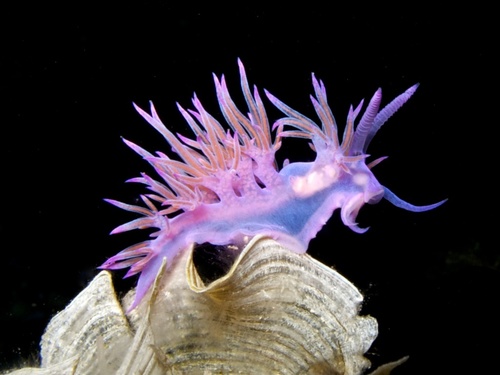
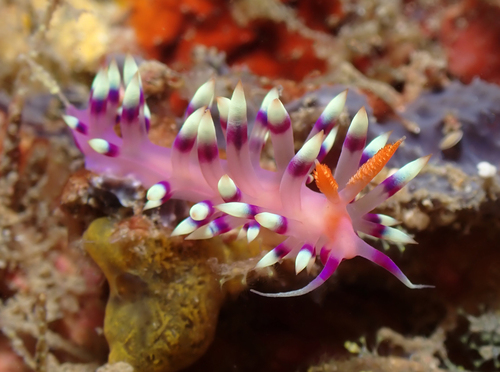
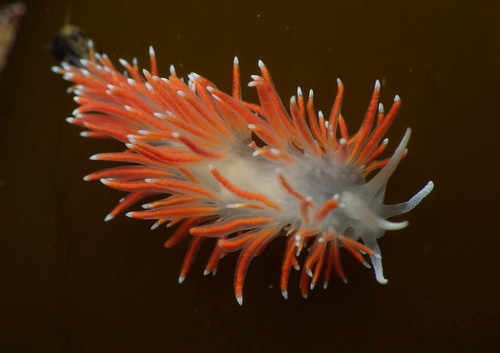
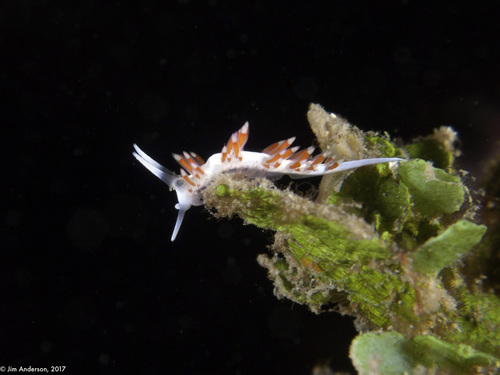
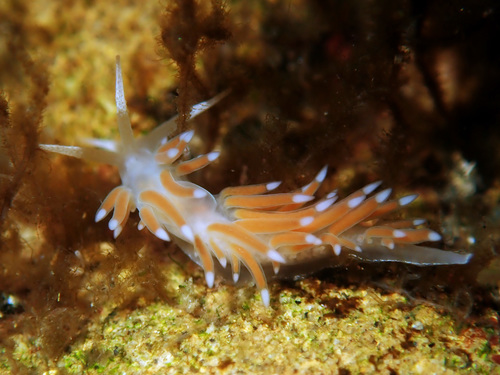
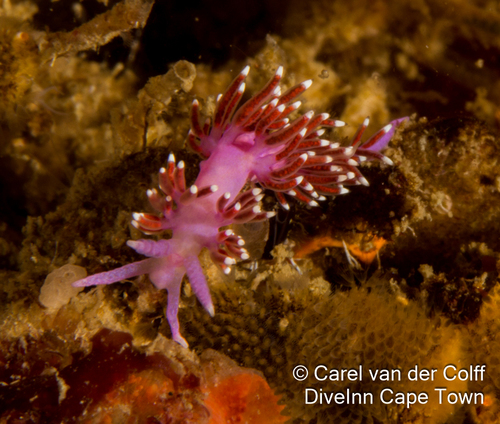
Commonly called the purple lady, this species of aeolid nudibranch is Paraflabellina funeka. Most individuals have a slender purple body, though a white-bodied form also exists. It has red cerata with white tips, and usually grows no larger than 45 mm in length. Its rhinophores are purple, annulate, and have pale tips. It also has a pair of pale-tipped oral tentacles that are shorter than its rhinophores. The red cerata and annulate rhinophores remain distinctive even in the white-bodied form. This species is endemic to the South African coast, and is only found between Cape Point and Port Elizabeth, in water between 5 and 30 meters deep. It feeds specifically on hydroids from the genus Eudendrium. Like all other aeolid nudibranchs, the purple lady’s cerata help with respiration, and also hold extensions of its digestive system. When this nudibranch eats a hydroid, it passes the hydroid’s nematocysts unharmed through its digestive tract to the tips of its cerata. These nematocysts mature at this location, and the nudibranch then uses them for its own defense. It is likely that the purple lady’s bright coloration acts as a warning to predators that it is toxic. Contrary to what its common name may imply, purple ladies are hermaphrodites. This species produces a white, highly convoluted egg mass.