About Paraechinus aethiopicus (Ehrenberg, 1832)
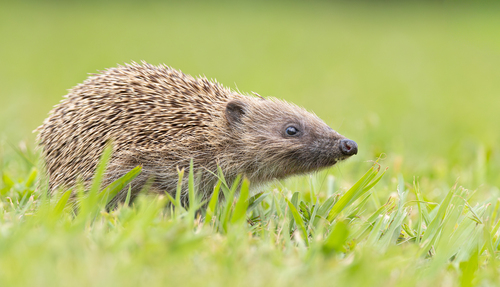
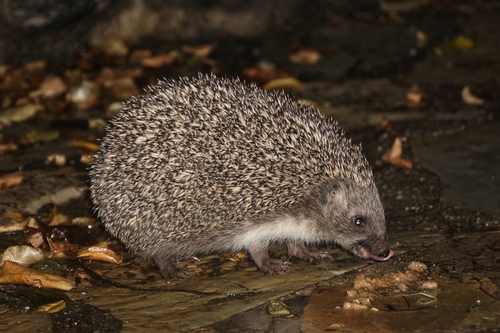
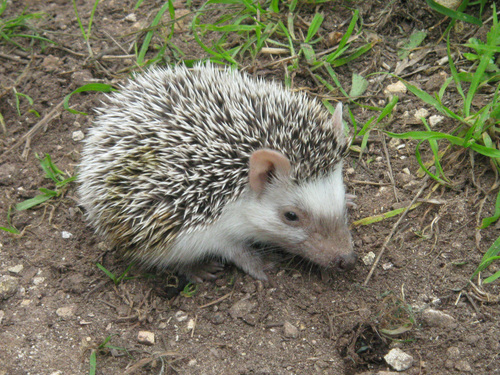
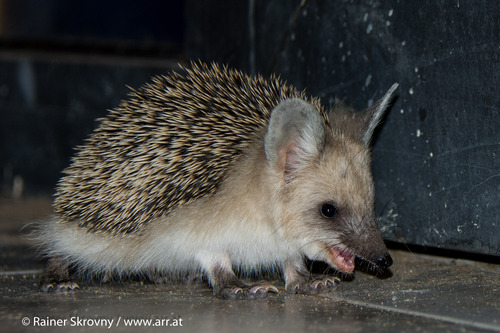
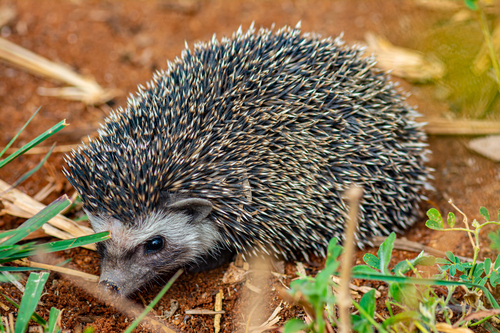
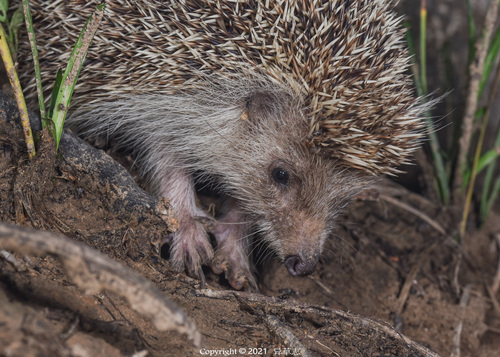
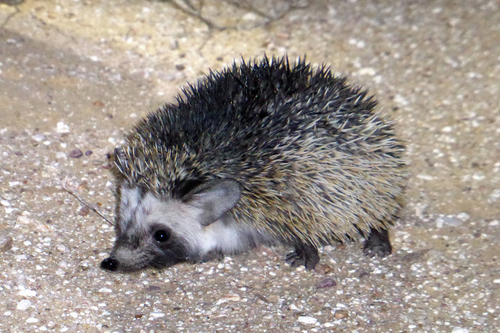
The desert hedgehog (Paraechinus aethiopicus) is one of the smallest species of hedgehog. Adults measure 140 to 280 mm (5.5 to 11 inches) in length, and weigh between 280 and 510 g (10 to 18 ounces). The spines covering its back often feature banded coloration similar to that of the four-toed hedgehog, and the species is most easily distinguished by its characteristic dark muzzle. When threatened, desert hedgehogs tighten their muscles to pull the outer skin around their entire body, causing their quills to protrude outward in all directions. While it was originally theorized that spines primarily function for defense, research indicates this role is likely incidental. Unlike porcupine quills, desert hedgehog spines do not break when disturbed, but instead bend. They are also capable of absorbing mechanical energy, which protects the hedgehog from damage during falls. This species is found across Bahrain, Algeria, Chad, Djibouti, Egypt, Eritrea, Iran, Iraq, Israel, Jordan, Kuwait, Libya, Mali, Mauritania, Morocco, Niger, Oman, Saudi Arabia, Somalia, Sudan, Syria, Tunisia, the United Arab Emirates, and Yemen; it may also occur in Ethiopia. Breeding for the desert hedgehog starts in March, once hibernation finishes. After a gestation period of 30 to 40 days, females give birth to up to six young in a burrow or concealed nest. Newborns are deaf and blind, and their quills develop just under the skin to avoid injuring the mother during birth. The quills emerge within a few hours of birth, and the young open their eyes around 21 days after birth. Young desert hedgehogs are weaned at approximately 40 days old. Researchers believe desert hedgehogs produce only one litter per year.