About Papilloculiceps longiceps (Cuvier, 1829)
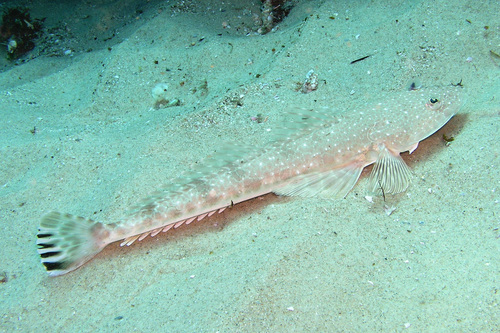
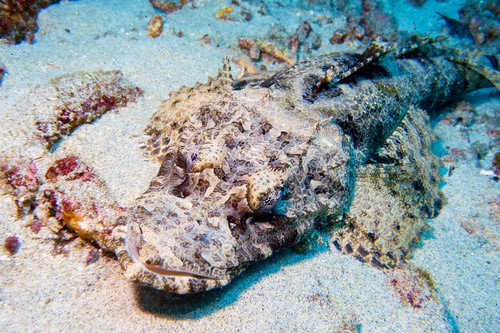
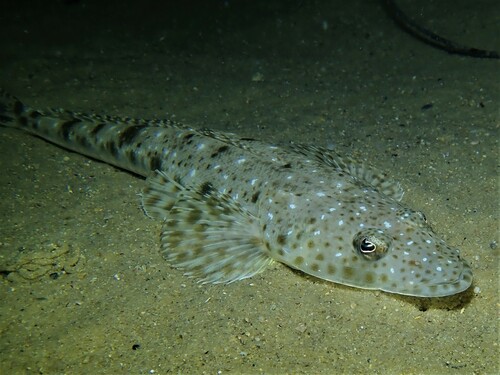
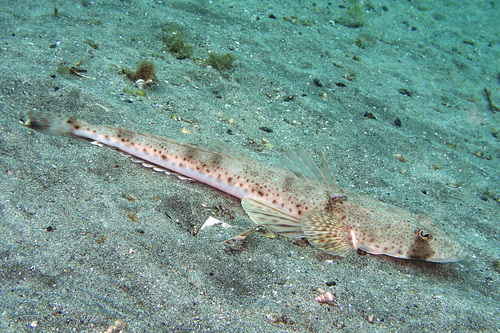
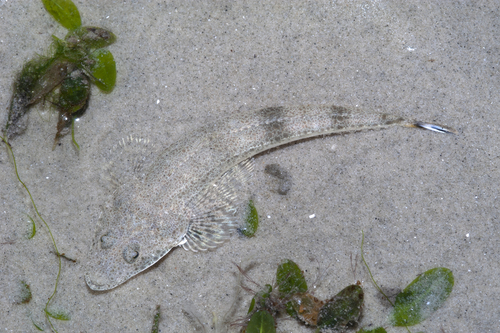
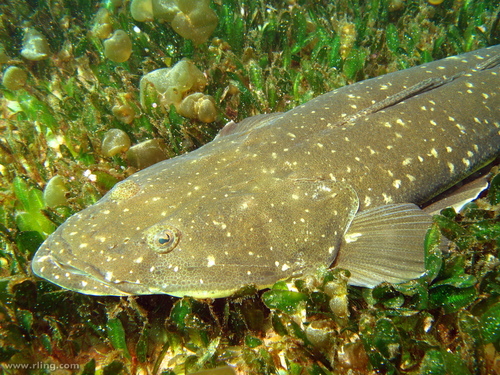
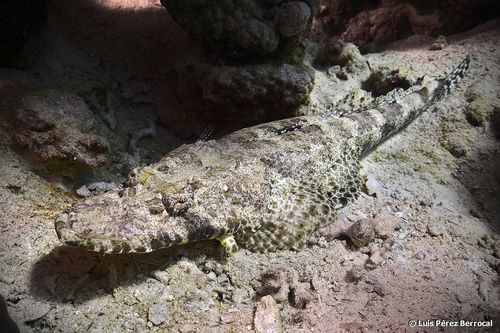
Papilloculiceps longiceps, commonly called the tentacled flathead, has an elongated body with a flattened head that bears 5 prominent nuchal spines. The ridges on its preoperculum and operculum are smaller on the dorsal side than on the ventral side. A spine is located on the rear of the suborbital ridge, which ends in a small spine, and the preoperculum itself also has small spines. The supraorbital region is smooth with a tiny terminal spine; there is one preocular spine and two parietal spines. The upper surfaces of the eyes have noticeable papillae. Its first dorsal fin contains 9 spines, while both the second dorsal fin and the anal fin each have 11 soft rays. The maximum published total length of this species is 70 cm (28 inches), with 50 cm (20 inches) being a more typical size. The dorsal side of the body is mottled brownish or greenish, and the ventral side is whitish. The caudal fin has 3 to 4 dark bands, and the other fins are marked with large, dark blotches. This species is distributed in the western Indian Ocean, ranging from northern KwaZulu-Natal and Madagascar to the northern Red Sea. It is also found in the Mediterranean Sea, where it was first reported off the coast of Israel in 1986, and it most likely migrated into the Mediterranean through the Suez Canal. The tentacled flathead lives near coral reefs, on sand or rubble substrates, at depths between 1 and 15 meters (3 feet 3 inches and 49 feet 3 inches).