About Papillifera papillaris (O.F.Müller, 1774)
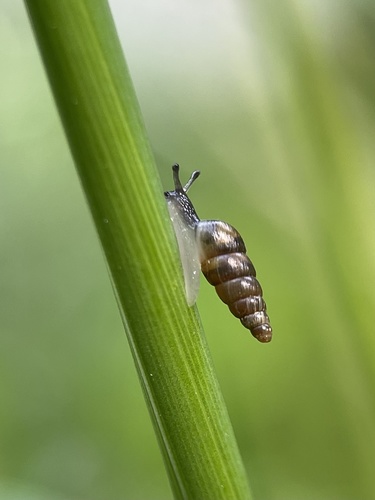
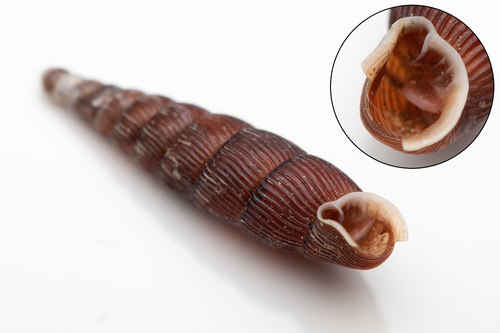
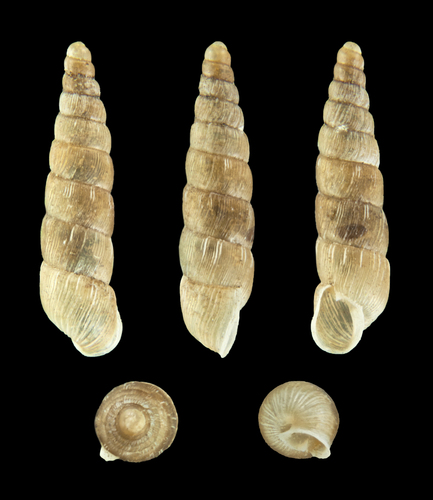
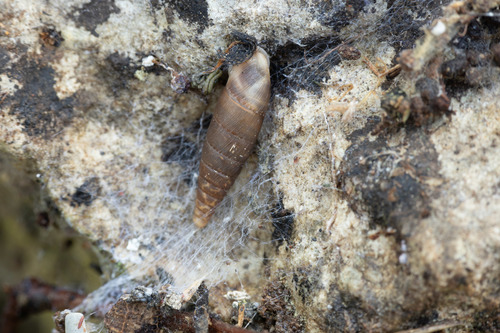
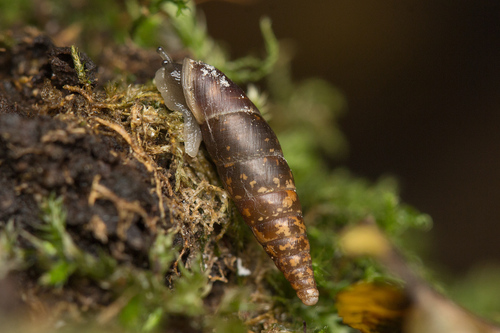
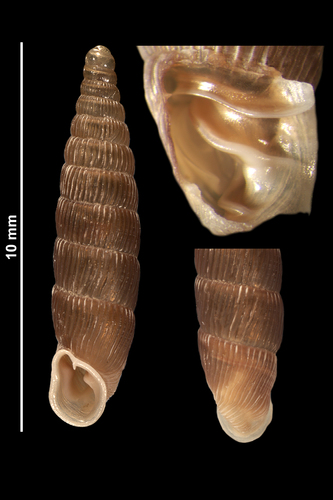
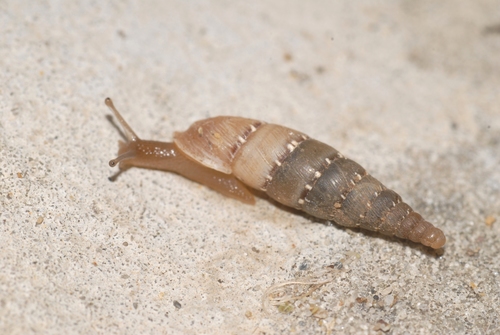
Papillifera papillaris, first described by O.F.Müller in 1774, has a sinistrally coiled, extremely high-spired shell with 10–11 whorls. The shell measures 3.2–3.8 mm in width and 12–15 mm in height. The genus name Papillifera translates to "bearing papules" or "having pimples", a name that refers to the prominent small white shell structures that sit along the shell's suture line. Throughout most of its range, this species lives in rocky limestone habitats, and it is often found close to the seashore. Its native range lies within the Mediterranean, and it was originally native only to Corsica and Italy, including mainland Italy, Sardinia, and Sicily. This species has been introduced and become established across the entire Mediterranean region. Confirmed established introduced locations include Malta, Spain (Catalonia and the Balearic Islands), Gibraltar, the south coast of France, southern England, Croatia (Susak), Montenegro, Albania, Greece, Turkey (present here since 330 AD or earlier), Libya, Tunisia, Algeria, and Morocco. At least some of these introductions appear to be accidental, occurring via imported stonework. In some cases, these introductions may date back to the Roman occupation of the areas where the species is now established. The introduction process is ongoing: in 2009–2010, Papillifera papillaris imported along with Italian limestone blocks were found to have survived overwintering in a stonemason's yard near Stuttgart, Germany.