About Papilio ulysses Linnaeus, 1758
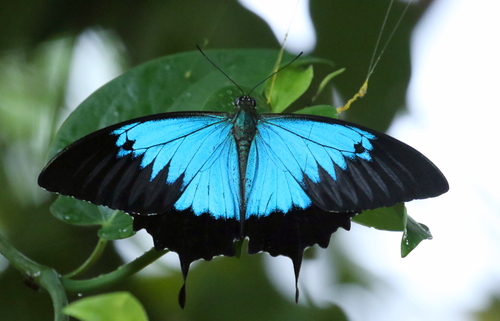
The Ulysses butterfly, scientifically named Papilio ulysses Linnaeus, 1758, typically has a wingspan of around 14 cm (5.5 inches). Size varies by subspecies, with the western subspecies being the largest. The upperside of its wings is an iridescent electric blue, while the underside is a more muted combination of black and brown. This coloration comes from the microscopic structure of the wing scales, an effect known as structural colouration. Females differ from males: females have small blue crescents on the upper rear sections of their hindwings, while these areas are solid black in males. When perched, the butterfly’s bright blue wing color is hidden by the plainer brown underside of its wings, which helps it blend into its surroundings. When flying, its bright blue flashes can be seen from hundreds of meters away. Males of this species are strongly attracted to the color blue, and will sometimes mistake other blue objects for females. Karl Jordan provided a full account of Papilio ulysses forms on pages 83 to 85 in Seitz's work.