About Papilio thaiwanus Rothschild, 1898
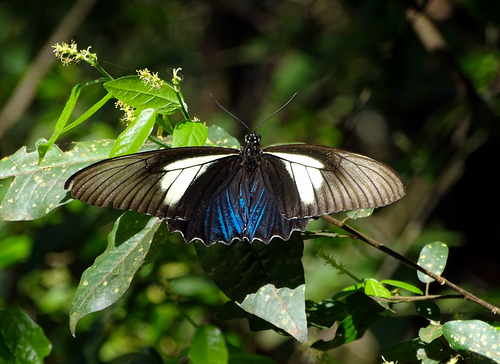
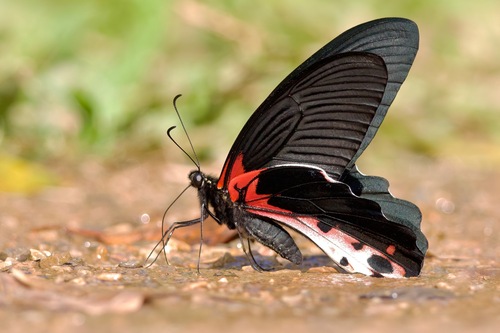
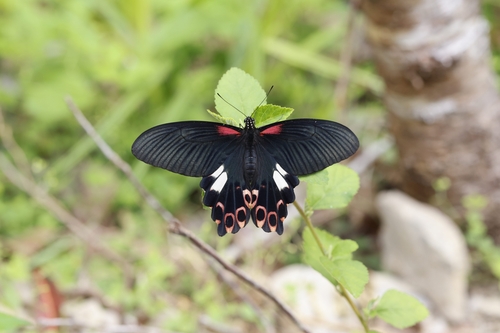
Papilio thaiwanus, commonly called the Formosan swallowtail, is a member of the swallowtail butterfly family that is endemic to Taiwan. This taxon was previously mistakenly described as a form of Papilio protenor, with an included synonym: Papilio thaiwanus Rothschild (= annaeus Fruhst.). Differences between this species and related taxa are far more noticeable in females than in males. In males, the underside of the forewing is almost entirely black, and its grey stripes are reduced, a trait common to many butterflies originating from Formosa. The red area on the underside of the male hindwing is much larger than that found in other related forms, and it bears large red submarginal spots that extend all the way to the subcostal vein. Females of this species lack tails; their forewings are paler than those of Papilio rhetenor. On the female hindwing, a macular band runs from the subcostal vein to the anal margin: the anterior patches of this band are large and white, while the posterior patches are smaller and reddish. The female posterior submarginal spots are fused into rings with the marginal spots. The underside of female wings matches the pattern of males, with larger overall markings than those of Papilio rhetenor. This species is found in Formosa. Its larvae feed on Toddalia asiatica, Zanthoxylum ailanthoides, and Cinnamomum camphora.