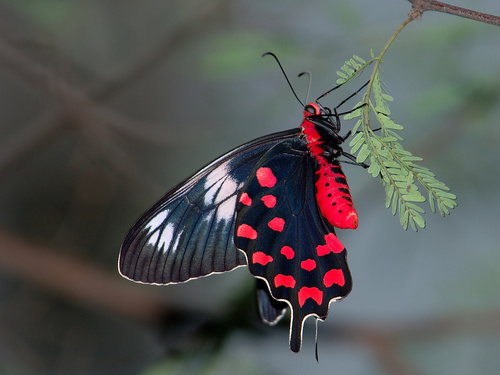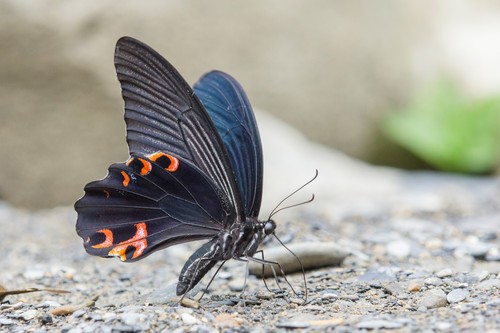
About Papilio protenor Cramer, 1775
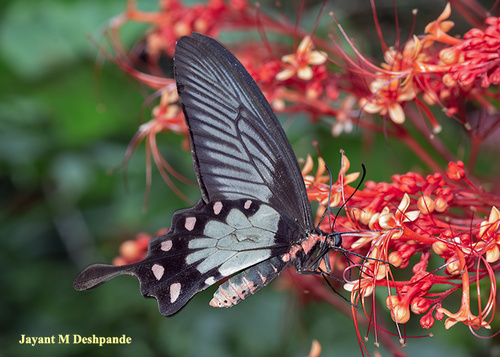
Papilio protenor, commonly called the spangle, is a large butterfly from the swallowtail family. It is found across a wide range that includes Northern Pakistan, Jammu and Kashmir, Garhwal Himalaya’s Govind Wildlife Sanctuary, Sikkim, Assam, Bangladesh, Burma, southern China (including Hainan), Vietnam, northern Laos, Taiwan, North Korea, South Korea, Japan, and Nepal. Most butterfly species only occupy a narrow range of available host plants. They assess potential host plants using plant chemicals to decide whether to lay eggs there. Most species in the genus Papilio feed exclusively on plants from the Rutaceae (citrus) family, and Papilio protenor is a host specialist whose main host plant is citrus. Research has confirmed that female Papilio protenor have a strong affinity for Citrus unshiu. Several types of oviposition stimulants have been identified in this system, including sugar acids, amino acids, alkaloids, and flavonoids. Studies on flavanone glycosides naringin and hesperidin show that both trigger positive oviposition responses from adult females. Females do not lay eggs on Phellodendron amurense, and this avoidance is caused by the plant’s high concentration of phellamurin. Researchers have documented differing adaptations to host plants between adult females and larvae of Papilio protenor. Females can lay eggs on Trollius asiaticus, but larvae cannot successfully grow on this plant. In contrast, while adult females will not oviposit on Phellodendron amurense, larvae are able to survive on this plant. Male Papilio protenor also appear to be more site faithful than females of the species.