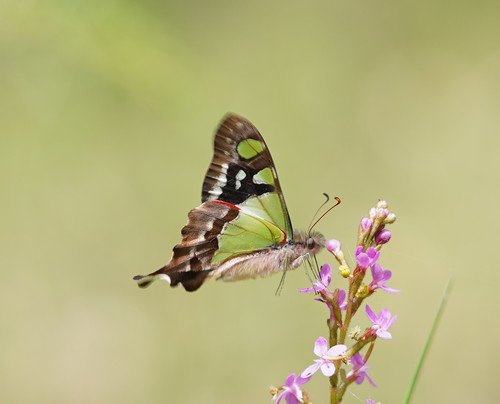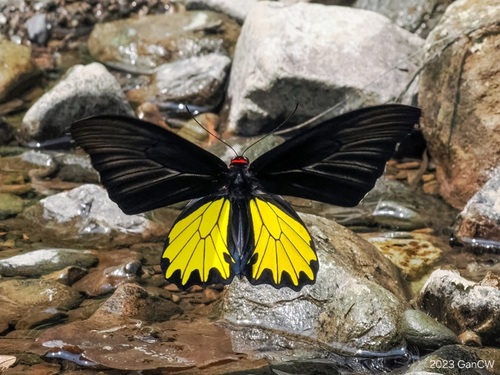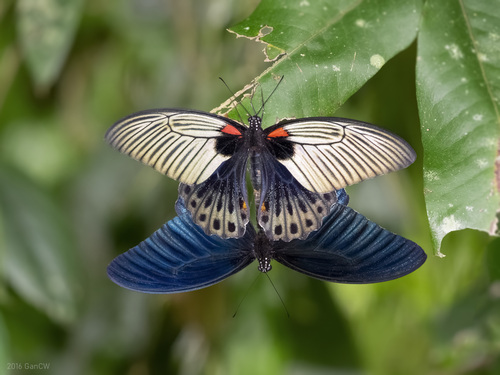
About Papilio memnon Linnaeus, 1758
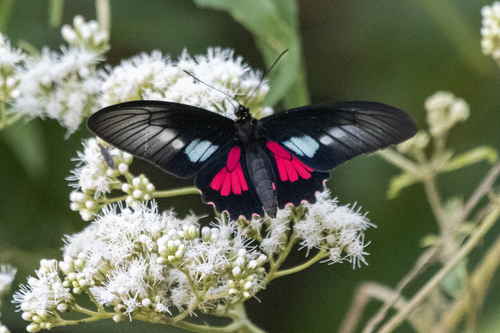
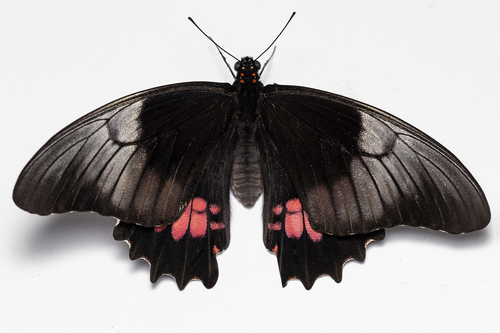
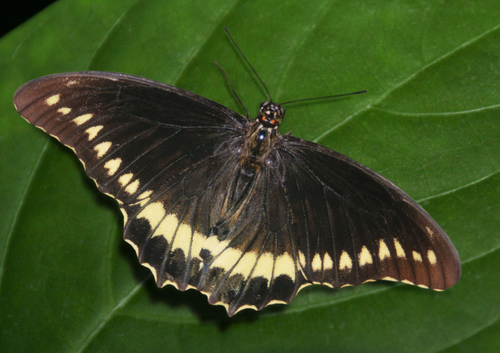
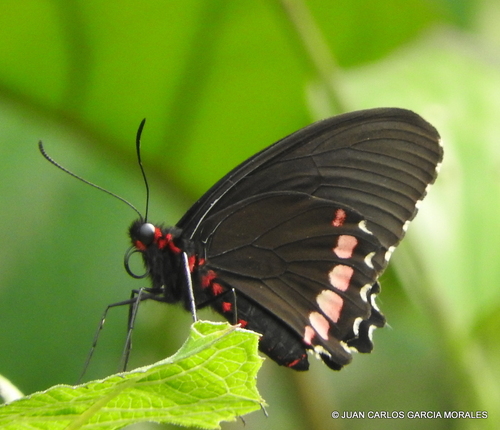
Description and polymorphism: This is a large butterfly with a wingspan ranging from 120 to 150 millimetres (4.7 to 5.9 inches). The species has four distinct male forms and many female forms; females are highly polymorphic, with many forms acting as mimics of unpalatable butterfly species. Up to twenty-six different female forms have been recorded for this species. This butterfly has been extensively studied to advance understanding of the genetic basis of polymorphism and Batesian mimicry.
Range: The species' distribution covers northeastern India (including Sikkim, Assam, and Nagaland), Nepal, Bangladesh, Myanmar, the Nicobar Islands, the Andaman Islands (only recorded as stragglers), western, southern, and eastern China (including Hainan), Taiwan, southern Japan including the Ryukyu Islands, Thailand, Laos, Vietnam, Cambodia, Malaysia, and Indonesia (including Sumatra, Mentawai Islands, Nias, Batu, Simeulue, Bangka, Java, Kalimantan, and the Lesser Sunda Islands).
Habitat: In the Himalayas, this species can be found flying at elevations up to 2,100 metres (6,900 ft), but it is most common at low elevations.
Life cycle: The larva of Papilio memnon resembles that of the common Mormon (P. polytes), and is green with whitish markings. Larvae of this species are heavily parasitised.