About Papilio eurymedon Lucas, 1852
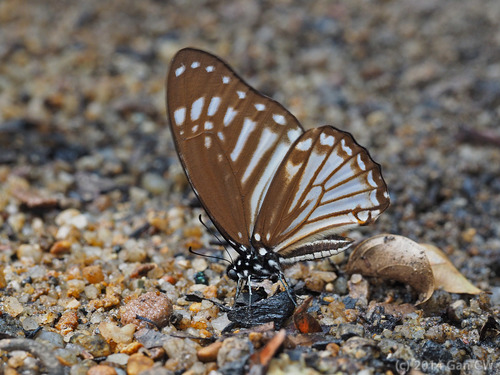
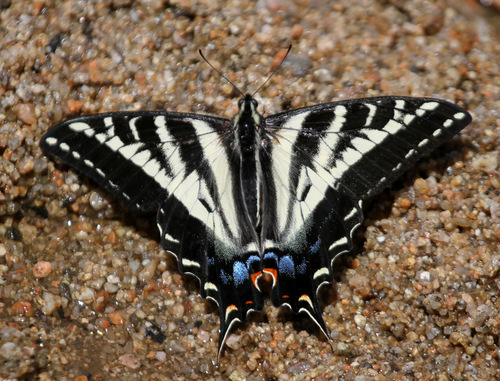
Papilio eurymedon, commonly known as the pale swallowtail or pallid swallowtail, is a relatively common swallowtail butterfly that occurs across most of western North America. This species was first formally described by Hippolyte Lucas in 1852. Its distribution ranges along the Pacific coast from northern Baja California to the southernmost point of British Columbia, extending inland to New Mexico and the Black Hills of South Dakota. It can be found from the Pacific coast east to western Montana, and from Wyoming south to northern New Mexico, but it is absent from most of Nevada and western Utah. The pale swallowtail favors open woodlands and forest clearings, particularly locations near permanent water sources like ponds. It can also be found in urban parks, and is occasionally spotted in suburban areas. While it is not as abundant as the western tiger swallowtail, pale swallowtails can gather in large groups at puddling parties, where up to a dozen or more males may congregate. At these gatherings, they join other butterfly species to drink water from damp soil to get nutrients needed for mating. The pale swallowtail looks very similar to the western tiger swallowtail, but its wings are white-cream or very pale yellow. Some individuals also have varying amounts of red-orange patches on the upper surface of the wings just above the tail. A submarginal band is present on the underside of the hindwings. The black tiger stripes and wing borders of the pale swallowtail are thicker than those of the western tiger swallowtail. The typical wingspan of this species is 3.5 to 4.5 inches (8.9 to 11.4 cm). Across most of its range, the pale swallowtail produces only one brood per year, but populations along the Pacific Coast have two or more broods annually. Adult butterflies fly from April to October, and are most commonly seen in May and July. Caterpillars reach the pupal stage in fall, overwinter as pupae, and emerge as adults the following season. Females lay eggs one at a time on host plants. These host plants include members of the genus Ceanothus, such as buckbrush, mountain balm, and mountain lilac, as well as red alder, ocean spray, bitter cherry, and serviceberry species. Pale swallowtail caterpillars are plump and green, with a single yellow band just behind the thorax. They have two eye-shaped spots on the upper thorax, which may help frighten off predators. Like most swallowtail butterflies, they have a red, wishbone-shaped organ called the osmeterium, which emerges from behind the head and releases a foul odor to deter predators. Just before their fifth molt, caterpillars turn brown. The pupa is brown and resembles a piece of bark. When pupating, the butterfly orients itself upright, secures the tip of its abdomen to a branch with a silk thread, and hangs freely. Males perch and patrol areas to find receptive females. After mating, females lay eggs singly on the leaves of host plants. Caterpillars feed on host plant leaves and rest on silken mats inside shelters made of curled leaves. Pupae hibernate through the winter.