About Papilio appalachiensis (Pavulaan & D.Wright, 2002)
Papilio appalachiensis, commonly called the Appalachian tiger swallowtail, is a species of swallowtail butterfly native to eastern North America, especially the Appalachian Mountains. It is a hybrid of two other Papilio species: Papilio canadensis and Papilio glaucus, and shares many characteristics with both parent species.
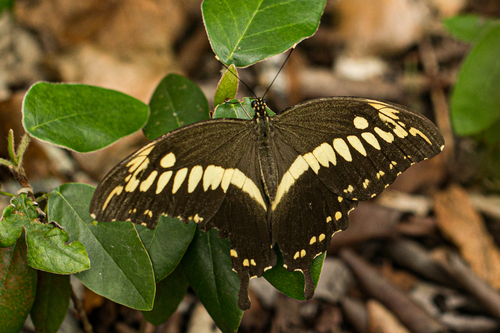
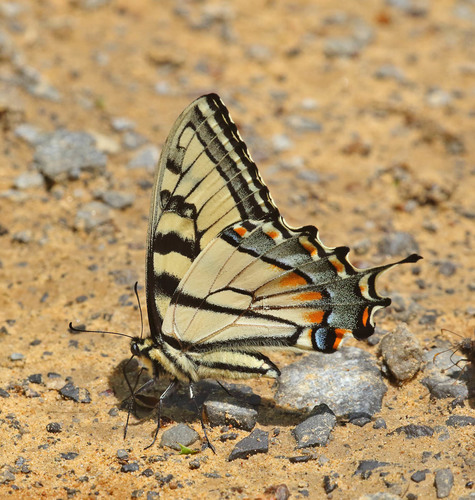
Adults are typically yellow with black wing patterns, and their wingspans measure between 86 and 115 mm. This species is notably larger than both the eastern tiger swallowtail (P. glaucus) and the Canadian tiger swallowtail (P. canadensis). Caterpillars range in color from green and yellow to orange, and are marked with black specks. These markings give the caterpillar the appearance of a bird dropping, an effective camouflage, or a large eye, a protective mimicry that also helps it avoid predators.
This species is univoltine, meaning it produces only one brood per year. In distribution, the Appalachian tiger swallowtail is found in the eastern United States, specifically along the Appalachian Mountains, with a range that extends from Pennsylvania to Georgia, and also reaches Georgia and Alabama overall.
These butterflies gather in woodlands and woodland openings. They prefer mid to high elevations in the southern Appalachian Mountains, and are extremely common at higher elevations, though they can also be found at lower elevations or in valleys within mountainous terrain. Adult butterflies usually stay in the canopy of Appalachian hardwood forests, and only leave the canopy to visit flowers. Their habitat often overlaps with that of P. glaucus.
For its life cycle, females lay eggs for their single brood between May and June, with egg laying specifically occurring in May. During the mating season, males fly through treetops to search for females. Females are hard to find, as they prefer to hide in the forest canopy. After mating, females lay eggs singly on the leaves of host plants. When caterpillars hatch, they feed on the host plant leaves, then form a chrysalis and overwinter. Pupation takes place in late June to July, and pupae enter diapause that lasts until spring. Adult butterflies hatch in May.