About Papilio alexanor Esper, 1800
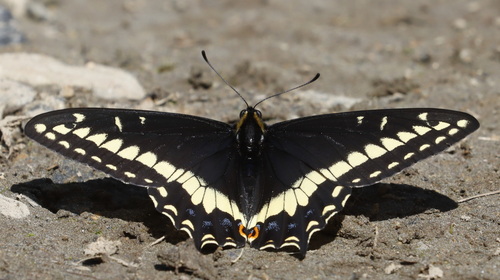
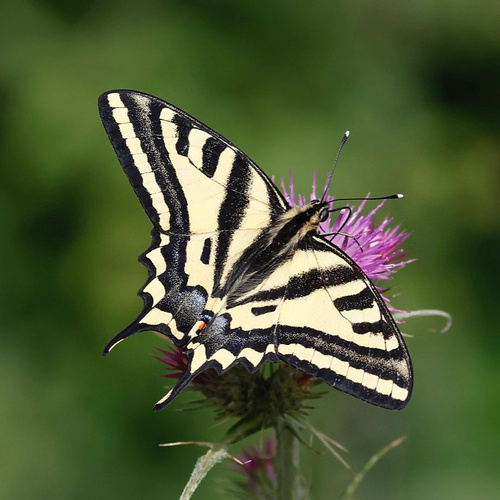
Papilio alexanor Esper, 1800 is similar in appearance to Papilio machaon. Unlike in P. machaon, the basal third of the forewing is not entirely black. Instead, this area is bordered both basally and distally by a broad black band. These black bands continue across the hindwing, where they also border the yellow basal area of the wing. The larva of P. alexanor is similar to the larva of P. machaon, but it has more varied patterning, with larger, brighter red dots. Larvae are easy to locate, because they gnaw the epidermis of the host plant stalks they feed on, turning these stalks white. The pupa of P. alexanor is stone grey, very flat, has keeled sides and an uneven surface. It attaches itself to stones and closely resembles a small broken stone splinter.