About Paphies ventricosa (Gray, 1843)
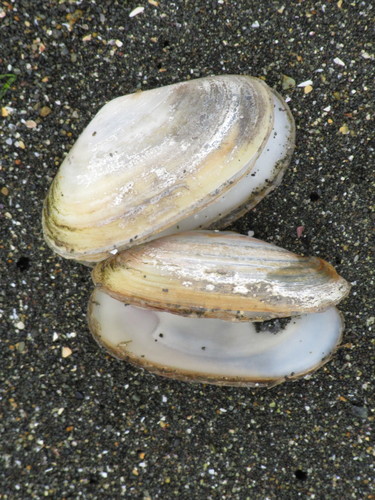
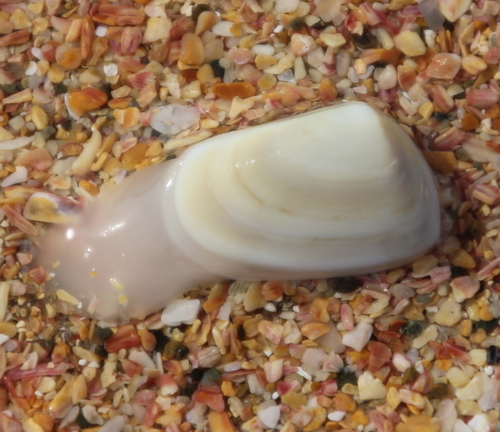
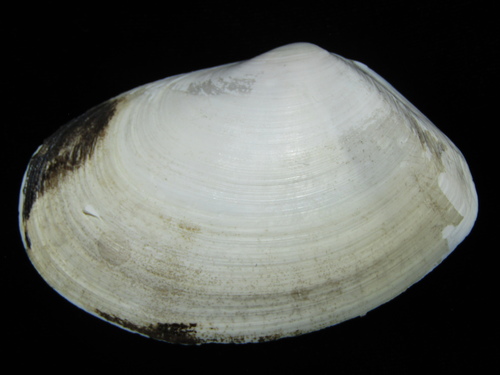
This species, commonly known as toheroa, has the scientific name Paphies ventricosa (Gray, 1843). It is a very large shellfish with a solid white, elongated shell that has its apex located at the middle. The maximum recorded dimensions are 117 mm in length, 81 mm in height, and 38 mm in thickness. Toheroa is found across both the North and South Islands of New Zealand, with its main habitat located on the west coast of the North Island. The most optimal growing grounds for this species are wide fine-sand beaches with extensive sand-dunes, which trap freshwater that percolates out to the sea and encourages the growth of diatoms and plankton. Toheroa is a traditional food for Māori. Historically, control over toheroa beds was sometimes a source of conflict that led to wars, and Māori translocated toheroa across New Zealand using pōhā, which are kelp bags made from southern bull kelp (Durvillaea poha). Toheroa has long been a popular New Zealand seafood, most often prepared into a greenish soup. This soup gained international attention and became a sought-after delicacy after the 1920 Royal Tour of Prince Edward, growing in popularity at restaurants in New Zealand, the United Kingdom, and Australia. A commercial industry focused on toheroa developed, including large-scale canning facilities. By the 1950s, over-exploitation had severely reduced toheroa populations. Since 1979, there has been a nationwide ban on toheroa harvesting, with the only exception being limited customary harvests. Toheroa population numbers have not recovered since the 1979 ban, due to a combination of threats including illegal poaching, inadequately policed customary harvesting, vehicle driving on beaches, pollution, reduced freshwater input to beaches, and gas bubble disease.