About Paphies subtriangulata (W.Wood, 1828)
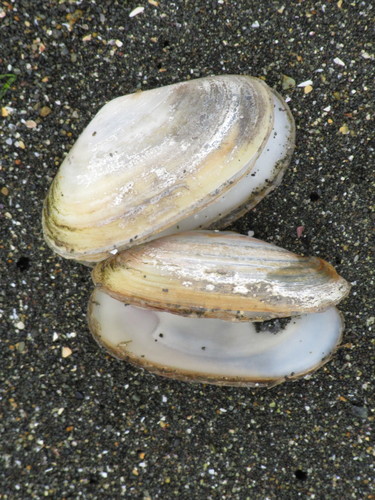
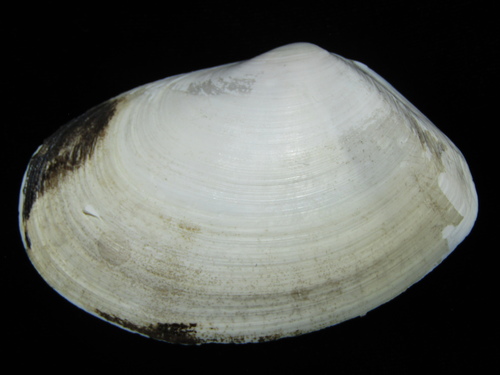
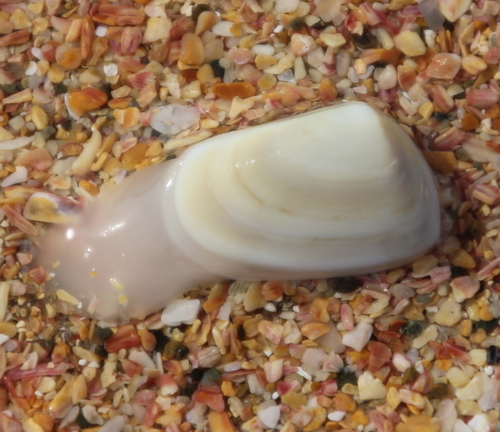
Paphies subtriangulata (W.Wood, 1828) is an edible species of bivalve clam called tuatua in the Māori language. It belongs to the family Mesodesmatidae and is endemic to New Zealand. It can be found on all three of New Zealand's main islands, where it buries in fine clean sand on ocean beaches. This clam has a large asymmetrical shell with the hinge positioned on one side. Its closest relative, the pipi (Paphies australis), has a symmetrical shell. Its shell shape and burrowing behavior allow it to withstand the high-energy waves of the ocean, so it adapts best in energetic oceanfront environments. The soft body tissue of Paphies subtriangulata is an edible delicacy; it is commonly made into fritters or boiled and served on the shell. Historically, Māori people have used this species as a food source, and its shells are commonly found in excavated Māori middens. This clam burrows beneath sand very quickly, which can make digging for it a challenge at times. It also squirts water when it feels threatened. All tuatua populations are protected by law, which sets legal limits on how many can be captured. Depending on the location, diggers may harvest no more than 50 to 150 tuatuas per person per day in some areas.