About Papaver nudicaule L.
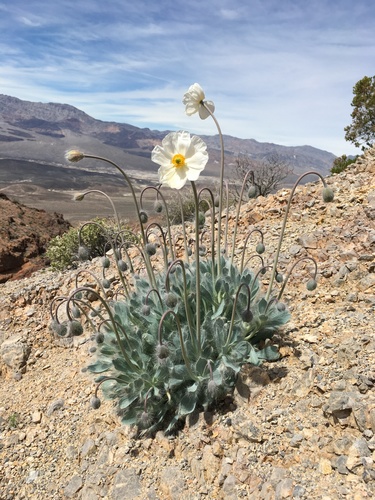
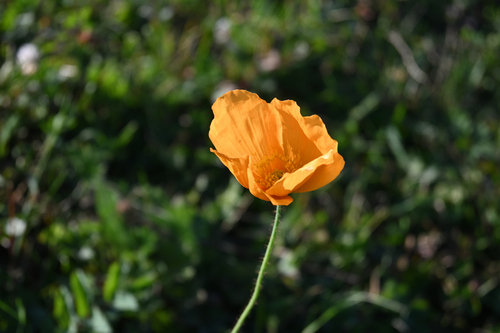
Papaver nudicaule L., also known by the synonym Oreomecon nudicaulis and commonly called the Iceland poppy, is a boreal flowering plant. Despite its common name, it is not native to Iceland; its native range covers subpolar regions of Asia and Yukon, North America, and it has been introduced to other locations including southern Argentina, Colorado, Greenland, and Tibet. Iceland poppies are hardy but short-lived perennials, and are frequently cultivated as biennials. They produce large, papery, bowl-shaped, lightly fragrant flowers. These flowers are held up by hairy, curved stems that reach about 1 foot (30 cm) in height, growing among feathery blue-green foliage that is 1 to 6 inches long. This species was first formally described by botanists in 1759. Wild-type Iceland poppies bear white or yellow blooms, and can grow in USDA Zones 3a to 10b. All parts of the Iceland poppy are likely to be poisonous. Like all poppies, it contains toxic alkaloids; specifically, this species has been confirmed to contain the benzophenanthidine alkaloid chelidonine. It also contains (+)-amurine, (-)-amurensinine, (-)-O-methylthalisopavine, (-)-flavinantine and (-)-amurensine. For cultivation, Iceland poppies prefer light, well-drained soil and full sun. They do not tolerate hot weather well, and will die within a single growing season in climates with hot summers. Like all poppies, Iceland poppies have extremely small seeds and long taproots that do not tolerate disturbance. In cool summer climates with well-drained soil, they can live for 2 to 3 seasons, and flower from early spring through fall. Iceland poppies are among the best poppy varieties for cut flowers, as they last for several days in a vase.