About Papaipema duovata Bird, 1902
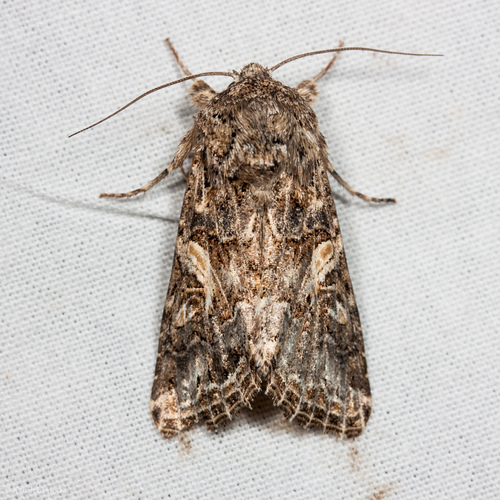
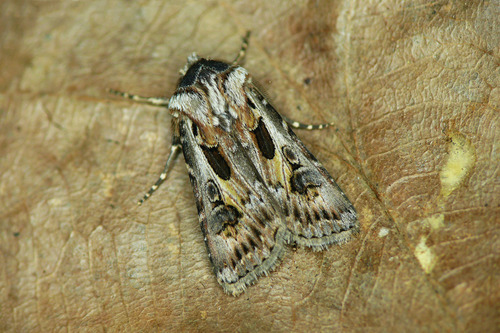
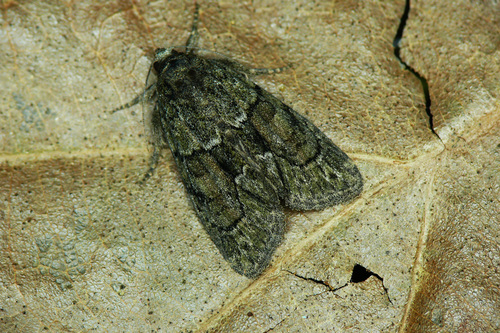
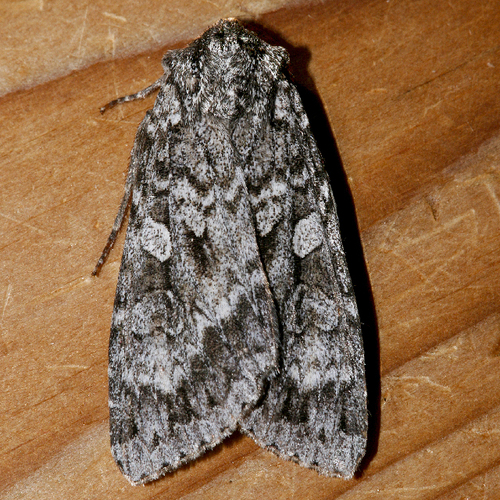
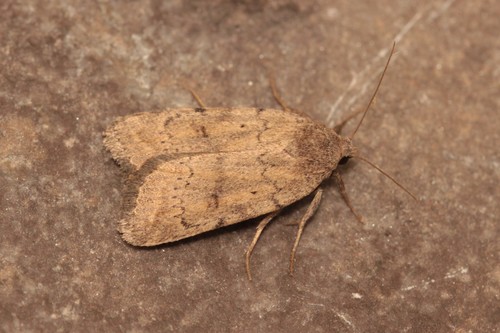
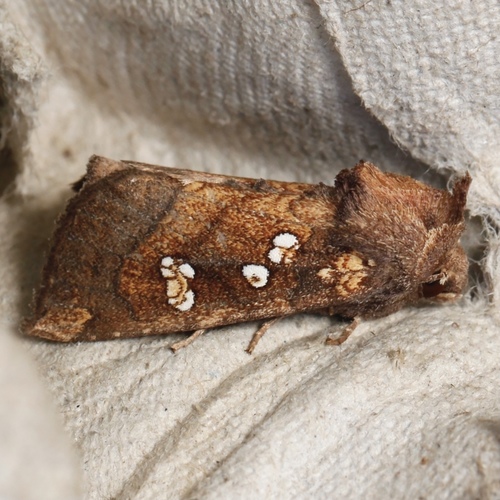
Papaipema duovata, commonly known as the seaside goldenrod stem borer or seaside goldenrod borer, is a species of moth native to North America. It is found in the coastal plain along the eastern side of the continent, ranging from the Gulf Coast north to at least New Jersey. This moth species was formally described by Henry Bird in 1902, and its scientific name is Papaipema duovata Bird, 1902. The species is classified as threatened in the U.S. state of Connecticut. This moth has an approximate wingspan of 36 mm. Adult individuals are dusky brown in color. They feature white reniform, orbicular, and claviform spots, along with dull yellow basal spots. Adults are most active and on wing primarily during October. The larvae of this species bore into the stems of Solidago sempervirens.