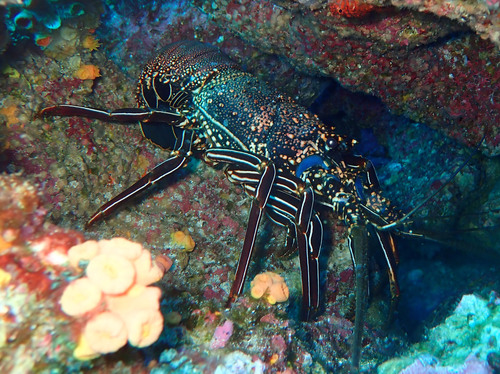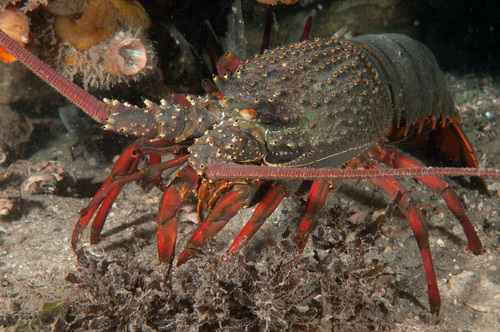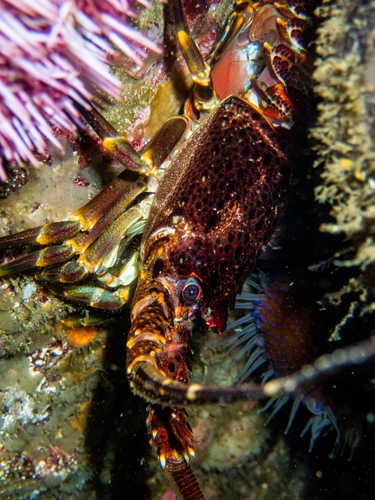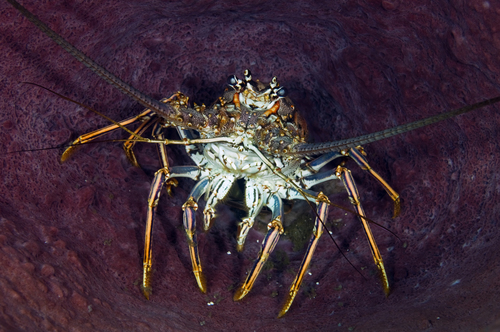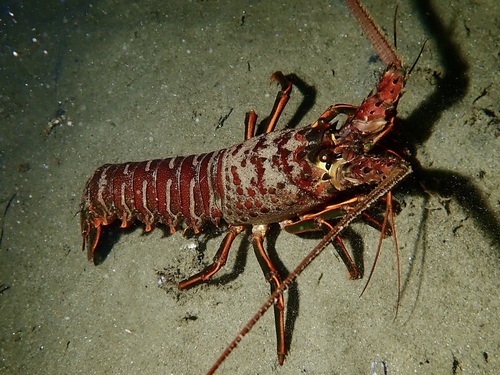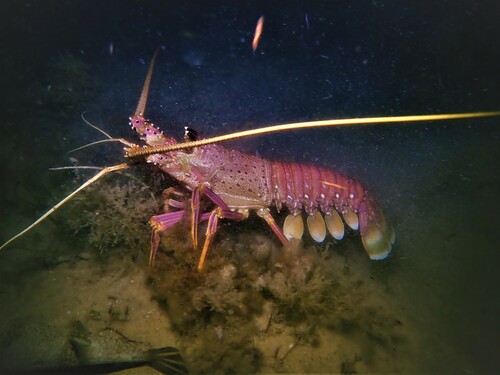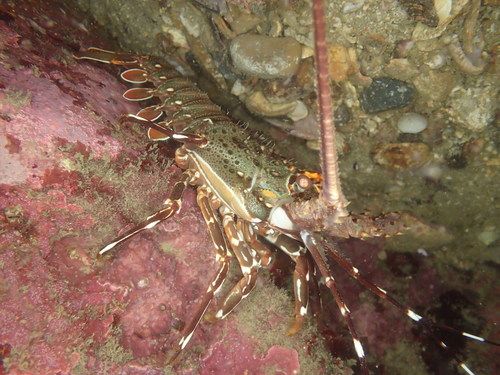
About Panulirus stimpsoni Holthuis, 1963
Panulirus stimpsoni is a spiny lobster species first formally described by Holthuis in 1963. It is closely related to Panulirus ornatus, and was originally classified as part of that species. The two species share an identical arrangement of spines on the carapace, but the spines of P. stimpsoni are usually stronger than those of P. ornatus. Like P. ornatus and other spiny lobsters in the genus Panulirus, the larvae of P. stimpsoni are most likely retained in local estuarine waters. Similar to Panulirus polyphagus, P. stimpsoni inhabits coastal shelves with high sediment loads, formed by the muddy outflow of the Pearl River and other turbid coastal streams. The Chinese spiny lobster, as it is commonly called, is omnivorous. It occurs in oceanic environments, and is also found in Baoan Lake, where it is preyed on by common carp. It lives in shallow rocky waters. P. stimpsoni populations have declined rapidly due to pollution, habitat loss, and overfishing. While the species is considered endemic to China, lobster aquaculture has expanded in Vietnam. Vietnam produces over 1,000 tons of cage-raised Panulirus species, including P. stimpsoni, for export to China, Japan, Thailand, and Hong Kong. Since 2006, production of this and other lobster species in Vietnam has decreased because of milky hemolymph syndrome.