About Panulirus homarus (Linnaeus, 1758)
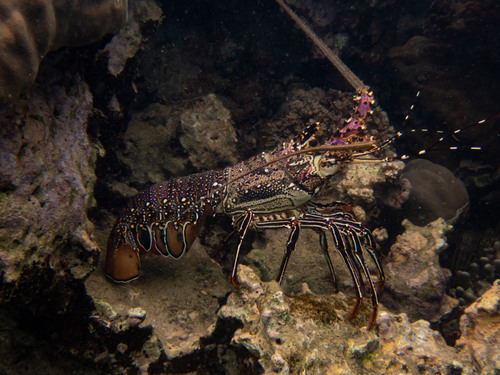
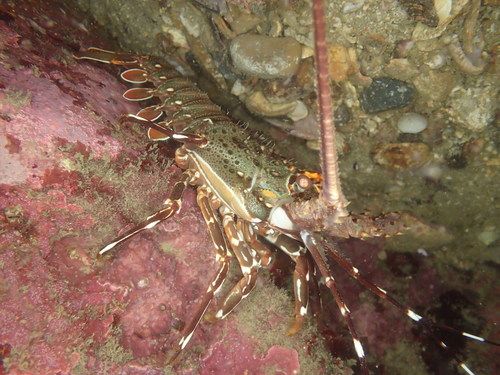
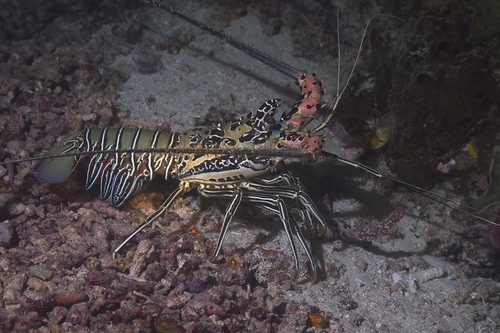
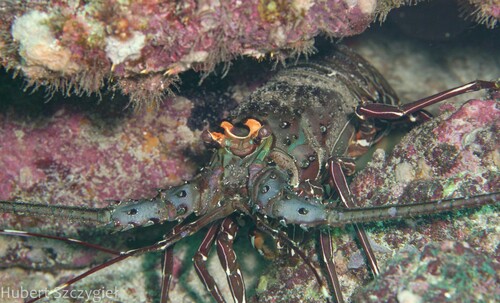
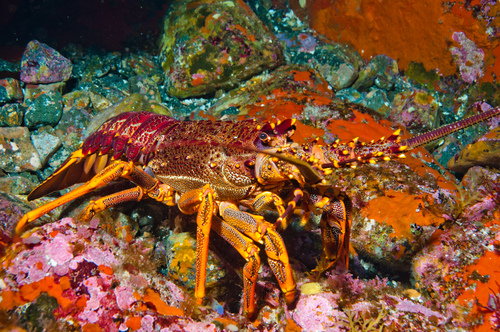
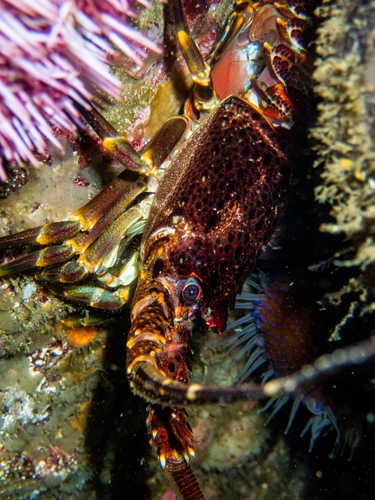
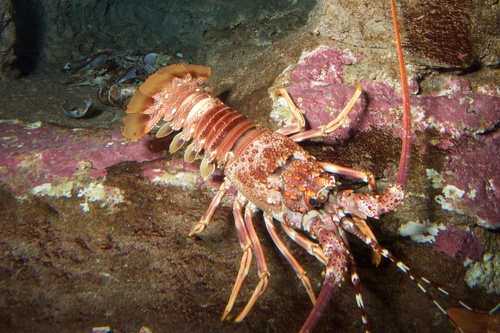
Panulirus homarus (Linnaeus, 1758) individuals can grow up to 31 centimeters (12 inches) in total body length, equal to a 12 cm (4.7 in) carapace length. Average total body length falls between 20 and 25 centimeters (8 to 10 inches). Its colouration varies alongside other morphological differences: most individuals are dark green, with only very small scales (squamae) in the grooves of the abdominal tergites, while other individuals are red, with much more prominent sculpturing in these grooves. The green form is called the microsculpta form, and the red form is the megasculpta form. Panulirus homarus occurs in the Indo-West Pacific region, ranging from East Africa along the coast of the Indian Ocean to the Malay Archipelago, then extending along Pacific Ocean coasts north to Japan and south to Australia, New Caledonia, and probably the Marquesas Islands. It inhabits shallow water, most commonly 1–5 metres (3 ft 3 in – 16 ft 5 in) deep, including rocky areas in the surf zone, though it may occasionally be found as deep as 90 m (300 ft), and can live in turbid water. This species is nocturnal and gregarious. Its diet consists mostly of the brown mussel Perna perna. In South Africa, Panulirus homarus is one of the main prey items of the Cape clawless otter.