About Panorpa japonica (Thunberg, 1784)
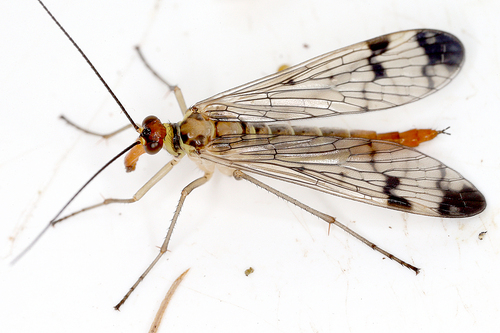
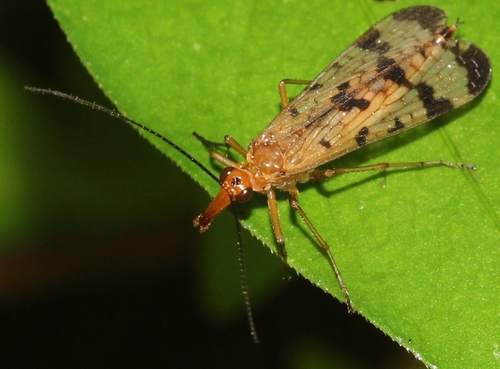
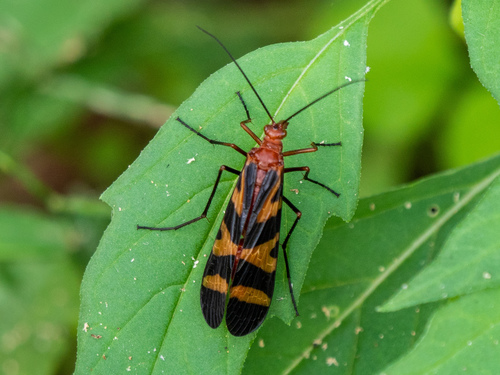
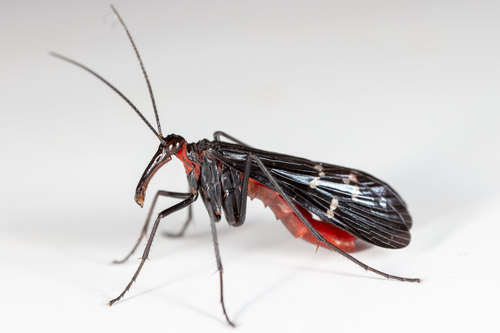
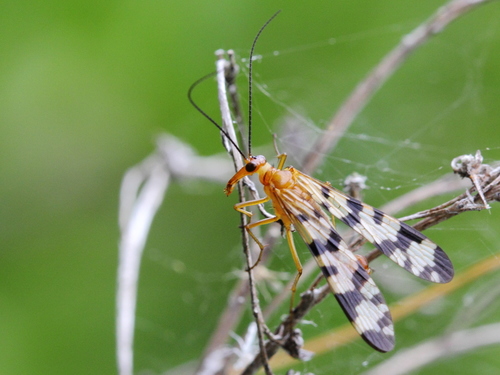
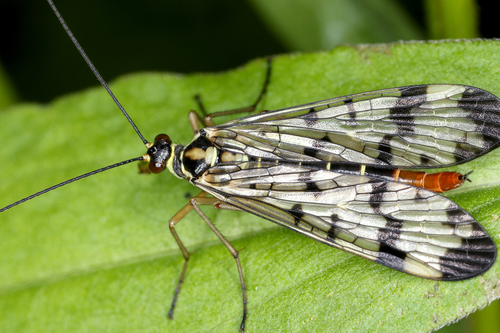
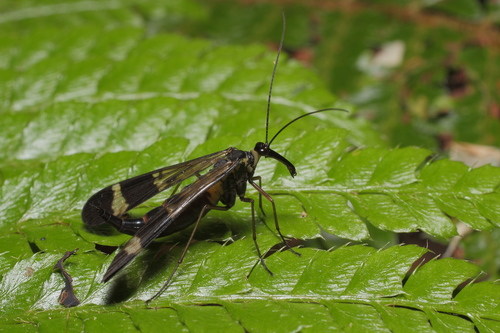
Panorpa japonica, commonly called the common Japanese scorpionfly, is a species in the genus Panorpa. It was originally formally described by Carl Peter Thunberg in 1784. This species can be identified by its translucent wings that bear two black bands, a sleek entirely black body, and a distinctive curved snout that is as long as its thorax. Its long, thread-like black antennae are almost the same length as its entire body. Female Panorpa japonica prefer the pheromones produced by males that have low fluctuating asymmetry in their forewings. Low fluctuating asymmetry is often correlated with higher individual fitness components, including improved growth, higher fecundity, and better survival. Because of this, choosing mates based on this trait is expected to result in more fit offspring than mating at random. Most observations of Panorpa japonica have been recorded in Japan, a fact that is confirmed by data from crowd-sourcing initiatives and data aggregation services.