About Panopea generosa A.Gould, 1850
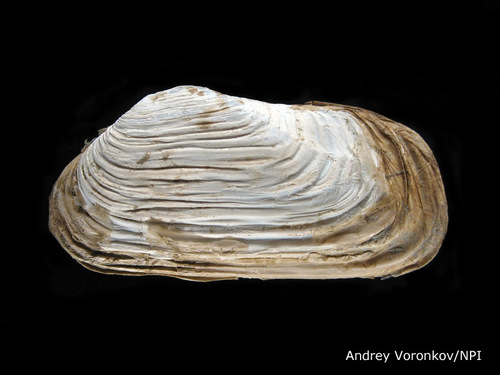
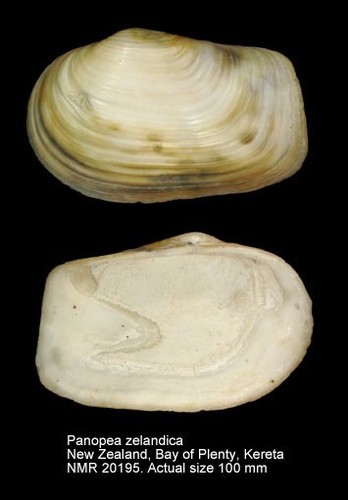
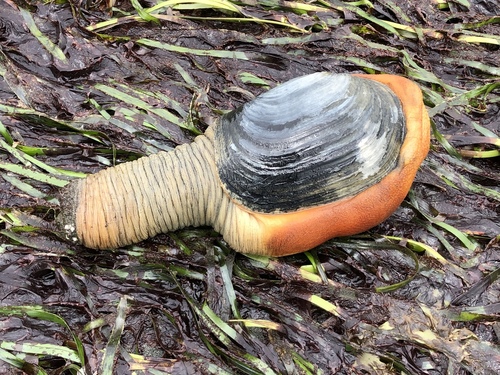
The Pacific geoduck (pronounced GOO-ee-duk, scientific name Panopea generosa) is a species of very large saltwater clam belonging to the family Hiatellidae. Its common name comes from the Lushootseed word gʷidəq. This clam is native to the coastal waters of the eastern North Pacific Ocean, ranging from Alaska to Baja California. Its shell measures between 15 centimeters (6 inches) and over 20 centimeters (8 inches) in length, but the clam’s extremely long siphons make its total body much longer – the siphon shaft alone can reach 1 meter (3 feet 3 inches) in length. The Pacific geoduck is the largest burrowing clam in the world. It is also one of the longest-lived animal species, with a typical lifespan of 140 years; the oldest individual ever recorded reached 179 years of age. Exact geoduck age can be determined from annual growth rings deposited in the shell, which can be matched to specific calendar years of formation through crossdating. These annual growth rings also act as an archive of historical marine environmental variability. For culinary use, the large, meaty geoduck siphon is valued for its savory flavor and crunchy texture. Due to its phallic shape, some people consider geoduck an aphrodisiac. It is especially popular in China, where it is classified as a delicacy, most often cooked and eaten in a fondue-style Chinese hot pot. In Korean cuisine, geoduck is eaten raw with spicy chili sauce, sautéed, or included in soups and stews. In Japan, geoduck is prepared as raw sashimi, served with a dip of soy sauce and wasabi. On cheaper sushi restaurant menus in Japan, geoduck is sometimes used as a substitute for the horse clam species Tresus keenae, and labeled mirugai or mirukuigai. It is considered to have a texture similar to the ark shell, called akagai in Japanese. The term mirugai is sometimes translated to English as "giant clam", and it is distinct from himejako, which is a dish made from Tridacna gigas.