About Panellus longinquus (Berk.) Singer
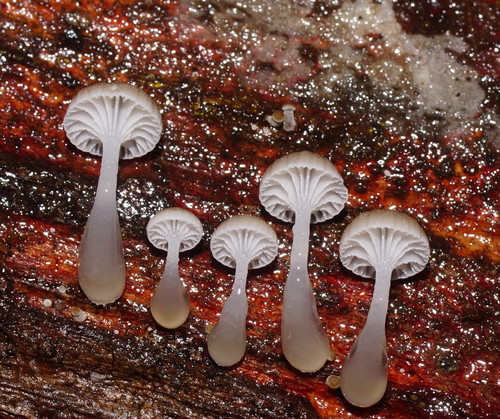
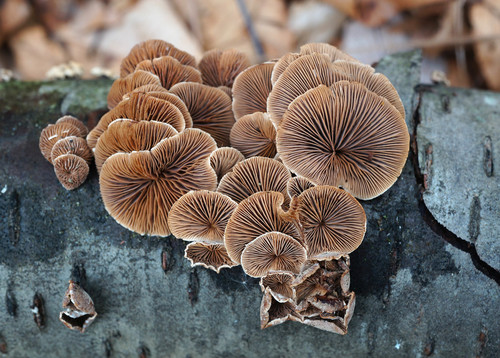
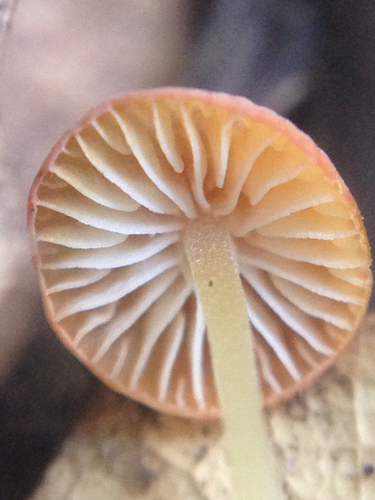
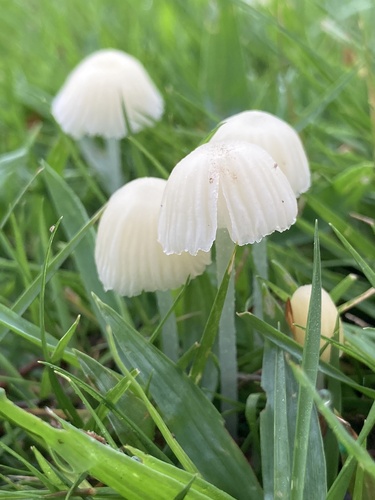
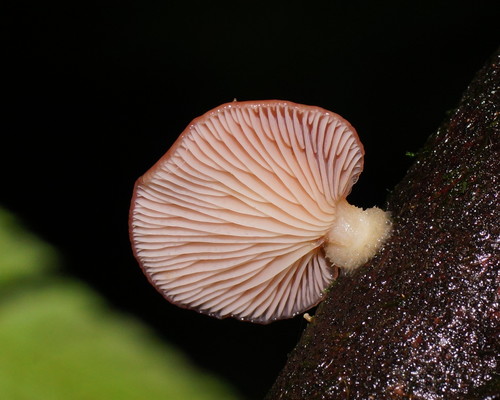
Panellus longinquus produces small, delicate fruiting bodies. Caps measure 30–50 mm (1.2–2.0 inches) wide; young specimens have a cream to pale orange-brown cap color, which shifts from grey to pink as the mushroom ages. The cap has a gelatinous texture, thought to be an adaptation to the moist environments that make up its native habitat. The stipe is short and stout, with a surface ranging from velvety to fibrillose. This fungus typically grows on the underside of decaying logs. Its gills are decurrent, translucent, and widely spaced. Spores of Panellus longinquus are white, smooth, and amyloid, measuring approximately 6.5–9.4 × 3.3–4.5 μm. The spore print produced by this species is a dingy yellowish-cream. Panellus longinquus occurs in temperate forests, where it grows on decaying wood. It has been recorded in New Zealand, Australia, Chile, Argentina, and parts of North America including British Columbia and Minnesota. In New Zealand, the species is classified as indigenous but not endemic. As a saprotrophic fungus, Panellus longinquus decomposes dead wood, and contributes to nutrient cycling in forest ecosystems.