About Pandinus imperator (C.L.Koch, 1841)
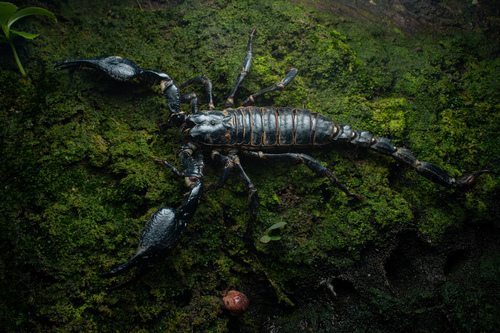
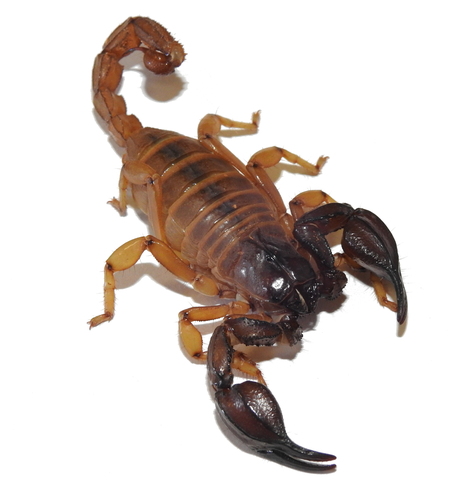
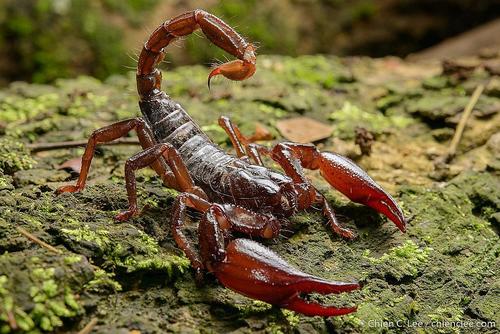
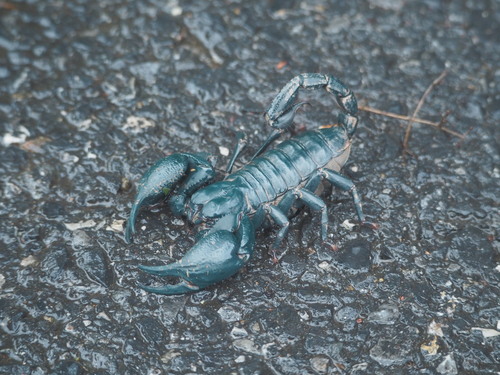
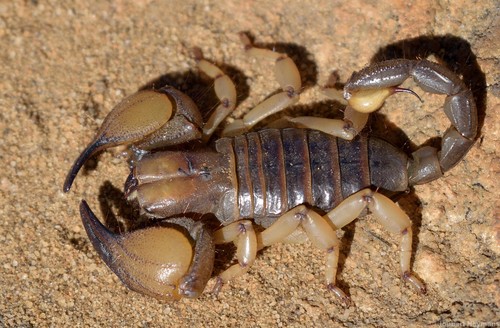
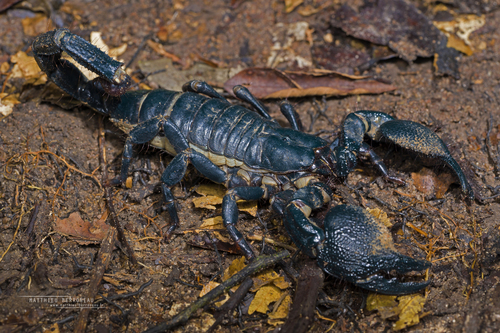
The emperor scorpion, scientific name Pandinus imperator (C.L.Koch, 1841), is one of the largest scorpion species in the world. Adult emperor scorpions average around 20 centimetres (7.9 in) in length and weigh 30 g. Some other forest scorpion species are similar in size to the emperor scorpion, and Heterometrus swammerdami holds the record as the world's largest scorpion, reaching 9 inches (23 cm) in length. Its large pincers are blackish-red with a granular texture. The front portion of the body, called the prosoma, is divided into four sections, each bearing one pair of legs. Behind the fourth pair of legs are comb-like structures called pectines, which are typically longer in males than in females. The tail, known as the metasoma, is long and curves back over the body. It ends in a large receptacle that holds the venom glands, tipped with a sharp, curved stinger. Scorpion stings can range from mild (comparable to a bee sting) to severe for humans, depending on the species. Most people do not experience severe effects from an emperor scorpion sting, though some people have general allergies to all scorpion stings. Sensory hairs cover the pincers and tail, allowing the emperor scorpion to detect prey via vibrations in the air and ground. When a female is gravid (pregnant), her body expands to expose the whitish membranes that connect its body segments. Emperor scorpions fluoresce greenish-blue under ultraviolet light. This species is known for docile behavior and an almost harmless sting. Adult emperor scorpions do not use their sting for self-defense, though adolescent individuals may use their stings. They prefer to use their pincers to crush and dismember prey. Their exoskeleton is heavily sclerotic, giving them a metallic greenish-black color. Emperor scorpions are often confused with the similar related genus Heterometrus, and they are one of the most well-known scorpion species. Several different ion channel toxins, including Pi1, Pi2, Pi3, Pi4 and Pi7, have been isolated from the emperor scorpion's venom. The emperor scorpion is an African species native to rainforests, and is also found in savanna habitats. It occurs in a number of West and Central African countries: Benin, Burkina Faso, Côte d’Ivoire, Gambia, Ghana, Guinea, Guinea-Bissau, Togo, Liberia, Mali, Nigeria, Senegal, Sierra Leone and Cameroon. This species lives in both tropical forests and open savannas. It burrows beneath the soil, hides under rocks and debris, and often burrows inside termite mounds.