About Pandanus odorifer (Forssk.) Kuntze
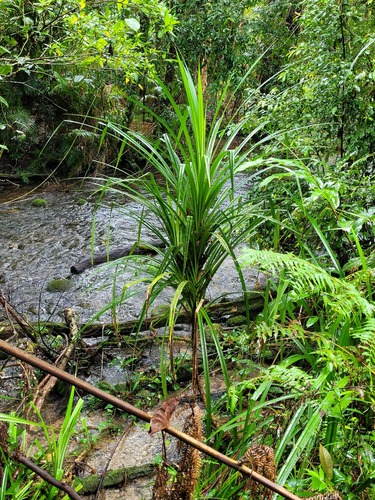
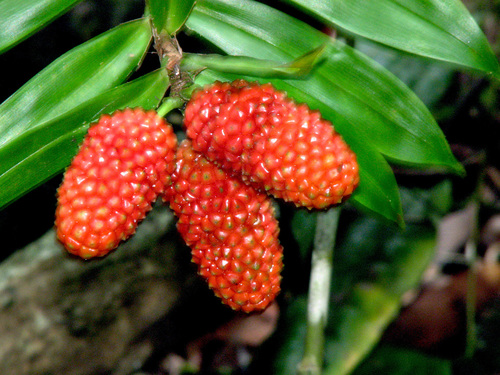
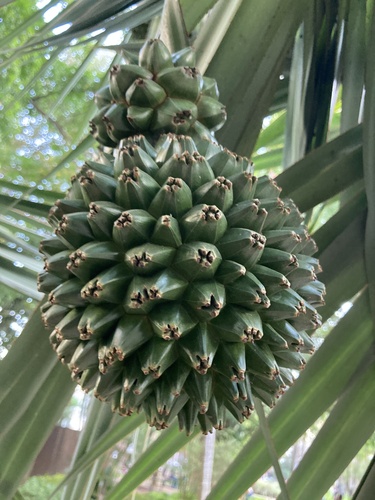
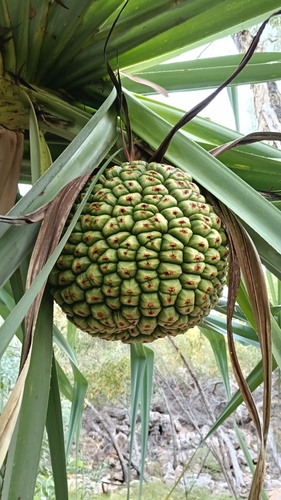
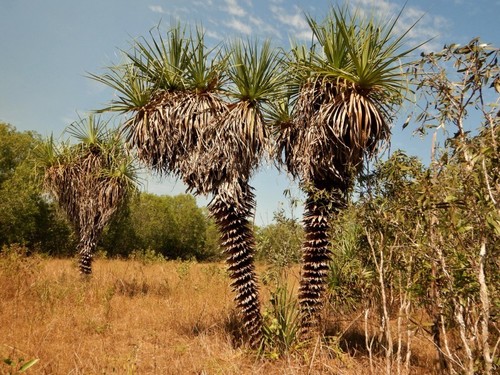
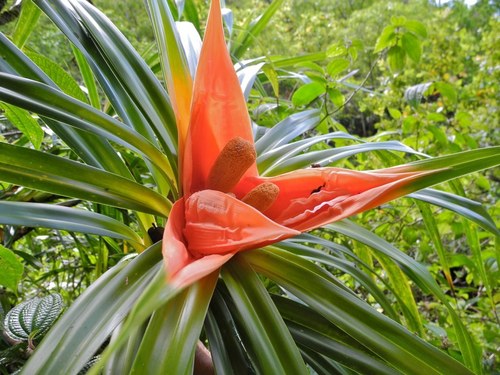
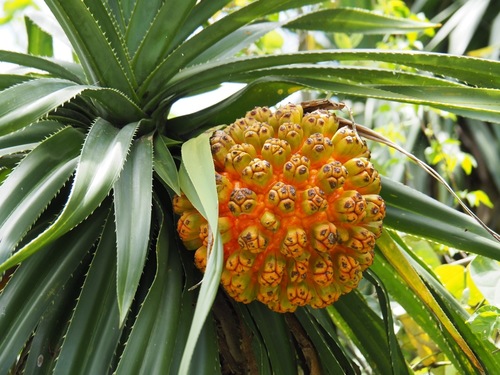
Pandanus odorifer (Forssk.) Kuntze is a small, branched, palm-like dioecious tree with a bending trunk supported by brace roots, reaching up to 4 meters in height. Its leaves grow in clusters at branch tips, forming rosettes of sword-shaped, stiff, leather-like, spiny, bluish-green, fragrant, glaucous leaves that are 40–70 cm long. In summer, this tree produces very fragrant flowers that are used for perfume. Uniquely, Pandanus does not develop a common callose wall around microspore tetrads during pollen growth. In Yemen, this species grows predominantly alongside flowing streams in the western escarpment foothills, and is most common in high rainfall areas; only male plants are reported to occur in Yemen. Fragrant male flowers of this species are wrapped in leaves and sold at roadsides and in markets. Some sources suggest it was introduced to Yemen from India, where its flowers are primarily used to produce perfume. Aromatic oil called kewra and a fragrant distillate called keorra-ka-arak are extracted from the male flowers. These extracts are almost exclusively used to make a watery distillate known as kewra water. The flowers have a sweet perfumed odor that shares pleasant qualities similar to rose flowers, though kewra’s scent is considered more fruity. The diluted kewra water is mild enough to be used by the tablespoon. According to Hindu tradition and mythology, the ketaki tree (this species) flower is never used as an offering to the god Shiva. The myth states Shiva cursed the flower to never be used in worship of him because it helped Brahma lie against Shiva, and also cursed Brahma to not be worshipped by people. On Ishigaki Island, southwest of Okinawa, it is customary to use parts of this plant as an offering during Bon festivities. The soft young shoots of this plant can be eaten, but they have a very astringent taste, and are considered inedible before blanching. Properly blanched shoots taste similar to bamboo shoots. Although its fruit has a pineapple-like appearance and sweet aroma, it is very fibrous. While it is non-toxic, the fruit is generally not eaten.