About Pandanus dubius Spreng.
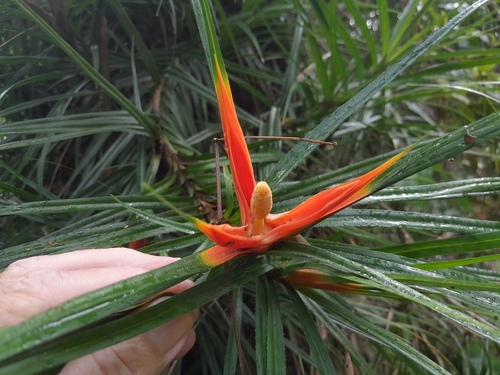
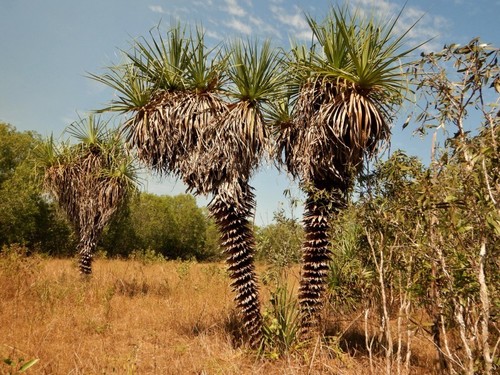
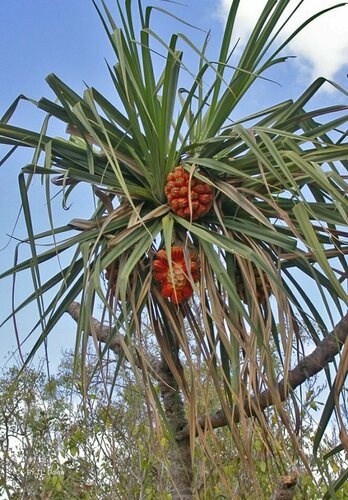
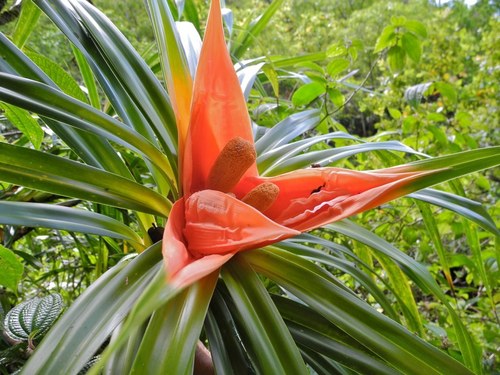
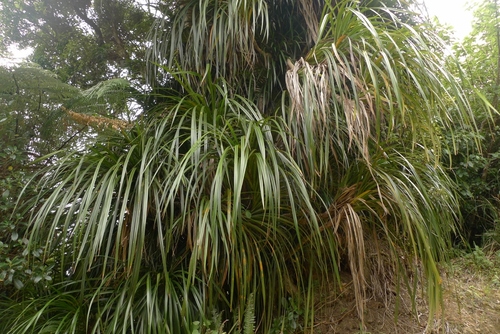
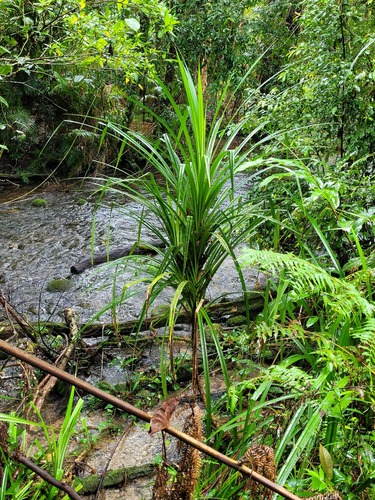
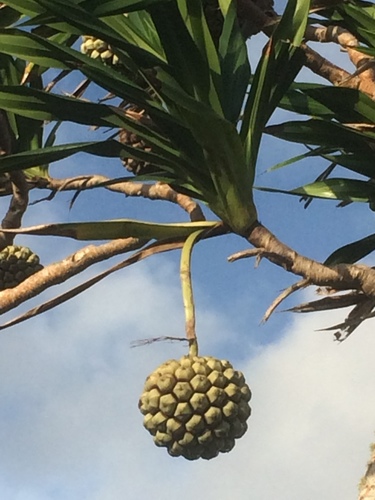
Pandanus dubius Spreng., commonly known as bakong, grows to 3 to 10 m (9.8 to 32.8 ft) in height, with numerous thick prop roots and aerial roots. Its leaves are lanceolate in shape with shallow serrations along the edges, measuring around 2 m (6.6 ft) long and 11 to 16 cm (4.3 to 6.3 in) wide, and are dark green in color. This species is dioecious, meaning male and female flowers grow on separate individual plants. Its fruits are globular, with a diameter of around 20 to 30 cm (7.9 to 11.8 in). Bakong typically grows on beaches, rocky areas, and limestone outcrops within coastal ecosystems. Like other pandanus species, bakong leaves are commonly harvested for weaving mats and other handicrafts in the Philippines, Halmahera, the Bismarck Archipelago, and the Solomon Islands. Fibers taken from the roots can also be made into ropes or twine. The white seeds of bakong are edible and have a flavor similar to coconut. The fleshy portion of the fruit can also be cooked and eaten; this use is recorded in Guam, the Philippines, and Rota Island. Bakong is also commonly cultivated as an ornamental plant.