About Panaeolus antillarum (Fr.) Dennis
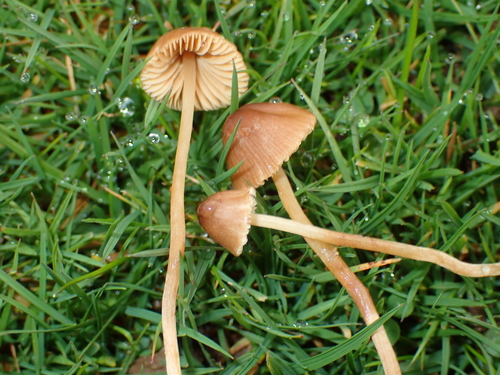
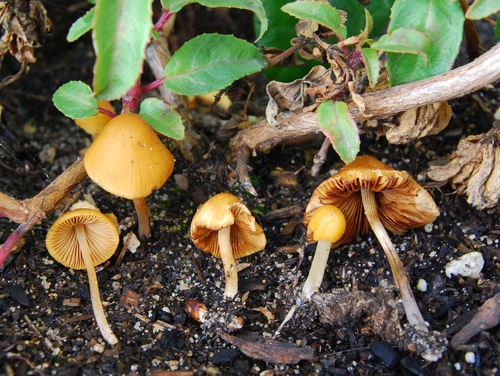
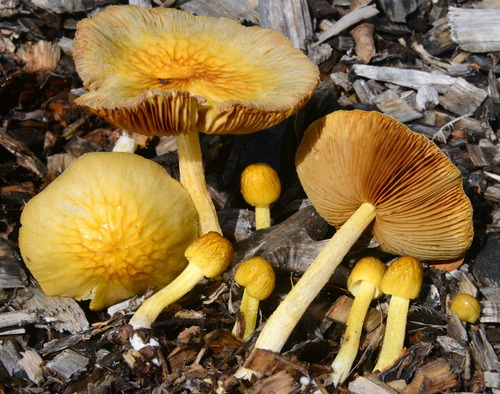
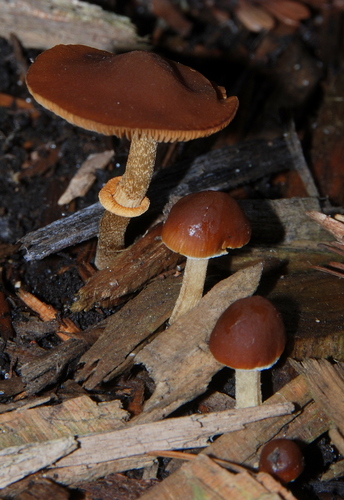
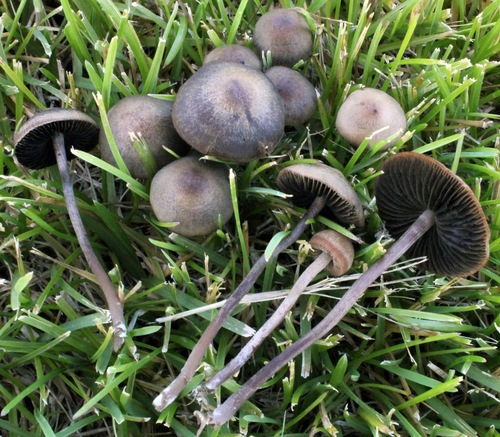
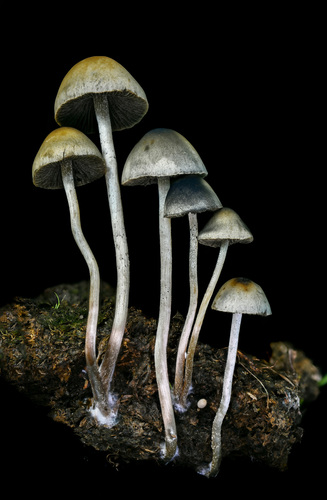
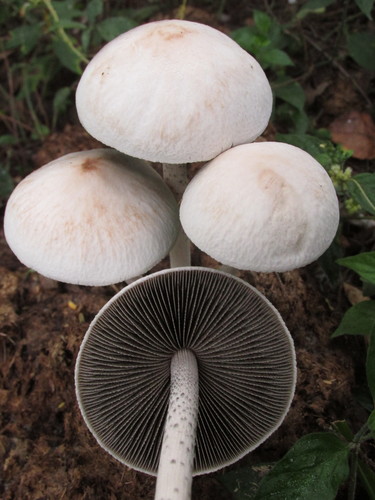
This species, Panaeolus antillarum (Fr.) Dennis, is a small to medium-sized fungus. The cap measures 3 to 6 cm across, with a shape ranging from bell-shaped to convex, and a color ranging from white to light gray or yellowish. Caps are thick and smooth, often marked with fine wrinkles, and develop a shiny silver-white color as they age. In young specimens, the gills are gray, and turn black as spores mature. The spore print is black. The stipe is 4 to 22 cm long and 0.5 to 2 cm thick, solid, and sometimes slightly wider at the base. Both the taste and odor are described as fungal. Microscopically, the spores are ellipsoid, measuring 15–20 (21) × 10–14 × 8–10 (11) μm. Cheilocystidia are cylindrical to narrowly utriform, colorless, and 30–45 μm long. Sulphidia are clavate, sometimes stalked, and 25–50 μm long. Basidia are four-spored and 30–35 micrometers long. This species is common and widely distributed, growing on dung, and can be found ranging from northern North America through Mexico into northern South America. It is edible, but not commonly consumed.