About Palhinhaea cernua (L.) Vasc. & Franco
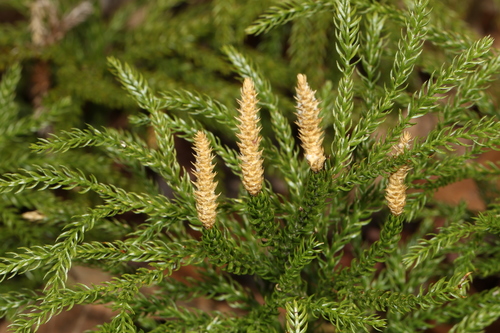
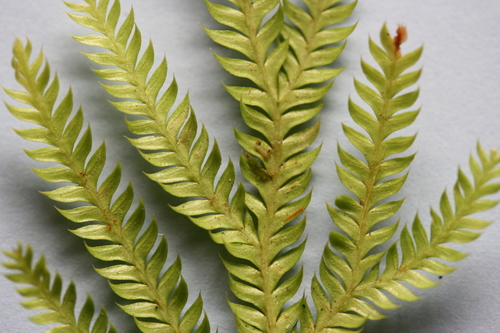
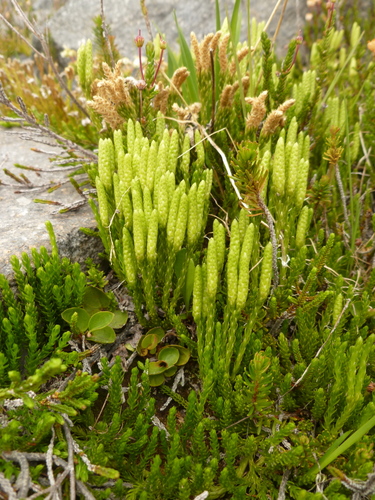
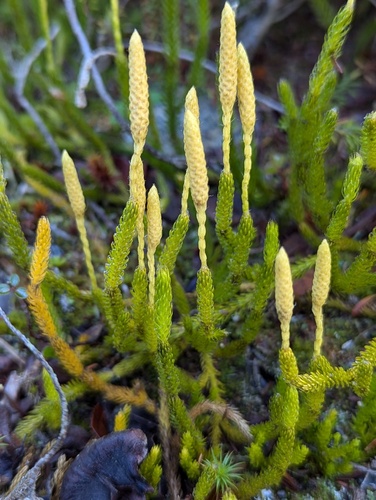
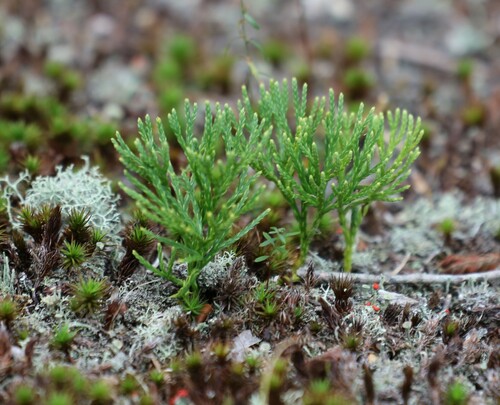
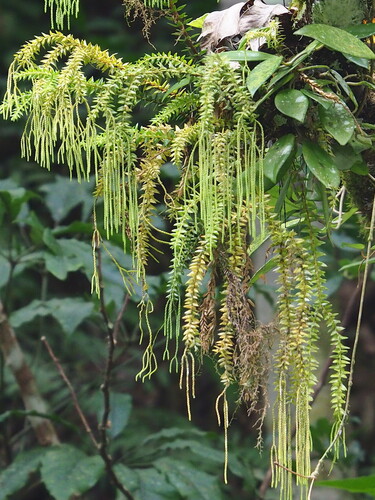
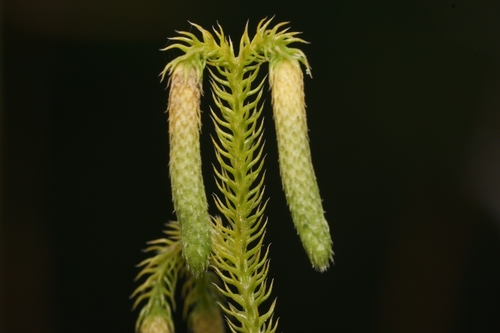
Palhinhaea cernua (with synonyms Lycopodiella cernua and Lycopodium cernuum) is a plant in the family Lycopodiaceae, commonly called the staghorn clubmoss. In Hawaii, it is known by the name wāwaeʻiole, which translates to "rat's foot". This species has a large number of scientific synonyms across multiple different genera. The genus Palhinhaea is recognized in the 2016 Pteridophyte Phylogeny Group classification (PPG I), but other classifications do not accept the genus and instead merge it into Lycopodiella. It is the largest species of clubmoss: its rhizomes can reach up to 5 meters (16 feet) in length, and its leafy upright stems grow up to 2.5 meters (8 feet 2 inches) in height. Palhinhaea cernua is a widespread pan-tropical species. It occurs mostly at higher elevations in the subtropical mountain climates of tropical Africa, Asia, the Pacific Islands, and the Neotropics. Within Europe, it is found in the Azores, where it may be native, and was previously found on Madeira. It has been introduced to continental Portugal (specifically Valongo), Sicily, and Malta. It grows best in bog environments. It is sometimes cultivated.