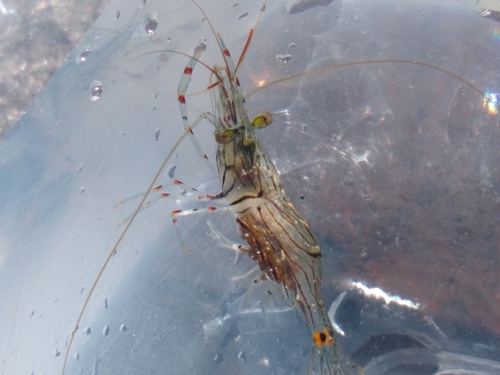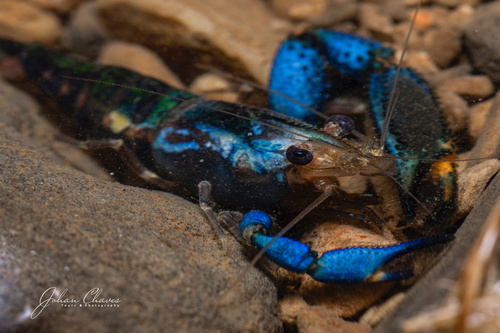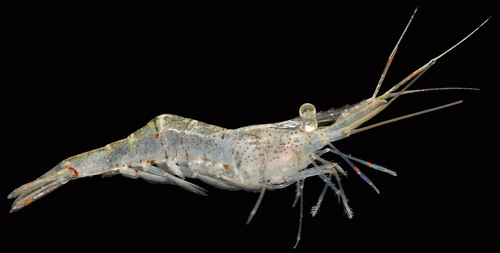
About Palaemon paludosus (Gibbes, 1850)
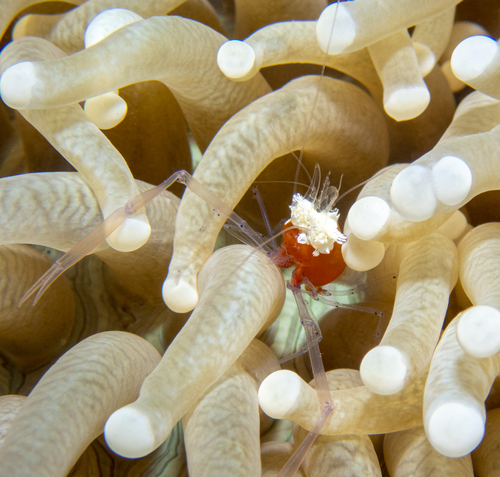
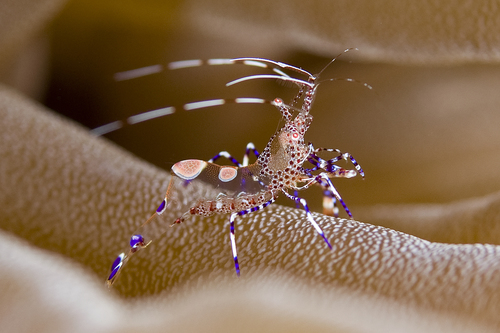
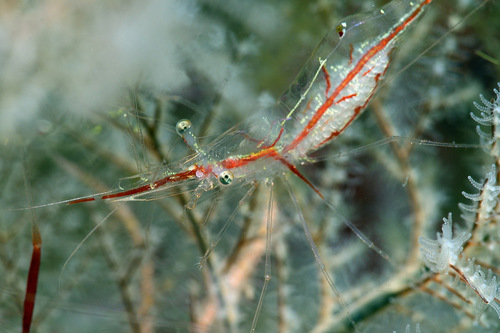
Palaemon paludosus reaches a maximum length of 2.5 cm (1.0 in) and is largely transparent. It can manipulate pigment granules in its body to create effective camouflage against its background. It is very closely similar to Palaemon kadiakensis, and can be told apart from that species by the arrangement of spines on the telson.
Palaemon paludosus is common across southern U.S. states east of the Appalachian Mountains. It is also present in Louisiana, where it may not be a native species, and scattered records exist from areas further west, including Texas and California. Its distribution is linked to lower susceptibility to predation, resulting from the structural complexity of higher habitats in Polygonum beds.
This species lives in fresh or slightly brackish water, most often in lakes. It is nocturnal: it stays hidden among vegetation during the day, and emerges at night to feed on plankton. It is an important prey source for many birds and fish, such as black bass, and may be classified as a keystone species. It hosts the parasitic isopod Probopyrus pandalicola, which renders female shrimp sterile and disrupts the development of male sex characteristics.
Palaemon paludosus reproduces sexually, with separate male and female individuals. It is a polygynous species, meaning males mate with more than one female. Wild populations typically have more females than males, with a ratio of 0.78 males per female. Reproduction marks the end of the species' life cycle, and all individuals die after the spawning season concludes. The timing of the breeding season varies based on water temperature, and a single female can lay up to 85 eggs per clutch.