About Pagurus samuelis (Stimpson, 1857)
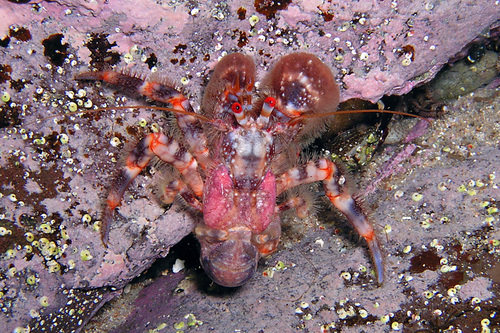
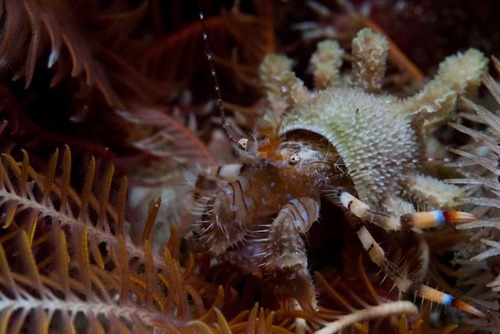
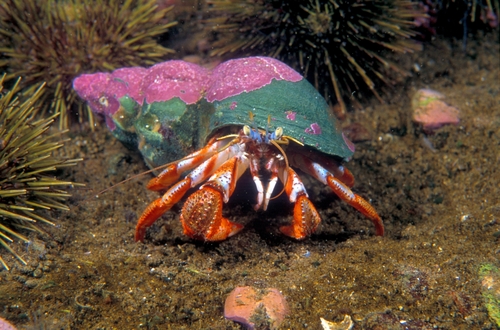
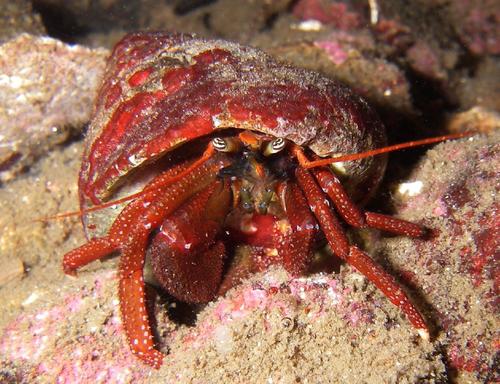
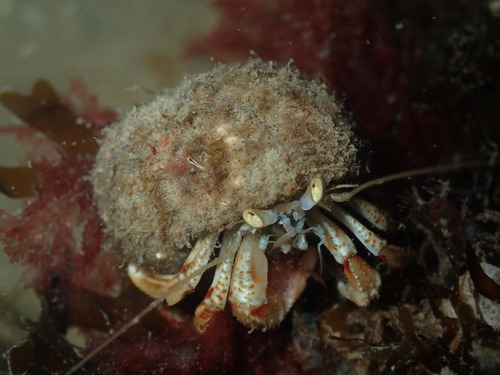
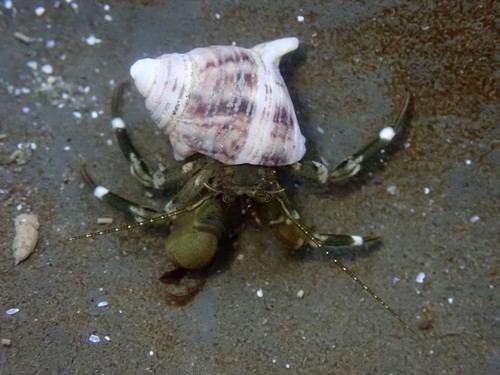
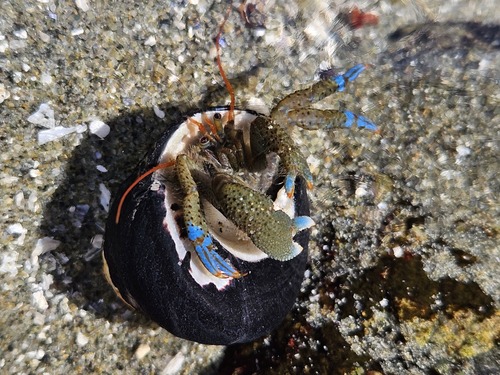
Pagurus samuelis is a small hermit crab that reaches a maximum total length of 40 mm (1.6 in) and a maximum carapace width of 19 mm (0.75 in). Its exoskeleton has a base colour of brown or green, while its antennae are red. Adult individuals have bright blue bands near the tips of their legs; these bands may be white in smaller individuals. Both the legs and carapace are covered in setae, and the rostrum located at the front of the carapace is triangular. Pagurus samuelis is distributed along the Pacific coast of North America, ranging from Alaska to Punta Eugenia in Baja California, Mexico. It was previously believed to also live in Japan, but Japanese specimens that were once assigned to this species are now classified as Pagurus filholi. In ecology and life cycle, Pagurus samuelis prefers to occupy discarded shells from the black turban snail, Tegula funebralis. It is primarily a nocturnal scavenger, feeding on algae (especially the giant kelp Macrocystis pyrifera) and detritus. In laboratory settings, P. samuelis can survive when fed a diet of Pelvetia canaliculata. Known predators of P. samuelis include several fish species: the pile perch (Rhacochilus vacca), California sheephead (Semicossyphus pulcher), and spotted kelpfish (Gibbonsia elegans). During the breeding season, males carry females on their backs, sometimes for over a full day. Females produce eggs between May and July, and carry the eggs on their abdomen inside their occupied shell.