About Pagurus pollicaris Say, 1817
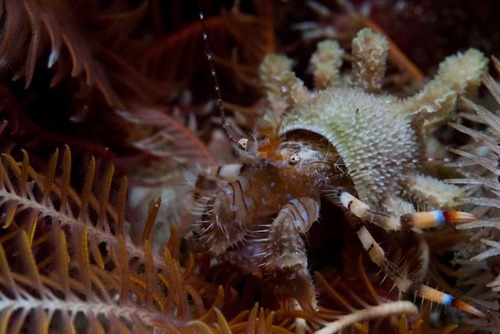
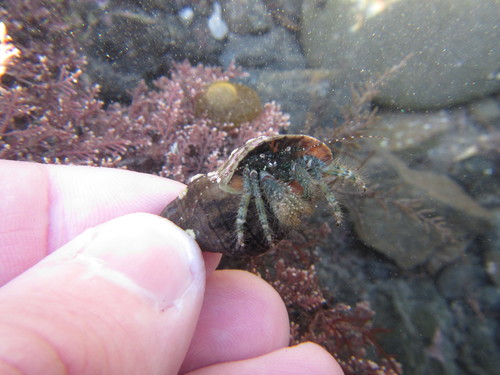
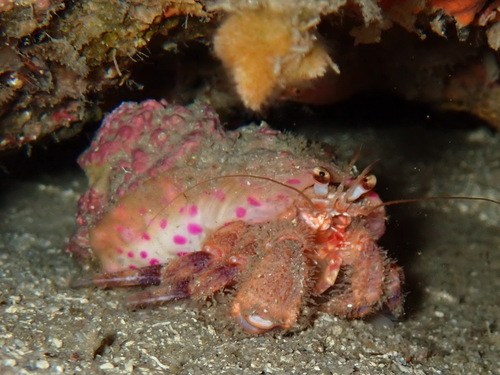
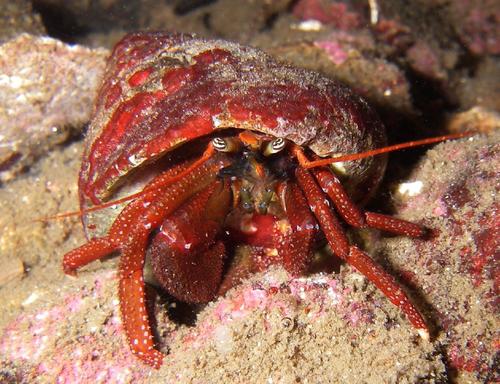
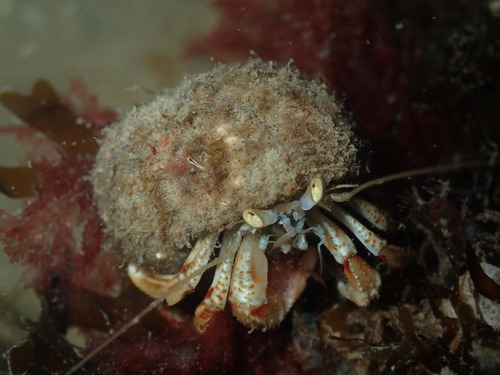
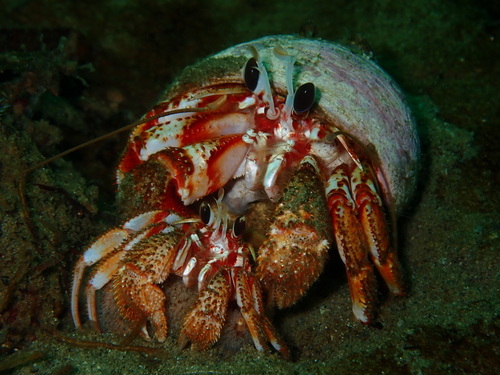
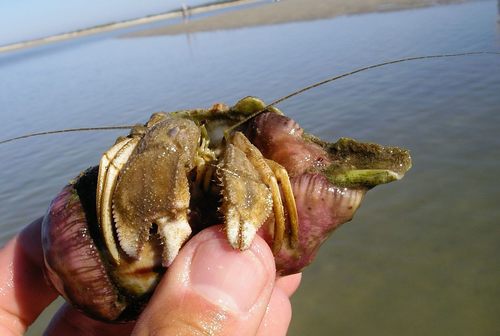
Pagurus pollicaris, first described by Say in 1817, is a species of hermit crab that is commonly found along the Atlantic coast of North America, ranging from New Brunswick to the Gulf of Mexico. It has a number of common names, which include gray hermit crab, flat-clawed hermit crab, flatclaw hermit crab, shield hermit crab, thumb-clawed hermit crab, broad-clawed hermit crab, and warty hermit crab. This hermit crab inhabits the shells of shark eye snails and whelks. Adults grow to a length of 31 millimeters (1.2 inches) and a width of 25 millimeters (1.0 inch). The body of the crab is a pale off-white, and it has unevenly sized, broad, flat claws. These claws can lock together to function as an operculum when the crab withdraws into its host shell. The shell occupied by P. pollicaris is often also shared by the commensal zebra flatworm, Stylochus ellipticus. The diet of the flat-clawed hermit crab is made up of organic matter, algae, and occasionally other hermit crabs. The most significant predators of this species are fish.