About Pagurus acadianus J.E.Benedict, 1901
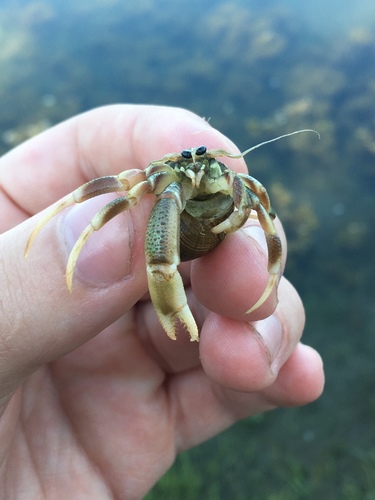
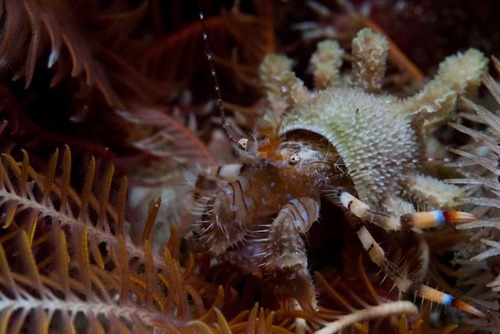
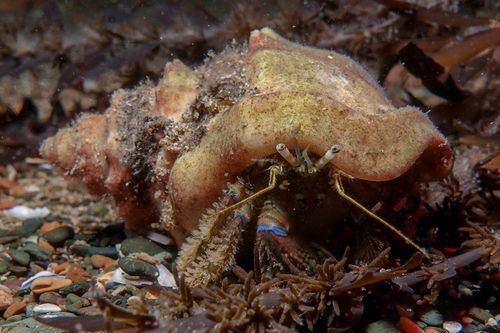
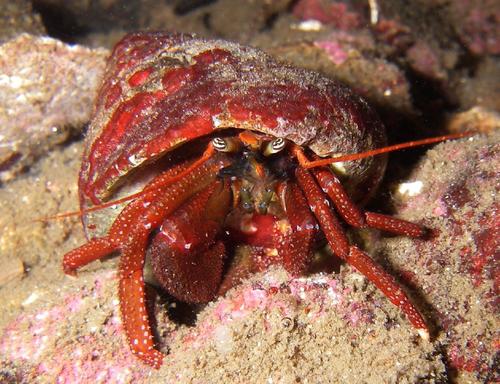
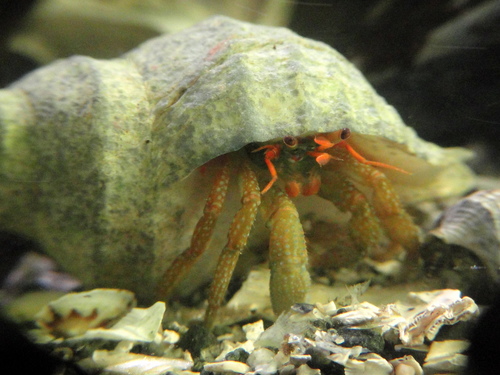
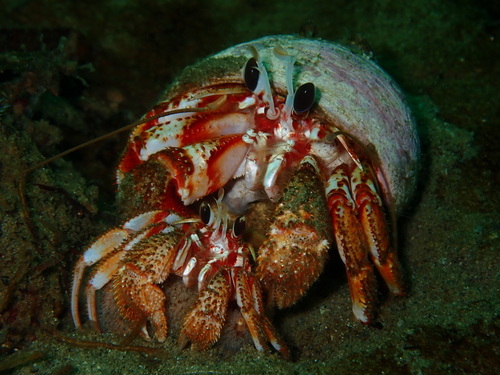
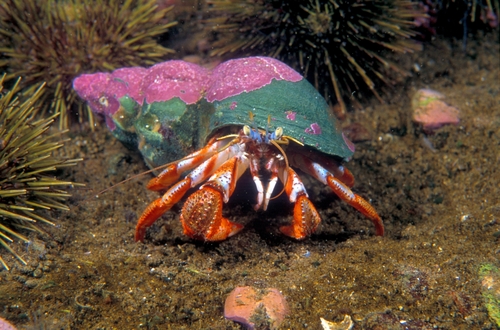
Pagurus acadianus, commonly called the Acadian hermit crab, is a species of hermit crab belonging to the family Paguridae, found in the Western Atlantic Ocean. Its confirmed distribution within the Western Atlantic includes Vineyard Sound. In his 1961 extensive study of hermit crabs in Salisbury Cove, Maine, William C. Grant, Jr. recorded Pagurus acadianus as the most abundant crab species there. Like other hermit crabs, Pagurus acadianus inhabits different shells throughout its life, switching to larger shells as it grows, per Jennifer E. Angel's research. Using a shell that is too small increases the crab's risk of predation and desiccation. William C. Grant, Jr. found that Pagurus acadianus most often inhabits shells from Littorina littorea, Thais lapillus, Buccium undatum, and Polinices heros. Larger individuals of this species typically live on elevated areas of the rocky intertidal, the zone between the highest high tides and lowest low tides, an area widely studied for its accessibility and the unique adaptations of its resident organisms, which must tolerate daily changes in salinity, exposure to sunlight, and periods without food. Smaller Pagurus acadianus individuals are found on wharf pilings and vertical rock faces in the midway region of the rocky intertidal zone. This hermit crab species is notably aggressive, leading to high levels of both intraspecific and interspecific competition. Smaller individuals have been recorded as more aggressive and dominant, which may be an adaptation to compensate for their smaller size. Little is known about the specific reproductive behavior of Pagurus acadianus, but Roberts gained information about the species' adolescent development through laboratory studies. Roberts found that the larval incubation period lasts approximately 30 days, with an optimal gestation temperature of 55.4 degrees Fahrenheit. Newly hatched larvae come from eggs that measure around 0.58 by 0.64 millimeters, and can be identified by their red and yellow color variations and distinct eyespots. Both larval and adult Acadian hermit crabs are often confused with the closely related common marine hermit crab of western Europe, Pagurus bernhardus, and this comparison has been a focus of multiple scientific studies including Benedict's original work.