About Paguristes puncticeps J.E.Benedict, 1901
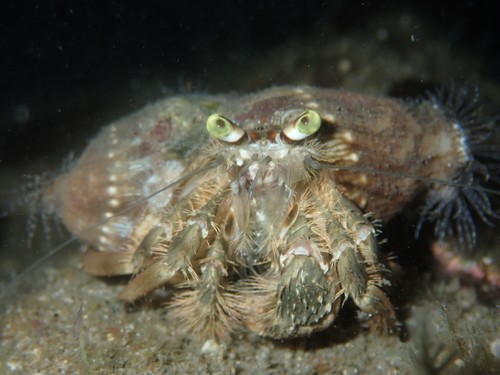
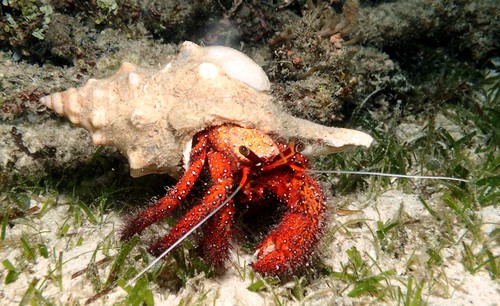
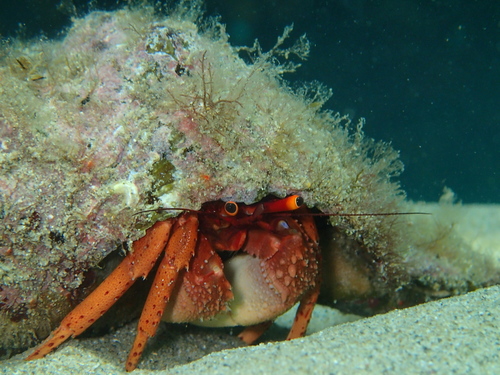
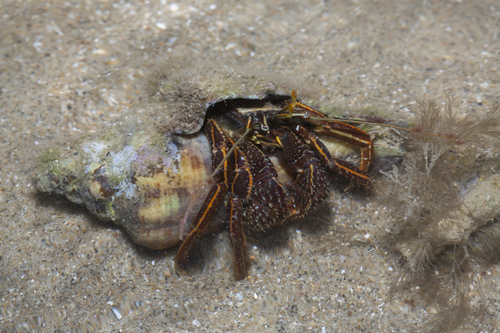
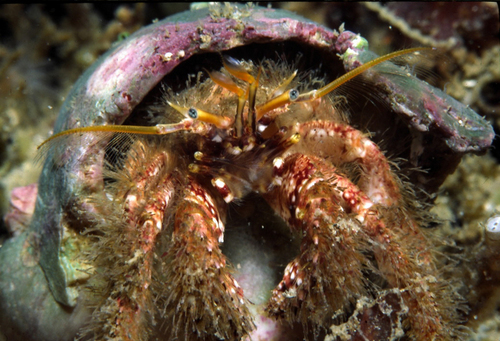
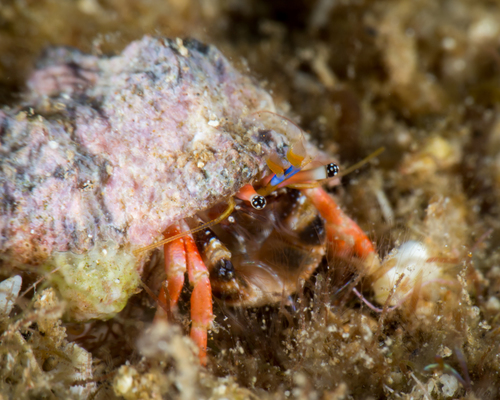
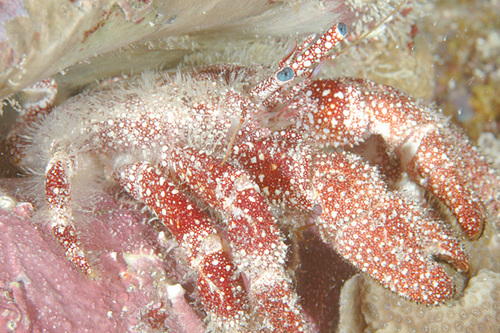
Paguristes puncticeps is a large species of hermit crab, reaching a total length of 8 to 13 cm (3 to 5 in) when including its limbs and claws (chelae). Its body is dark red or rusty-brown, with its hairy carapace and limbs marked by bold white spots. Its antennae and eye stalks are also dark red, and its eye irises are blue. While most members of its family have a larger left claw than right claw, P. puncticeps has two claws that differ very little in size. P. puncticeps is found in the tropical western Atlantic Ocean, the Caribbean Sea, and the Gulf of Mexico. Its range stretches from Florida to Brazil, and includes the islands of Cuba, Guadeloupe, Martinique, and Saint-Martin. It occurs from the low tide mark down to a depth of around 40 m (130 ft), and most often lives in coral reef habitats. P. puncticeps is a scavenger and detritivore, feeding on any animal or plant matter it encounters. Breeding occurs year-round. The earliest larval stages develop inside the egg; after hatching, the larvae become planktonic zoeae. Once fully developed, zoeae settle onto the seabed and metamorphose into juvenile crabs, which must then find a small empty gastropod shell to occupy. This hermit crab often uses empty shells from the queen conch (Aliger gigas). Larger individuals favor empty shells from the Florida horse conch (Triplofusus papillosus), the largest gastropod mollusk in the northern Gulf of Mexico, as well as shells from the large snails that this conch preys on. A common limiting factor for hermit crab populations in any area is the availability of empty gastropod shells for them to live in. Cephalopods including the common octopus (Octopus vulgaris) and the Caribbean reef octopus (Octopus briareus) hunt lobsters, crabs, hermit crabs, and mollusks. They typically carry captured prey back to their dens, leave inedible remains nearby to form a midden, and extract their hermit crab prey through the shell aperture, leaving the shell structure intact. Octopus middens provide a source of empty shells for hermit crabs, and P. puncticeps has been observed moving empty shells away from these piles. Middens also attract hermit crabs that feed on food scraps left by the octopus, though feeding near an octopus den is risky. Smaller hermit crabs with a shield length of less than 5 mm (0.2 in) sometimes live inside octopus dens, feeding on food scraps the octopus has discarded.