About Paguristes eremita (Linnaeus, 1767)
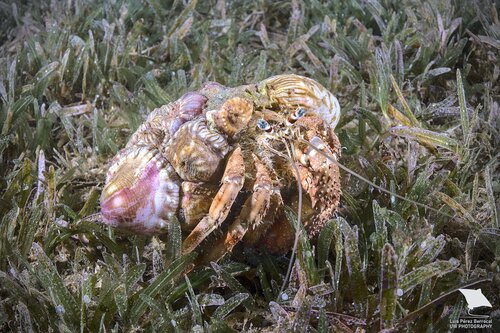
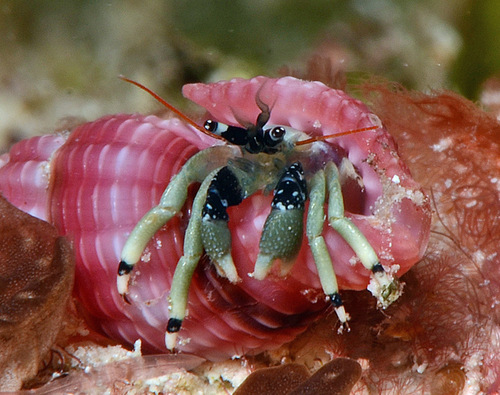
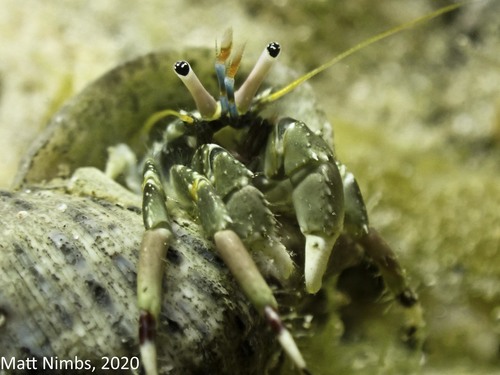
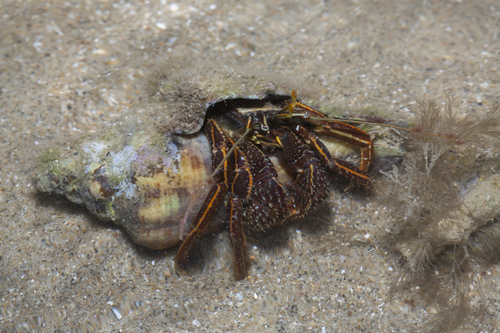
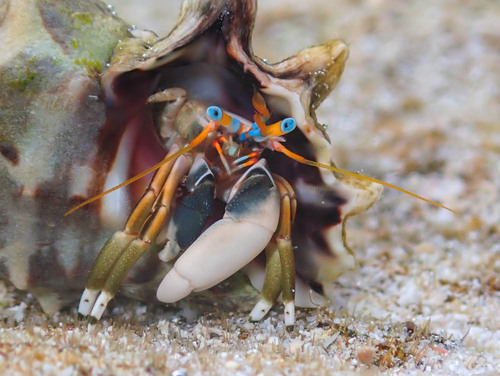
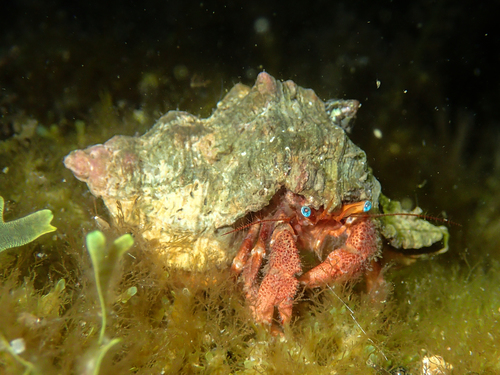
Paguristes eremita is a species of hermit crab. The carapace of this hermit crab can grow to a length of about 20 mm (0.8 in). It has a pointed rostrum, with a spine located at the tip of its small eye scale. Its eye stalks are long and cylindrical, and its thorny antennal scales nearly cover the bases of the antennae. Its chelae (claws) are granulated and covered with short hairs; the left chela is slightly larger than the right. Its walking legs are laterally compressed: the first three pairs are similar in length, the fourth pair are much shorter, and the fifth pair end in small claws. The general body colour of this crab ranges from orange-red to brown, and its eyes are greyish-blue. A purplish spot at the base of the dactylus is a diagnostic feature that distinguishes this species. Paguristes eremita is native to the Mediterranean Sea and the adjoining Atlantic Ocean, where its range extends from Portugal to Morocco. It occurs at depths between 10 and 50 m (33 to 164 ft), and lives on sandy stretches of the seabed and in seagrass meadows among Neptune grass. Like other hermit crabs, P. eremita lives inside the empty shell of a gastropod mollusc. It is often associated with the sea anemone Calliactis parasitica, epizoanthids, hydroids, or the sponge Suberites domuncula, which attach themselves to the occupied shell. The main predators of this crab are loggerhead turtles, larger crustaceans, octopuses, and certain fish. Like other crabs, P. eremita is a detritivore. Breeding takes place year round. Its larvae are planktonic, passing through two zoea larval stages and one megalopa stage before metamorphosing into juvenile hermit crabs.